Commercial kitchens are demanding environments. Your flooring endures constant foot traffic, spills, grease, heat, and intensive cleaning. Choosing the wrong flooring can result in costly repairs, safety hazards, and food safety violations.
Commercial kitchen flooring in Sydney requires solutions that go beyond aesthetics—you need floors that are non-slip, hygienic, durable, and compliant with health and safety regulations.
This guide explores the 4 best commercial kitchen flooring options available in Sydney, their pros and cons, and which is right for your operation.
What Makes Great Commercial Kitchen Flooring?
Before exploring specific options, understand what commercial kitchen flooring must deliver:
Non-Slip Surface
Prevents accidents caused by water, oil, and food spillage. Essential for staff safety and reducing liability.
Hygienic Design
Seamless construction eliminates crevices where bacteria, mold, and food particles can accumulate. Meets health department standards.
Chemical Resistance
Withstands daily exposure to cleaning chemicals, grease, salt, and food acids without degradation.
Easy Maintenance
Requires minimal special care while remaining easy to clean during high-pressure washing and daily sanitization.
Heat Resistance
Tolerates hot cooking equipment, steam, and temperature fluctuations without warping or damage.
Durability
Resists cracking, staining, and wear patterns even under heavy foot traffic and rolling equipment.
The 4 Best Commercial Kitchen Flooring Options in Sydney
Option 1: Epoxy Flooring – The Top Choice
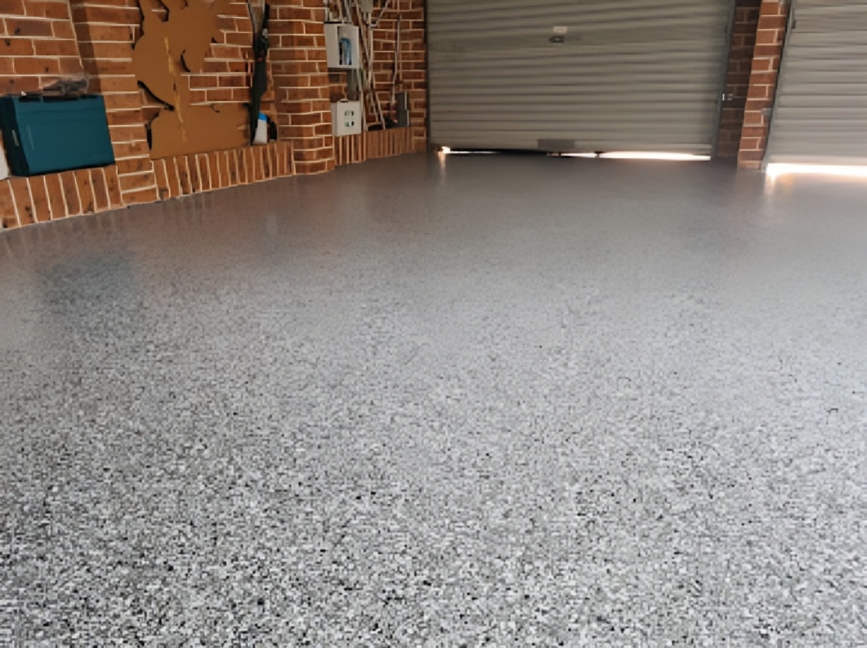
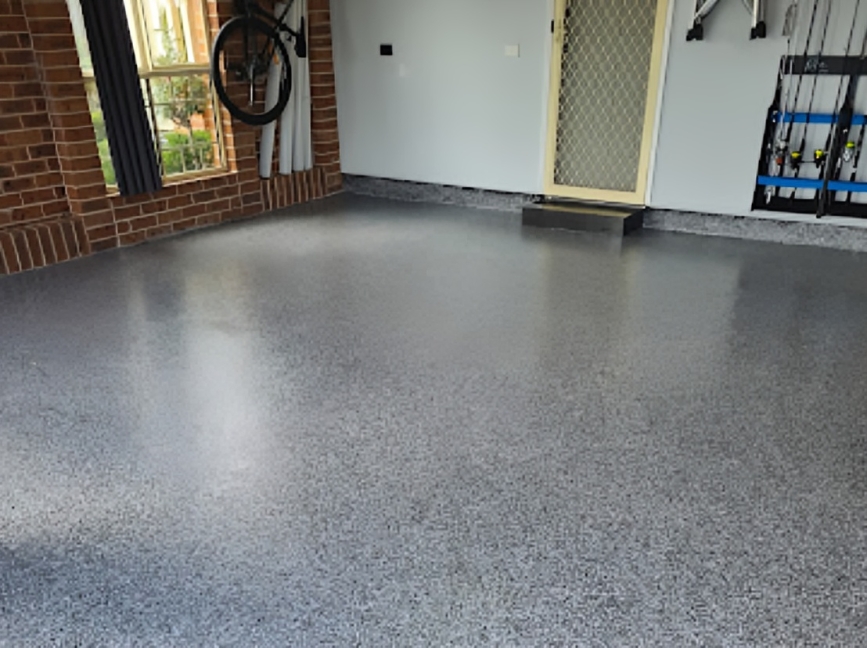
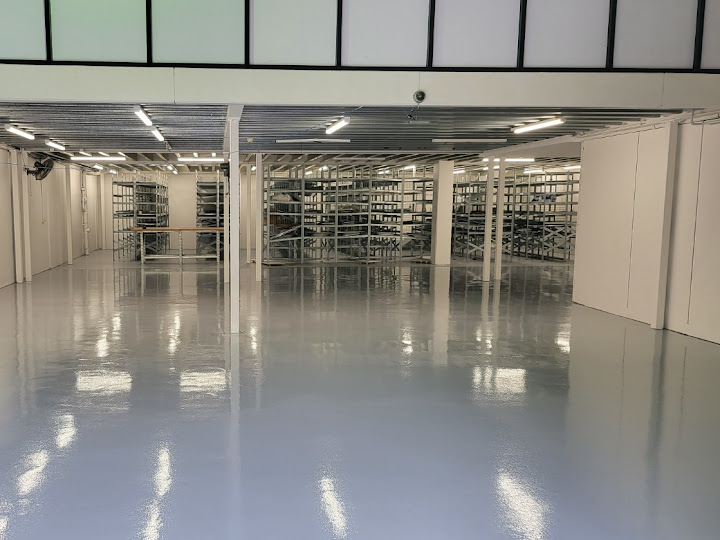
What it is: Industrial-grade epoxy coating applied to prepared concrete, creating a seamless, high-performance surface.
Advantages:
- Seamless and hygienic: No joints or crevices for bacterial growth
- Non-slip properties: Available with anti-slip additives for maximum safety
- Chemical resistant: Handles grease, oils, and cleaning chemicals without damage
- Easy to clean: Quick, damp mopping or high-pressure washing
- Customizable: Available in various colors and finishes
- Long-lasting: Lasts 10+ years with proper maintenance
- Cost-effective: Excellent value for long-term investment
Disadvantages:
- Initial installation cost ($3,000-$8,000+ depending on area)
- Requires 24-48 hours curing time (minimal disruption with proper scheduling)
Best For: Most commercial kitchens, restaurants, food processing facilities
Option 2: Polyurethane Cement Flooring
What it is: A hybrid flooring system combining polyurethane resin with cement, creating a durable, flexible surface.
Advantages:
- Highly flexible: Accommodates minor movement and vibration from equipment
- Excellent chemical resistance: Superior to epoxy for certain harsh chemicals
- Fast curing: Ready for light use in 24-48 hours
- Impact resistant: Handles dropped equipment without cracking
- Moisture resistant: Ideal for wet kitchen environments
- Customizable finishes: Available in multiple colors and textures
Disadvantages:
- Slightly higher cost than standard epoxy
- Requires skilled installation
- Professional maintenance recommended
Best For: High-stress kitchens with heavy equipment, butcher shops, and food processing
Option 3: Commercial-Grade Tile Flooring
What it is: Porcelain or quarry tile specifically designed for commercial kitchen use.
Advantages:
- Very durable: Resists staining and scratching
- Traditional option: Familiar to many kitchen operators
- Individual tile replacement: Can replace damaged tiles without full reflooring
- Heat resistant: Tolerates high temperatures
Disadvantages:
- Grout line issues: Grout traps bacteria and is difficult to clean thoroughly
- Slip hazard: Can be slippery when wet (requires aggressive non-slip treatments)
- Cracking: Grout and tiles crack under heavy equipment stress
- Frequent maintenance: Grout requires regular sealing and attention
- Poor hygiene: Not ideal for food safety compliance
- Installation disruption: Time-consuming installation with extended downtime
Best For: Secondary areas, dining spaces (not ideal for main kitchen floors)
Option 4: Vinyl Composite Tile (VCT) Flooring
What it is: Composite tiles containing vinyl, offering a mid-range commercial flooring option.
Advantages:
- Budget-friendly: Lower initial cost
- Moderate durability: Suitable for moderate-traffic areas
- Available styles: Multiple colors and patterns
- Easier replacement: Damaged tiles can be replaced individually
Disadvantages:
- Limited lifespan: Requires replacement every 5-7 years
- Poor moisture resistance: Absorbs water and develops mold
- Not ideal for heavy grease: Becomes slippery and degrades
- Frequent maintenance: Requires regular waxing and stripping
- Hygiene concerns: Seams and porosity harbor bacteria
- Not recommended for commercial kitchens: Health departments often discourage use
Best For: Office areas, storage rooms (NOT recommended for kitchen floors)
Epoxy vs. Traditional Options: Head-to-Head Comparison
| Feature | Epoxy | Polyurethane Cement | Tile | VCT |
| Hygiene | Excellent | Excellent | Poor | Poor |
| Slip Resistance | Excellent (with additives) | Excellent | Fair | Poor |
| Chemical Resistance | Excellent | Excellent | Good | Fair |
| Ease of Cleaning | Excellent | Excellent | Good | Fair |
| Durability | 10+ years | 10+ years | 7-10 years | 5-7 years |
| Cost | Moderate | Moderate-High | Low-Moderate | Low |
| Maintenance | Minimal | Minimal | High | High |
| Health Compliant | Yes | Yes | Conditional | No |
Commercial Kitchen Waterproofing with Epoxy Flooring
Beyond floor applications, epoxy solutions protect your entire kitchen:
Kitchen Areas Protected by Epoxy:
- Kitchen floor waterproofing: Prevents moisture damage to subfloors
- Sink and drain waterproofing: Seals areas prone to water damage
- Cool room and refrigeration area waterproofing: Maintains structural integrity
- Grease trap sealing: Prevents leaks and odors
- Food preparation countertop waterproofing: Protects work surfaces
- Waterproof wall coatings: Protects walls from splashes and steam
- Steam and cooking area waterproofing: Handles high humidity and temperature
This comprehensive protection ensures your kitchen operates safely and efficiently while meeting all health and safety standards.
Installation Process for Commercial Kitchen Flooring
Site Assessment
- Professional evaluation of existing floor condition
- Assessment of traffic patterns and specific kitchen needs
- Identification of problem areas (cracks, moisture, uneven surfaces)
Preparation
- Complete floor cleaning and degreasing
- Concrete grinding to create a proper surface profile
- Repair of cracks, spalls, and imperfections
- Moisture testing to ensure readiness
Priming
- Application of epoxy primer to ensure adhesion
- Proper coverage to seal the substrate
Epoxy Application
- First coat application (base layer)
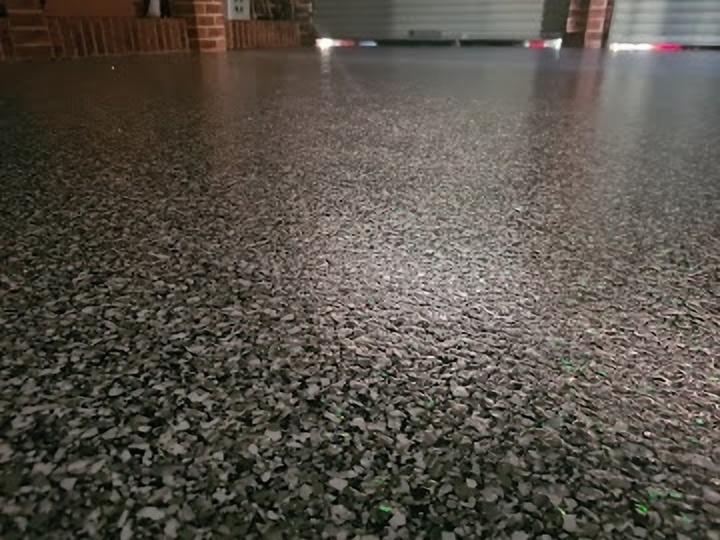
- Optional: non-slip additives or decorative flakes
- Second coat application (topcoat)
- Professional finishing for a seamless result
Curing
- Full curing period (typically 24-48 hours)
- Proper ventilation during curing
- Scheduling to minimize kitchen disruption
Final Inspection
- Quality assurance walkthrough
- Testing of non-slip properties
- Client approval before returning to service
Health & Safety Compliance
Commercial kitchens must comply with:
- Food Safety Standards Australia: Requires hygienic, non-porous surfaces
- WorkCover NSW: Mandates non-slip surfaces in food preparation areas
- Local Health Department: Requires seamless, easy-to-clean floors
Epoxy flooring satisfies all compliance requirements, reducing your liability and ensuring regulatory approval.
Maintenance Guide for Commercial Kitchen Flooring
Daily Cleaning:
- Sweep away debris
- Mop with pH-neutral cleaner and warm water
- Ensure proper drainage and drying
- Address spills immediately to prevent staining
Weekly Deep Clean:
- High-pressure wash (if appropriate for surface type)
- Deep clean with degreaser (approved for your flooring)
- Sanitize to food safety standards
- Allow proper drying time
Monthly Inspection:
- Check for cracks or wear
- Inspect non-slip properties
- Address any maintenance needs promptly
Annual Professional Maintenance:
- Professional cleaning and assessment
- Resealing or touch-ups as needed
- Documentation of maintenance history
Real Sydney Commercial Kitchens Trusting Epoxy Flooring
Sydney Epoxy Flooring has completed hundreds of commercial kitchen projects across:
- Fine dining restaurants
- Fast-casual food outlets
- Aged care facilities
- Commercial food processing plants
- Hospitality venues
- Catering centers
Client Feedback:
- “Our health inspector gave us a compliment on our floor—seamless and spotless!”
- “We’ve cut our cleaning time in half—the floor is so easy to maintain.”
- “It’s been 3 years, and the floor still looks brand new with minimal care.”
Why Choose Sydney Epoxy Flooring for Your Kitchen?
✓ 12+ years of commercial kitchen experience
✓ 2,000+ projects completed, including 500+ commercial kitchens
✓ Specialized waterproofing systems for every kitchen area
✓ Expert understanding of health and safety compliance
✓ Minimal disruption to your operation
✓ Transparent pricing and detailed proposals
✓ 700+ happy clients, 137+ verified Google reviews
Getting Started: Free Kitchen Flooring Consultation
Transform your commercial kitchen with professional epoxy flooring that’s durable, hygienic, non-slip, and compliant.
We’ll assess your kitchen, discuss your needs, and provide a transparent proposal with no hidden costs.
Contact Sydney Epoxy Flooring Experts:
Phone: 1300 621 873
Email: info@sydepoxyflooring.com.au
Address: Unit 123/7 Hoyle Ave, Castle Hill, NSW 2154
Follow Us on Social Media:
Facebook
Instagram
YouTube
LinkedIn