If you’ve spent any time working in a commercial bakery, you already know the floor takes a beating. Flour settles into every crack, steam condenses on every surface, and by the end of a long shift, the floor is a patchwork of water, grease, and fine dust. Standard concrete, the default choice for many commercial spaces, simply wasn’t built for this kind of punishment. That’s why investing in Bakery Flooring Sydney solutions designed specifically for food production environments can make a significant difference in durability, safety, and ease of maintenance.
At Sydney Epoxy Flooring, we’ve worked with dozens of bakeries across Sydney, from artisan sourdough shops in Surry Hills to large-scale production facilities in Parramatta. What we’ve found is consistent: the right flooring doesn’t just solve problems — it transforms how a bakery operates. This guide explains why and what to look for when you’re ready to upgrade.
The Real Challenges Bakery Floors Face
Most flooring guides give you a generic list of “commercial kitchen challenges.” The reality inside a bakery is more specific — and more demanding.
Moisture is constant. Between dough preparation, oven steam, and end-of-day washdowns, bakery floors are seldom dry for long. Untreated or cracked concrete absorbs this moisture, and once it does, mould and bacteria find a home. That’s not just a hygiene problem — it’s a food safety liability.
Temperature swings are severe. Commercial deck ovens can radiate significant heat at floor level, and then cold water hits the surface during cleaning. Repeated thermal cycling cracks and warps flooring materials that weren’t designed for it.
Flour dust is deceptively dangerous. Fine flour settles on any surface and, when combined with moisture, creates a surface almost as slippery as ice. Standard non-slip treatments degrade quickly under this kind of contamination.
Cleaning chemicals are aggressive. The degreasers and sanitisers required for food safety compliance are hard on the flooring. Acidic cleaners, enzyme-based sanitisers, and high-pressure washdowns can eat through inadequate surface coatings in months.
The traffic never stops. Heavy mixers on wheels, trolleys loaded with trays, staff on their feet for 10-hour shifts — bakery floors absorb all of this, every day.
Why Epoxy Is the Right Answer
Epoxy flooring has become the industry standard for commercial food production facilities, and for good reason. It addresses every challenge listed above in a single, integrated system.
A properly installed epoxy floor creates a seamless, non-porous surface — no grout lines, no expansion gaps, no micro-cracks where bacteria can colonise. This is something no tile, sheet vinyl, or bare concrete can offer, and it’s the foundation of a genuinely hygienic food production environment.
Beyond hygiene, epoxy’s chemical resistance is exceptional. The formulations we use are designed to withstand the cleaning routines that food safety requires, including harsh degreasers and acidic sanitisers, without degrading or discolouring. Your floor stays intact and cleanable for years.
Moisture resistance is built into the system at the substrate level. We assess and treat your existing concrete before laying the epoxy, which means moisture can’t migrate upward and compromise the surface from underneath.
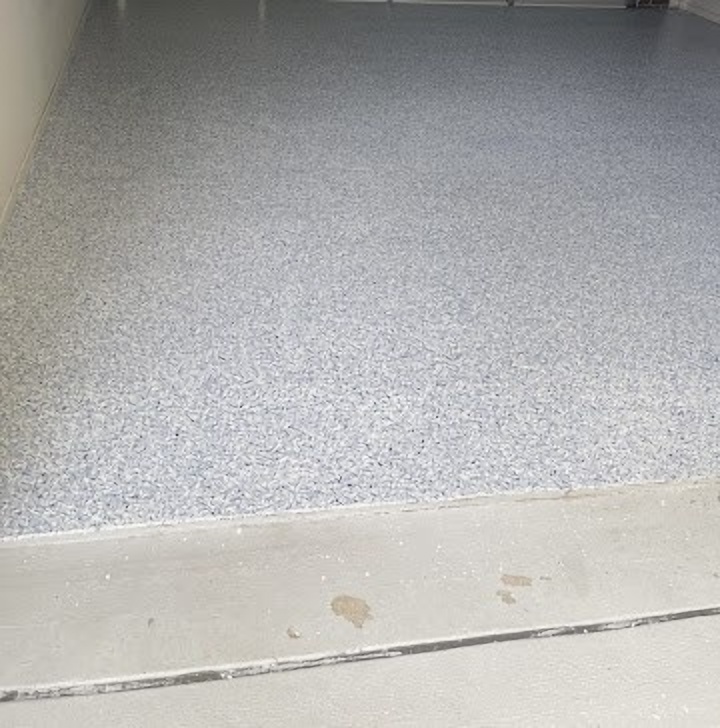
For slip resistance, epoxy can be finished with a variety of textures that maintain grip even on wet, flour-dusted surfaces — something standard smooth finishes cannot guarantee. This is a meaningful safety upgrade for your team.
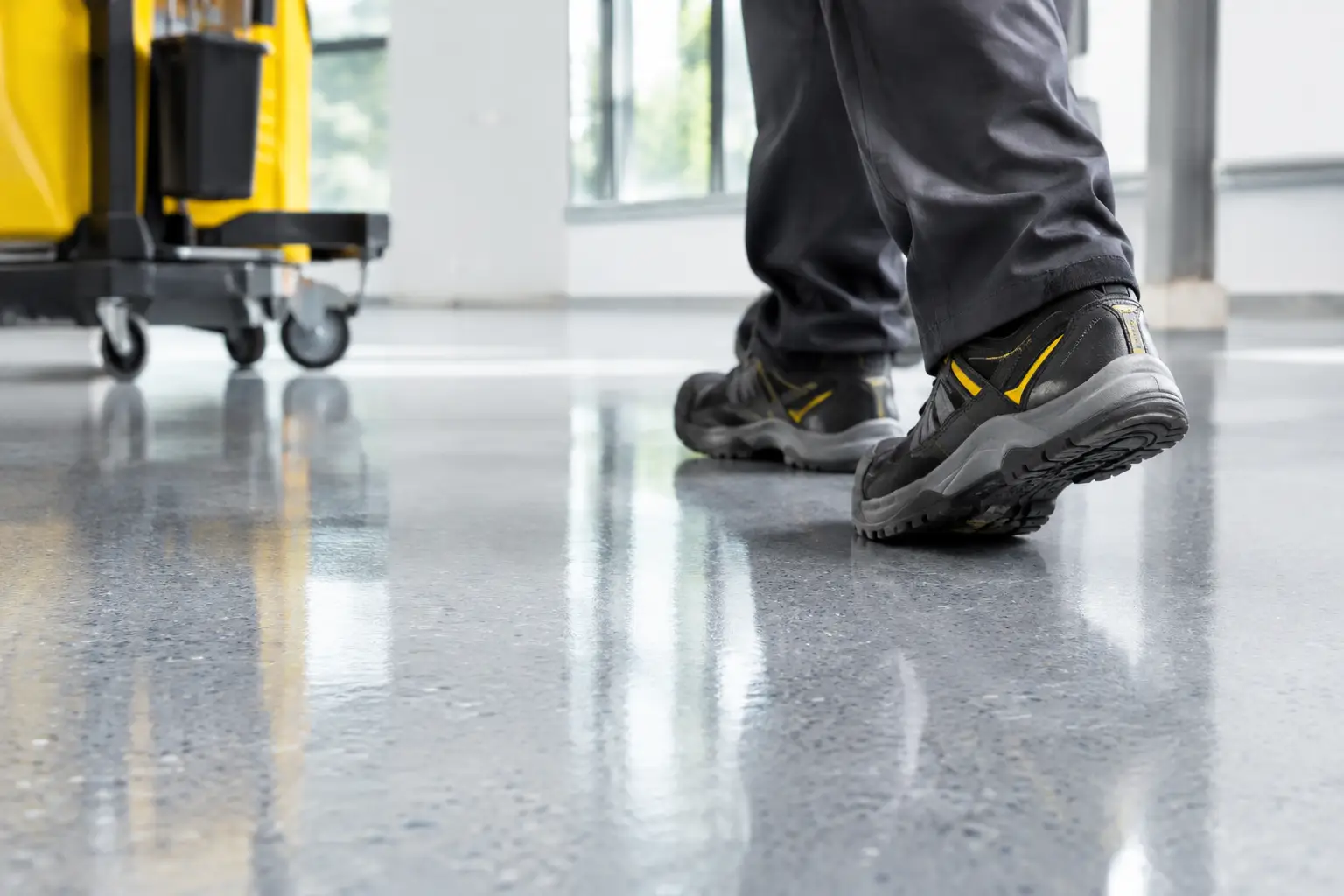
And practically speaking, epoxy is simply easier to clean. A smooth, sealed surface can be swept, mopped, and sanitised in a fraction of the time that porous concrete requires. Over the course of a year, that adds up to real labour savings.
Food Safety and Compliance
NSW Food Authority regulations are specific about what commercial food preparation surfaces must achieve: they must be smooth, impervious, non-absorbent, and capable of being thoroughly cleaned. Bare or sealed concrete rarely meets these standards over time. Epoxy does.
We use FDA-compliant epoxy formulations rated for food contact environments. After installation, we provide full documentation of materials and compliance specifications — something you can present confidently at any inspection.
What the Installation Process Looks Like
A Bakery Flooring Sydney project isn’t something you slot in between services without planning. Here’s how we approach it.
We start with a site assessment — not just measuring the floor, but understanding your operations. Where are your ovens? What equipment is on wheels? Are there any existing moisture or structural issues? This shapes every decision that follows.
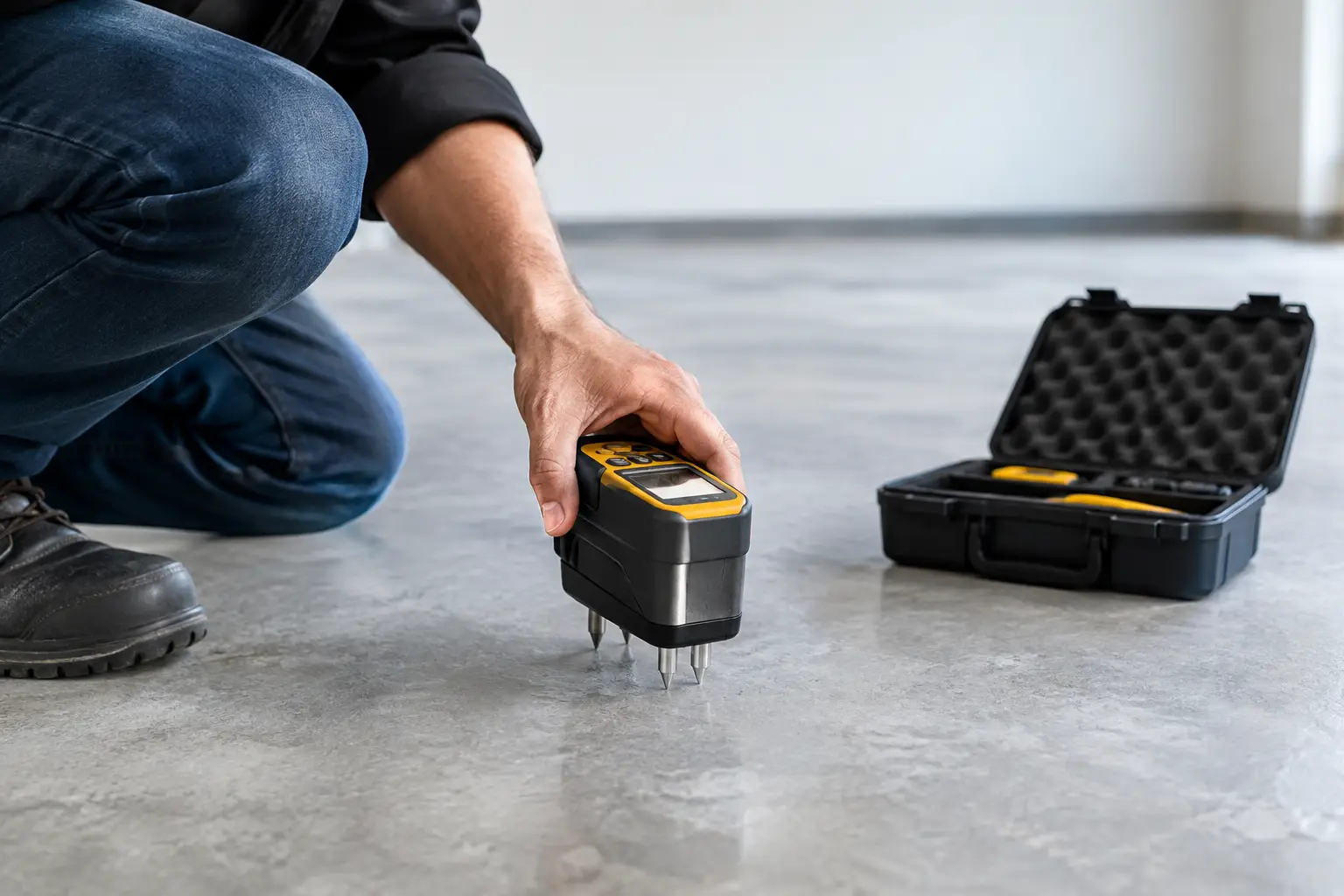
Surface preparation is where most of the critical work happens. We deep-clean the existing substrate, assess moisture levels, repair any damaged concrete, and apply a primer coat. Rushing this step is the most common reason epoxy floors fail prematurely — we don’t rush it.
The epoxy application itself is precise and layered, with anti-slip texture applied to specification. Most bakery projects take two to five days from start to finish, depending on floor area and the complexity of any concrete remediation required.
Once cured, your floor is ready for full production — and we provide you with a complete maintenance guide so you know exactly how to keep it performing at its best.
The Investment Case
Quality epoxy flooring for a commercial bakery is not the cheapest option upfront. But the calculation over time is straightforward.
A professionally installed epoxy floor typically lasts 10 to 15 years with normal maintenance. Standard sealed concrete or sheet vinyl rarely makes it past five to seven years in a bakery environment before requiring significant repairs or replacement.
Beyond lifespan, consider the operational savings: faster daily cleaning, fewer incidents that require remediation, and lower risk of food safety failures that can lead to fines or temporary closure. Most of our bakery clients find the investment pays for itself within three to five years through these cost reductions alone — before accounting for the harder-to-measure benefits like staff wellbeing and reduced slip-related injuries.
What Our Clients Say
“The finished result is beyond my expectations. The team used high-quality materials and delivered outstanding work.” — M.C.
“Professional team, on time, and very friendly. Highly recommended.” — Melancholic Art
“Grace was very helpful with the quote, and Saeed did an amazing job. The result looks incredible.” — Rakesh Suruj
Frequently Asked Questions
Is epoxy flooring genuinely food-safe?
Yes. When properly installed using FDA-compliant formulations, epoxy creates a surface that meets or exceeds NSW Food Authority standards for food production environments. We provide documentation to confirm this.
How long does epoxy flooring last in a bakery?
Epoxy flooring in a bakery can last 10 to 15 years with proper maintenance. For businesses investing in Bakery Flooring Sydney, longevity depends on the quality of materials, professional installation, and consistent cleaning routines.
Can epoxy be installed over our existing tiles or concrete?
In most cases, yes — provided the existing substrate is in sound condition and properly prepared. We assess this during our initial site visit.
Is it slippery?
Standard smooth epoxy can be slippery when wet. That’s why we specify anti-slip textures for bakery environments. The finish provides a reliable grip even on wet, flour-dusted surfaces.
How long does installation take, and how much disruption should we expect?
Most projects take two to five days. We work with you to schedule installation during your lowest-activity period and minimise disruption to production.
What’s involved in cleaning and maintaining epoxy flooring?
Daily: sweep or dry mop to remove flour and debris, followed by a damp mop with a mild commercial detergent. Weekly: a more thorough wet clean and sanitisation. No special equipment required. We provide a full protocol with every installation.
Ready to Talk?
If you’re dealing with mould, cracked concrete, persistent slip hazards, or simply a floor that’s become harder to keep clean, we’d like to help. As specialists in Bakery Flooring Sydney, we offer a free facility assessment with no obligation — we’ll look at your current flooring, discuss your operational needs, and give you an honest recommendation.
Contact us
Phone: 1300 621 873
Email: info@sydepoxyflooring.com.au
Address: Unit 123/7 Hoyle Ave, Castle Hill, NSW 2154