Looking for epoxy flooring in Sydney? Whether you need a tough garage floor, a compliant commercial kitchen surface, or a high-traffic warehouse coating, Sydney Epoxy Flooring delivers installations built to last 15–20 years. Our team of certified professionals has completed over 2,000 projects across Sydney in 12+ years — and every job starts with a free floor audit, not a sales pitch.
The Science Behind Epoxy Flooring: How It Actually Works
Epoxy flooring isn’t simply a paint or a surface sealer. It is the result of a chemical reaction between two components: an epoxy resin and a hardener (polyamine). When these two substances are combined in the correct ratio and applied to a prepared concrete substrate, they undergo a process called polymerisation, where the molecules cross-link to form a rigid, thermosetting plastic material.
This cross-linked molecular structure is what gives epoxy its exceptional properties:
- Hardness – the cured material resists indentation and surface abrasion far better than ordinary concrete sealers
- Adhesion – the resin penetrates the microscopic pores of prepared concrete, creating a mechanical and chemical bond rather than simply sitting on top
- Chemical inertness – once fully cured, epoxy does not react with most acids, alkalis, or solvents, which is why it performs well in industrial environments
The curing process itself is exothermic; it generates heat. In thicker applications, this heat must be managed carefully to prevent the coating from curing too quickly and developing internal stress cracks. This is one reason why ambient temperature and humidity at the time of application directly influence the quality of the final result.
Why concrete preparation changes everything scientifically
Concrete surfaces are naturally alkaline and often have a thin layer of carbonation, latitude (weak surface cement), or contamination from oils and dust. Without removing these layers through diamond grinding or shot blasting, the epoxy bonds to the weak surface layer rather than to the sound concrete beneath, which is the direct cause of peeling and delamination failures seen in poorly installed floors.
A mechanically prepared concrete surface, measured by its Concrete Surface Profile (CSP), provides the physical texture that allows the epoxy to lock in. Most professional systems require a CSP of 3 to 5 (on a scale of 1–10) for standard epoxy coatings, and a higher profile for thicker industrial systems.
Epoxy Flooring Related Common Problems People Face
Most people don’t think about their floors until something goes wrong. Here are the most common issues Sydney residents and businesses face, and why epoxy is often the smartest fix.
Epoxy Floor Peeling or Bubbling After Installation
The problem: Homeowners notice their epoxy coating lifting, bubbling, or peeling within months of application, especially in garages and industrial spaces.
Why it happens: Poor surface preparation is the number one cause. If the concrete substrate isn’t diamond-ground or acid-etched before coating, the epoxy simply doesn’t bond correctly. Moisture trapped beneath the slab is another common culprit, particularly in Sydney’s humid climate.
The solution: Professional epoxy flooring experts always start with a thorough floor audit and surface preparation process. At Sydney Epoxy Flooring, our team uses industrial-grade diamond grinding equipment to profile the concrete before any product touches the surface.
Why it works: Proper surface preparation gives the epoxy something to grip. It’s the foundation of every long-lasting result, and it’s what separates professional installation from DIY kits.
Floors That Can’t Handle Chemical or Heavy Machinery Exposure
The problem: Standard concrete floors in warehouses, factories, or workshops stain from oil, chemicals, and acids, and eventually deteriorate under heavy forklift or machinery traffic.
Why it happens: Untreated concrete is porous. It absorbs everything, fuel, hydraulic fluid, cleaning agents, and breaks down over time. Most surface-level sealers wear off within a year or two.
The solution: Industrial epoxy coating systems, including polyurethane cement flooring, create a seamless, non-porous surface that resists chemical penetration. These systems are specifically designed for heavy-duty environments and are a core service offered by qualified epoxy flooring experts.
Why it works: Polyurethane cement bonds directly to concrete and provides both chemical resistance and thermal shock protection, essential for Sydney’s manufacturing and food-processing sectors.
Slippery Floors in High-Traffic or Wet Zones
The problem: Many business owners deal with slippery floors in kitchens, car parks, or production areas, creating genuine safety risks and legal liability.
Why it happens: Polished concrete or standard floor coatings become dangerously slick when wet. In food-production facilities, hospitals, and commercial kitchens, this is a critical WHS concern.
The solution: Anti-slip epoxy floor coatings with broadcast aggregate finishes are specifically formulated to increase traction. These systems meet Australian slip-resistance standards and are widely used by epoxy flooring experts across Sydney.
Why it works: The textured finish provides grip without sacrificing cleanability, meaning your floors are both safe and easy to maintain. Safe Work Australia classifies slip resistance as a primary factor in workplace floor compliance.
Why Sydney Chooses Us
- 2,000+ completed projects across Sydney metro
- 120 qualified flooring technicians on the ground
- 12 years of local experience in Sydney’s climate conditions
- 137 Google reviews — consistent 5-star rating
- Free floor audit and written quote — no vague estimates
- Fully insured, WHS-compliant on every site
Our Epoxy Flooring Services in Sydney
Residential Garage Epoxy Flooring
Cracked, stained, or peeling garage floors are the most common job we handle. We diamond-grind the surface, repair cracks, and apply a durable multi-layer epoxy system that handles car traffic, oil spills, and everyday wear. Most double-garage projects are completed in one to two days.
Commercial Epoxy Floor Coating
Offices, retail spaces, showrooms, and multi-storey car parks require floors that look professional and perform under constant foot traffic. Our commercial systems include decorative finishes — metallic epoxy, flake broadcast, and terrazzo-style coatings — alongside functional slip-resistant options.
Industrial Epoxy Flooring & Polyurethane Cement
Warehouses, factories, and manufacturing facilities in Western Sydney and Parramatta need systems that handle forklifts, pallet jacks, chemicals, and thermal cycling. We install industrial epoxy and polyurethane cement systems rated for the heaviest commercial environments.
Food-Grade & Healthcare Floor Coatings
Commercial kitchens, food processing plants, breweries, and hospitals require FSANZ and NCC-compliant floors. Polyurethane cement — not standard epoxy — is the correct system for these environments, handling steam cleaning, hot washdowns, and HACCP hygiene requirements.
Anti-Slip Epoxy Coatings
Car parks, pool surrounds, commercial kitchens, and change rooms require floors meeting AS 4586:2013 slip resistance classifications. Our anti-slip broadcast aggregate systems provide P4–P5 ratings while remaining easy to clean and maintain.
Line Marking Systems
Warehouse aisles, car parks, schools, and sporting facilities benefit from high-visibility line marking applied as part of the same floor system — not painted on top. Our markings bond at the coating level for long-lasting visibility.
Waterproofing & Balcony Coating
Balconies, rooftop terraces, and below-ground car parks require waterproof membranes underneath any decorative or functional coating. We assess and treat moisture issues before they become structural problems.
Our Installation Process
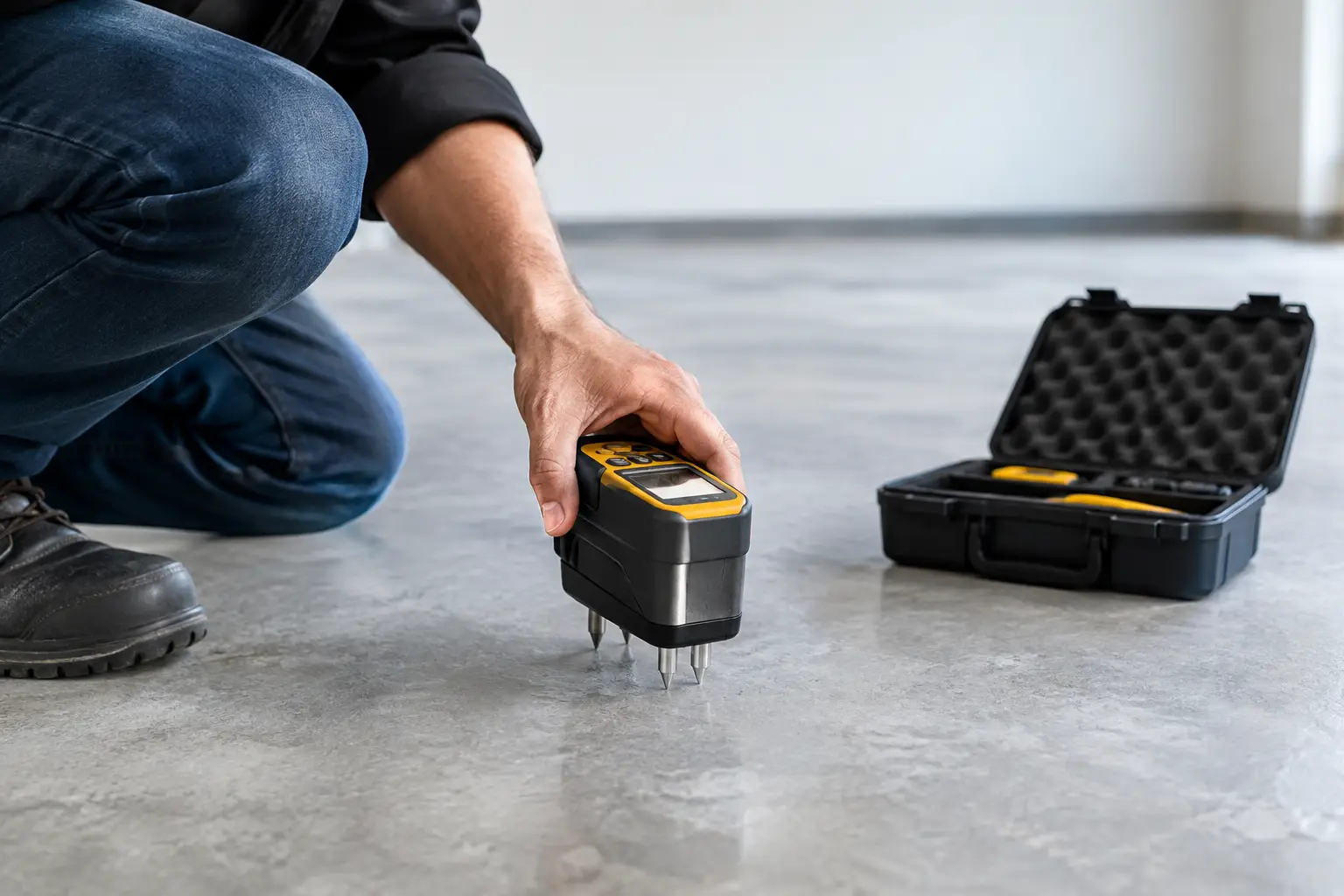
- Free Floor Audit & Moisture Test — We inspect your slab for cracks, moisture, and contamination before recommending any system.
- Surface Preparation — Industrial diamond grinding profiles the concrete to CSP 3–5, the minimum needed for a lasting bond. No grinding = no guarantee.
- Primer Application — A penetrating epoxy primer seals the substrate and creates a chemical bond layer.
- Coating System Application — Your selected system (epoxy, polyurethane cement, or decorative finish) is applied in specified layers.
- Quality Inspection & Handover — Every square metre is checked before handover. Floor ready for use within 24–72 hours.
Epoxy Flooring vs Other Options: Sydney Property Guide
| Flooring Type | Lifespan | Maintenance | Chemical Resistance | Best For |
| Epoxy Coating | 15–20 yrs | Very Low | Excellent | Garages, warehouses, commercial |
| Polyurethane Cement | 10–15 yrs | Low | Outstanding | Food production, heavy industry |
| Polished Concrete | 10–20 yrs | Medium | Moderate | Retail, offices |
| Vinyl / Tiles | 5–10 yrs | Medium–High | Poor–Moderate | Residential, light commercial |
| Painted Concrete | 1–3 yrs | High | Poor | Short-term, low-budget |
Australian Flooring Standards & Compliance
For commercial and industrial properties in Sydney, epoxy flooring is not just a finish choice — it is often a compliance requirement.
Slip Resistance: AS 4586:2013 & AS 4663:2013
AS 4586:2013 classifies new floor surfaces across wet and dry conditions. The National Construction Code mandates minimum classifications based on building class:
| Building Class | Example | Wet Slip Rating | Recommended System |
| Class 6 | Retail, restaurants | P4 (pendulum) | Standard epoxy + anti-slip |
| Class 7/8 | Warehouses, factories | P4–P5 | Industrial epoxy system |
| Class 9a | Healthcare facilities | P5 | Polyurethane cement |
| Class 9b | Schools, assembly | P4 | Anti-slip broadcast epoxy |
Workplace Health & Safety (WHS Act 2011)
Business operators have a legal duty to manage slip and trip hazards. A floor that does not meet the appropriate AS 4586 classification can constitute a breach — particularly if a worker is injured. Our systems are specified and installed with WHS compliance as a baseline, not an afterthought.
Chemical Containment: AS 3780:2008
Facilities handling corrosive chemicals require bunded, chemically resistant floor surfaces. Unsealed concrete does not meet this standard. Epoxy and polyurethane cement systems are the accepted solution across Sydney’s industrial sectors.
Food Safety: FSANZ Standard 3.2.3
Commercial kitchens must meet FSANZ Standard 3.2.3 — floors must be sealed, non-absorbent, and easy to clean. Polyurethane cement is the preferred system, handling thermal shock from steam cleaning that standard epoxy cannot reliably tolerate.
Epoxy Flooring Across Sydney: Local Knowledge Matters
Sydney’s climate affects how concrete behaves and how coatings cure. Our methods are adjusted accordingly:
- Western Sydney (Parramatta, Blacktown, Penrith): Larger temperature swings require thicker-build systems with UV-stable topcoats
- Coastal suburbs (Bondi, Manly, Cronulla): Higher substrate moisture requires extended moisture testing and primer protocols
- Inner West & CBD: Older buildings often have contaminated slabs needing additional preparation stages
- Hills District (our Castle Hill base): Strong demand for residential garage and commercial warehouse flooring
- North Shore & Eastern Suburbs: High demand for decorative metallic and flake systems in residential and retail settings
We service all Sydney metro areas including Western Sydney, Inner West, North Shore, Eastern Suburbs, South Sydney, the Hills District, and surrounding regions.
Frequently Asked Questions: Epoxy Flooring Sydney
How long does epoxy flooring last in Sydney?
Professionally installed epoxy flooring lasts 15–20 years in Sydney conditions. High-traffic industrial areas may need a topcoat refresh every 7–10 years. Correct surface preparation is the single biggest factor in long-term durability.
How long does installation take?
A standard double garage takes 1–2 days to install, plus 24–48 hours curing before light foot traffic. Larger commercial projects are scheduled to minimise business disruption.
Is epoxy flooring safe for homes?
Yes. Once fully cured (24–72 hours), epoxy is non-toxic and safe for residential use. Anti-slip additives are available for wet areas. Low-VOC water-based formulations are available on request.
Why is my epoxy floor peeling or bubbling?
Peeling is almost always caused by poor surface preparation or moisture beneath the slab. Professional installation always begins with diamond grinding and a moisture test — both non-negotiable for a lasting result.
Can you install epoxy over existing tiles or painted concrete?
In most cases, no. Existing coatings must be removed to allow proper bonding. We assess the current surface during the free floor audit before any work begins.
What is the difference between epoxy and polyurethane cement?
Epoxy suits most residential and commercial applications. Polyurethane cement handles extreme temperatures and heavy chemicals better, and is required for food processing plants, commercial kitchens, and breweries.
Do you service my area in Sydney?
Yes. We cover all Sydney metro areas: Western Sydney, Inner West, North Shore, Eastern Suburbs, South Sydney, and the Hills District. Contact us to confirm availability for your suburb.
Do you provide anti-slip epoxy flooring?
Yes. Anti-slip broadcast aggregate systems meeting AS 4586:2013 P4 – P5 ratings are available for car parks, commercial kitchens, pool surrounds, and any wet or high-risk area.
What maintenance does an epoxy floor need?
Very little. Sweep regularly, mop with a pH-neutral cleaner, and avoid dragging sharp metal objects across the surface. A topcoat refresh every 7–10 years extends lifespan significantly.
Get a Free Epoxy Flooring Quote in Sydney
Every floor is different. The right solution depends on your space, how it’s used, and the current state of your concrete. The best way to get an accurate answer and an accurate price is a free floor assessment. We’ll inspect your slab, check for moisture, identify any underlying issues, and give you a clear written recommendation.
Contact Sydney Epoxy Flooring Experts:
Phone: 1300 621 873
Email: info@sydepoxyflooring.com.au
Address: Unit 123/7 Hoyle Ave, Castle Hill, NSW 2154