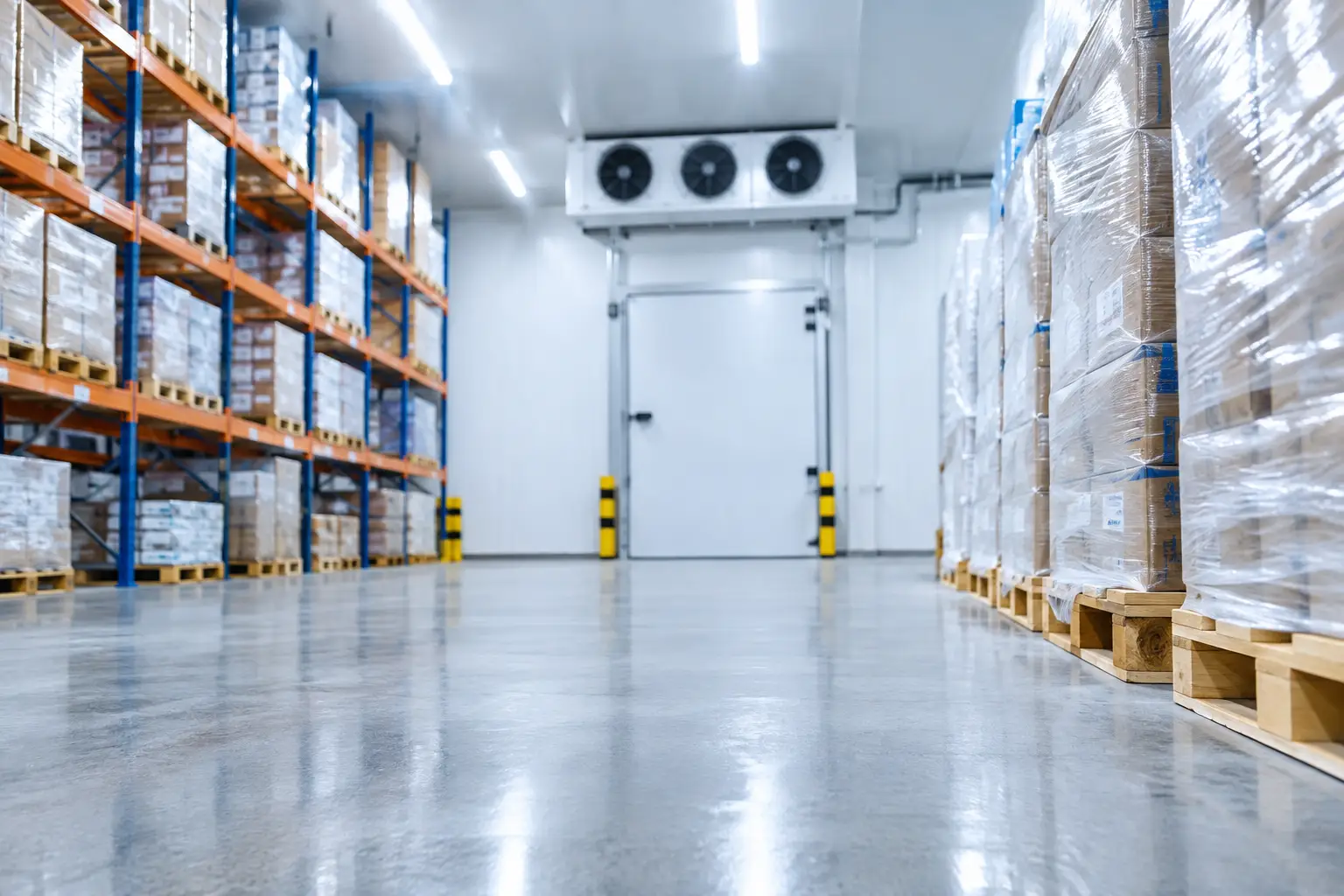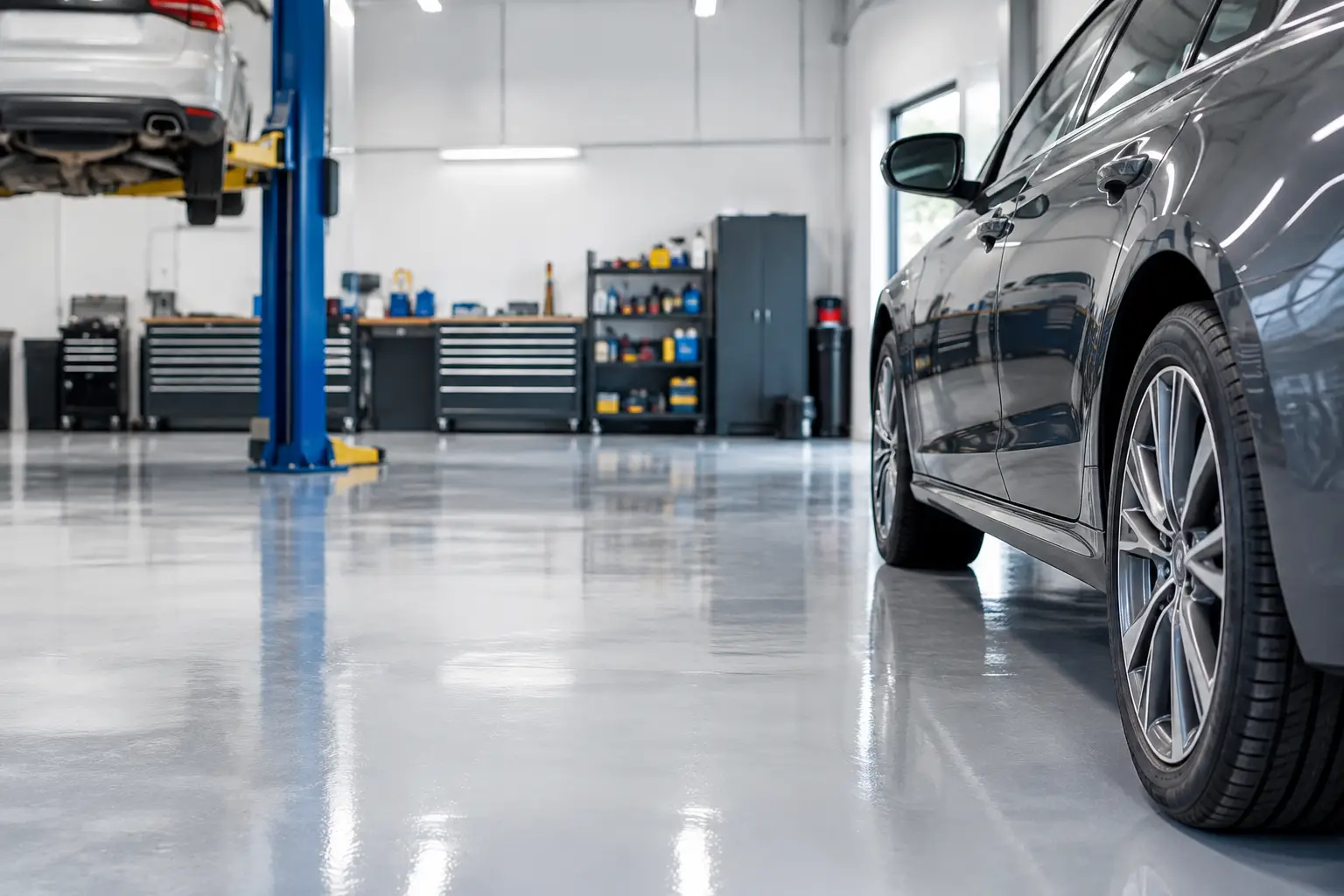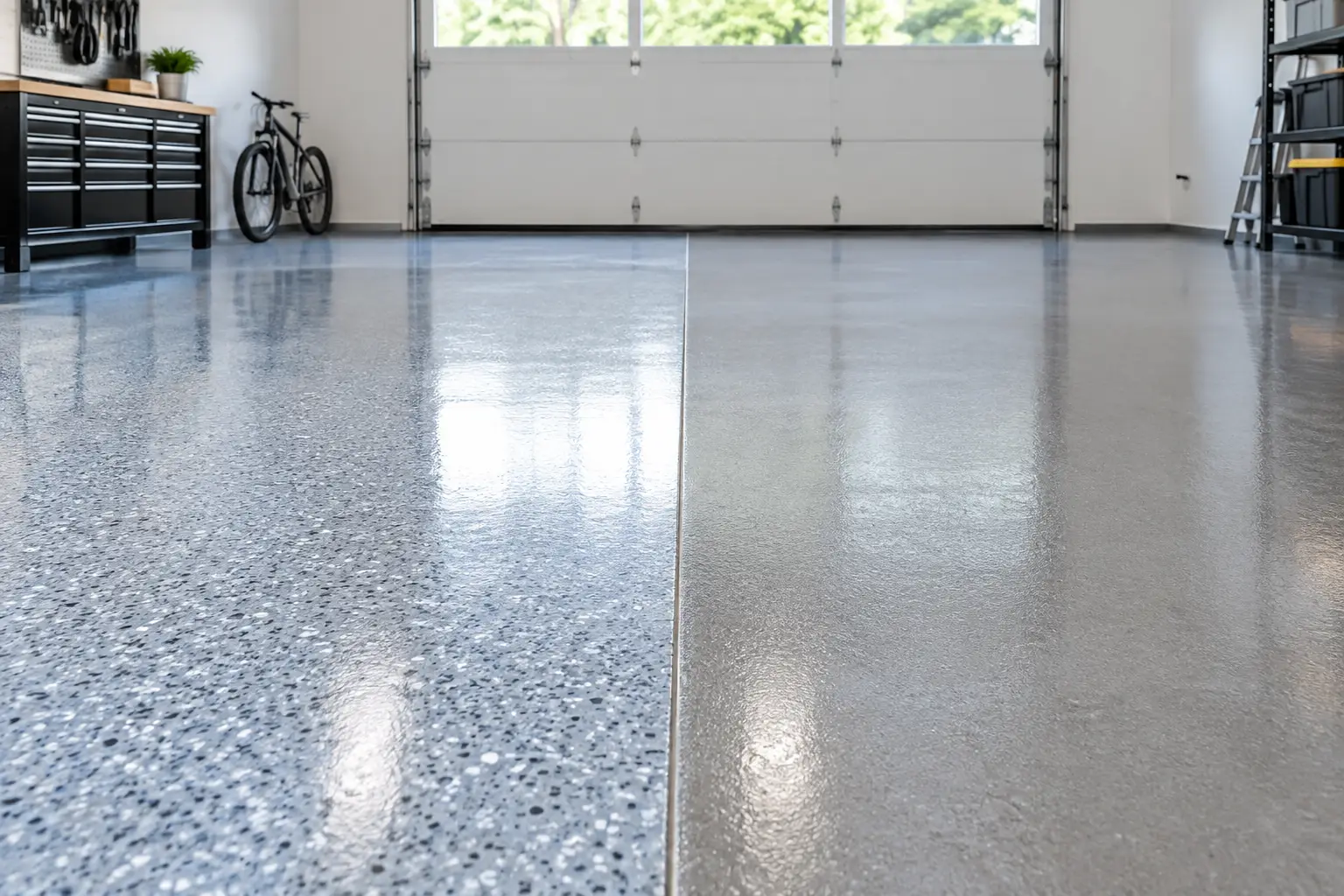
A garage floor has to handle more than parked cars. It may see hot tires, dropped tools, oil drips, moisture from wet vehicles, sunlight at the doorway, and regular foot traffic. When comparing polyaspartic versus epoxy garage floors, the better option is not automatically the faster-curing or more expensive one. It is the system that suits the concrete condition, garage use, installation window, and finish you expect to maintain.
Both coatings can create a clean, durable, easy-to-maintain floor. Both can be finished in solid color or decorative flakes, with a clear protective topcoat and a slip-resistant texture. The meaningful differences appear in cure speed, UV performance, application tolerance, system build, and project cost.
Polyaspartic versus epoxy garage floors: the core difference
Epoxy is a thermosetting resin coating that has been widely used in garages, workshops, warehouses, and industrial spaces for decades. A properly specified epoxy system bonds strongly to prepared concrete and provides excellent resistance to many oils, fuels, chemicals, abrasion, and impacts. It is particularly useful where a thicker build or a moisture-tolerant primer is required.
Polyaspartic is a type of aliphatic polyurea coating. It is known for rapid curing and strong UV stability. In practical terms, a polyaspartic system can often be installed and returned to service more quickly than a conventional epoxy system, while retaining its color better where sunlight reaches the floor.
That does not mean polyaspartic replaces epoxy in every garage. Many high-performing floors use both: epoxy or another suitable primer/base coat to establish adhesion and build, followed by a polyaspartic clear coat for color retention, wear resistance, and faster return to use. The right answer often lies in the complete coating system, not the name on a single product can.
Cure time and disruption
For homeowners who need the garage back quickly, cure time is usually the first noticeable difference. Conventional epoxy generally needs more time between coats and before vehicles can return to the floor. Exact timing varies with product selection, temperature, humidity, slab conditions, and coating thickness, but the project may extend across several days.
Polyaspartic coatings can cure much faster. Some systems allow a garage to be coated in a day and returned to light use soon afterward, with vehicle traffic possible within a shorter timeframe than epoxy. This is valuable when the garage is the only parking space, when a builder is working to a tight handover date, or when downtime needs to be minimized.
Fast cure has a trade-off. Polyaspartic materials have a shorter working time, so the installation crew must control mixing, cutting-in, broadcasting flakes, and back-rolling with precision. Warm conditions can shorten that working window further. Rapid application is not a shortcut around workmanship. It demands disciplined surface preparation, properly sized crews, and a clear installation sequence.
Sunlight, yellowing, and appearance
A garage with a closed door most of the day has limited UV exposure. In that setting, epoxy can be an excellent-looking and durable finish. However, standard epoxy can amber or yellow when exposed to direct sunlight over time. This is most visible near open garage doors, windows, and entrances with strong afternoon sun.
Polyaspartic coatings are more UV stable. They are generally the stronger choice for clear topcoats over decorative flakes, light-colored floors, or garages where sunlight regularly falls across the slab. A UV-stable topcoat helps preserve the intended color and keeps a flake finish looking consistent from the back wall to the doorway.
Appearance also depends on the chosen texture. Full-flake systems are forgiving of dust, tire marks, and minor day-to-day wear, while solid-color systems create a cleaner, more uniform look but may show dirt and scuffs more readily. Metallic finishes can be visually striking, though they are usually better suited to lower-traffic feature spaces than hard-working garages.
Durability under vehicles, tools, and spills
Both epoxy and polyaspartic floors can perform well in residential garages when the coating is matched to the use. A quality epoxy system offers dependable mechanical strength and chemical resistance, making it a sound choice for garages that double as workshops or storage areas. It can also be built to a thicker film, which can help create a more substantial protective layer over a properly prepared slab.
Polyaspartic coatings provide strong abrasion resistance and flexibility, which can be beneficial where the slab experiences small movements or temperature changes. They also hold up well against routine garage contaminants when spills are cleaned in a timely manner.
Neither coating should be treated as indestructible. Brake fluid, battery acid, solvents, and harsh cleaners should not be left to sit. Sharp metal edges can gouge a coating, and repeated dragging of heavy equipment can wear any finish. A professional system improves protection and cleanability, but sensible use and basic maintenance still matter.
Hot-tire pickup is another common concern. This occurs when a coating softens or loses adhesion under warm tires. It is often blamed on the coating type, but poor concrete preparation, contamination, insufficient cure, or an incorrectly selected system are frequently the underlying causes. Grinding to a suitable concrete profile and repairing weak areas before coating are essential for either material.
Surface preparation decides the outcome
The concrete beneath the coating is the foundation of the entire job. A garage slab may look sound while carrying invisible contaminants from oils, sealers, curing compounds, old paint, or moisture. If these issues are not identified and addressed, even premium materials can fail prematurely.
A proper assessment should consider concrete hardness, laitance, cracks, previous coatings, moisture vapor, oil contamination, and areas of delamination. Mechanical diamond grinding is usually the preferred preparation method because it removes weak surface material and creates a profile that supports adhesion. Cracks and joints should be evaluated individually rather than simply covered, since some movement is expected in concrete.
Moisture deserves particular attention. Moisture vapor moving through a slab can cause blistering, peeling, or coating failure. An appropriate moisture-mitigation primer may be required where testing or site conditions indicate elevated vapor transmission. Polyaspartic’s fast cure does not eliminate this risk, and epoxy is not automatically the answer without a suitable moisture-control system.
Cost: compare the installed system, not the square-foot price
Polyaspartic flooring often carries a higher upfront cost than a basic epoxy coating, partly because of material cost and the speed and skill required during installation. However, it may reduce disruption and offer stronger color stability in sun-exposed areas. For some homeowners, those benefits justify the investment.
Epoxy can provide excellent value, especially in enclosed garages with limited UV exposure or where a thicker base system is needed. But a low-priced epoxy quote may not include the preparation, crack repair, primer, flake broadcast, clear coat, or moisture management required for lasting performance.
When reviewing proposals, ask what is included from start to finish. The critical details are the preparation method, number of coats, primer type, coating thickness, decorative finish, slip-resistance approach, curing schedule, and treatment of cracks and joints. A transparent scope is more useful than a single material label.
Which garage floor system is right for you?
Choose a predominantly polyaspartic system when rapid return to service and UV stability are priorities, particularly for a garage with frequent sunlight exposure. It is also a practical choice for decorative flake finishes where a clear coat needs to retain its appearance over time.
Choose an epoxy-based system when the slab needs a carefully built base layer, chemical resistance is a central requirement, or the garage is enclosed and cure time is less critical. A professional epoxy system can be a long-lasting solution for vehicle storage, workshops, and utility spaces.
For many properties, the strongest specification is a hybrid approach: prepared concrete, a compatible epoxy or moisture-control primer where required, a full decorative flake broadcast, and a UV-stable polyaspartic topcoat. This combines the strengths of each material while addressing the actual condition of the slab.
The best garage floor is not chosen from a color card alone. Start with an inspection of the concrete, be clear about how the space is used, and select a system with preparation and cure time equal to the demands placed on it. That is how a garage floor stays clean, safe, and dependable long after the installation day.