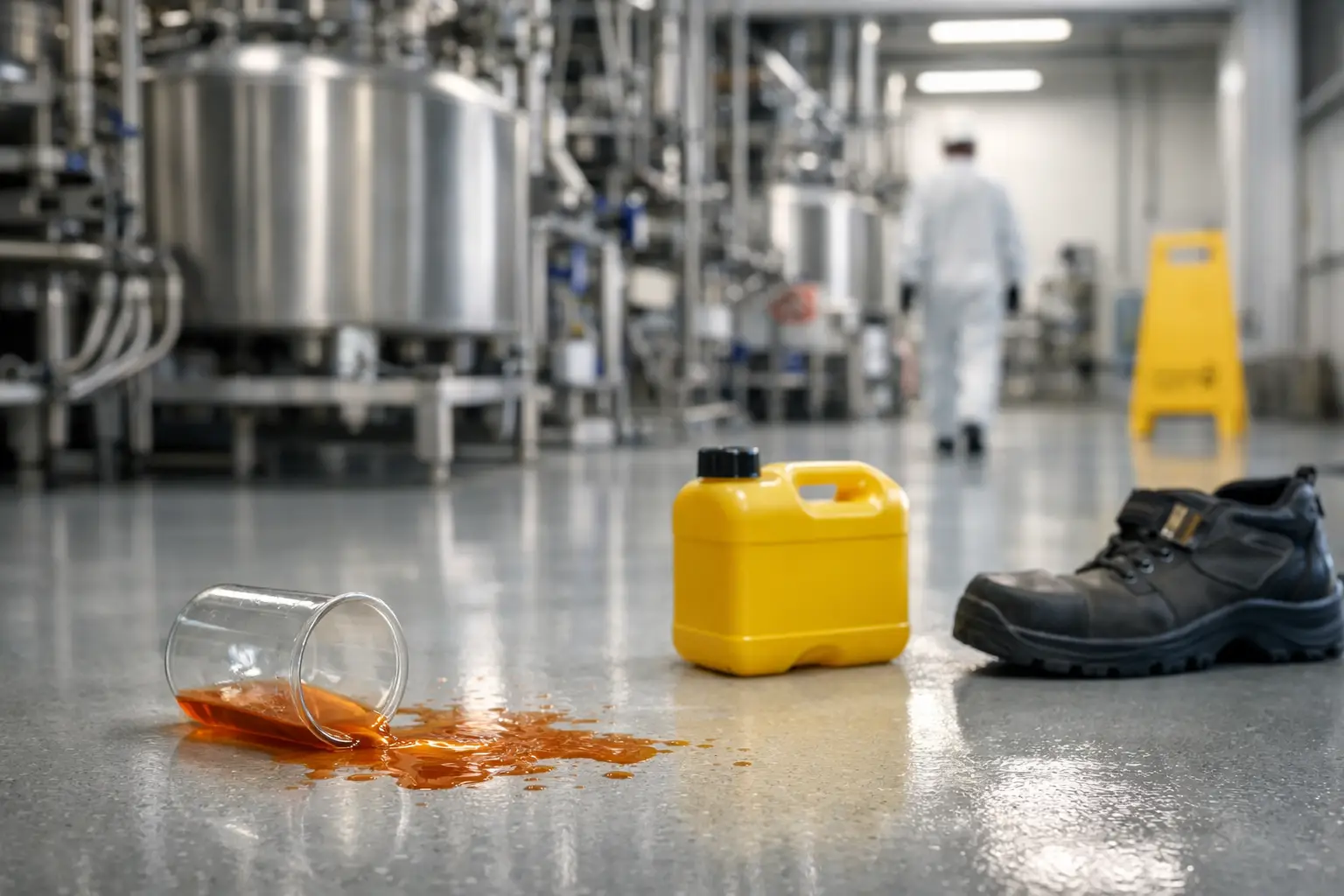
A leaking drum, washdown water left standing overnight, or a dropped container of solvent can expose weaknesses in a floor quickly. This chemical resistant flooring guide is designed to help facility managers, builders, workshop owners, and commercial operators choose a resin system that protects the concrete beneath it and supports safer day-to-day operations.
Chemical resistance is not a single product feature. It is the result of selecting the right coating chemistry, building the system to the required thickness, preparing the concrete correctly, and allowing adequate cure time before the floor returns to service. A floor that performs well under oil may not be the right choice for hot washdowns, acidic foods, battery acid, or aggressive cleaning chemicals.
Start With the Chemicals, Not the Color
The most effective flooring specification begins with the materials that may contact the surface. That includes obvious chemicals such as fuels, oils, acids, alkalis, solvents, detergents, disinfectants, and coolants. It should also account for how often exposure occurs, whether spills are cleaned promptly, and whether the substance is diluted or concentrated.
A workshop may need protection from hydraulic oil, brake fluid, fuel, and occasional solvent spills. A commercial kitchen needs a different response: regular exposure to fats, food acids, cleaning chemicals, moisture, and thermal movement from hot equipment and washdowns. In a warehouse, the primary issue may be forklift traffic and battery charging areas rather than broad chemical exposure.
Ask suppliers or site teams for safety data sheets where possible. These identify the products in use and their concentration. This practical step prevents a coating being chosen on general claims of chemical resistance when the site requires proven compatibility with a specific substance.
Exposure Conditions Change the Specification
A brief, cleaned spill is different from chemical immersion. So is room-temperature exposure compared with exposure at elevated temperatures. Heat can accelerate chemical attack and place additional stress on the bond between coating and concrete.
The method of cleaning matters as well. High-pressure washdowns, steam, strong degreasers, and frequent sanitizing cycles can be more demanding than the product stored on the floor. The complete operating environment should guide the system, not a single item on a chemical list.
Choosing a Chemical Resistant Flooring System
Epoxy, polyurethane cement, and MMA resin systems can all provide excellent performance when specified for the right conditions. The best choice depends on the combination of chemicals, temperature, traffic, downtime allowance, and hygiene requirements.
Epoxy Flooring for General Chemical Protection
Epoxy flooring is a reliable choice for many warehouses, workshops, garages, storage facilities, showrooms, and light industrial spaces. Properly installed epoxy creates a dense, easy-to-clean surface that resists many oils, fuels, greases, mild acids, and cleaning products. It can also incorporate line marking, non-slip aggregates, and a range of finish options.
Its limitations need to be considered honestly. Standard epoxy is not always the best option for repeated thermal shock, consistently wet production areas, or exposure to highly aggressive chemicals. It may also yellow under sustained UV exposure, although suitable topcoats can improve color stability in sun-exposed areas.
For a garage or workshop, an epoxy system often provides a strong balance of chemical resistance, appearance, and cost. In a production environment, the required build may be thicker and include coving, slip-resistant texture, or reinforced areas around equipment.
Polyurethane Cement for Heat, Moisture, and Heavy Use
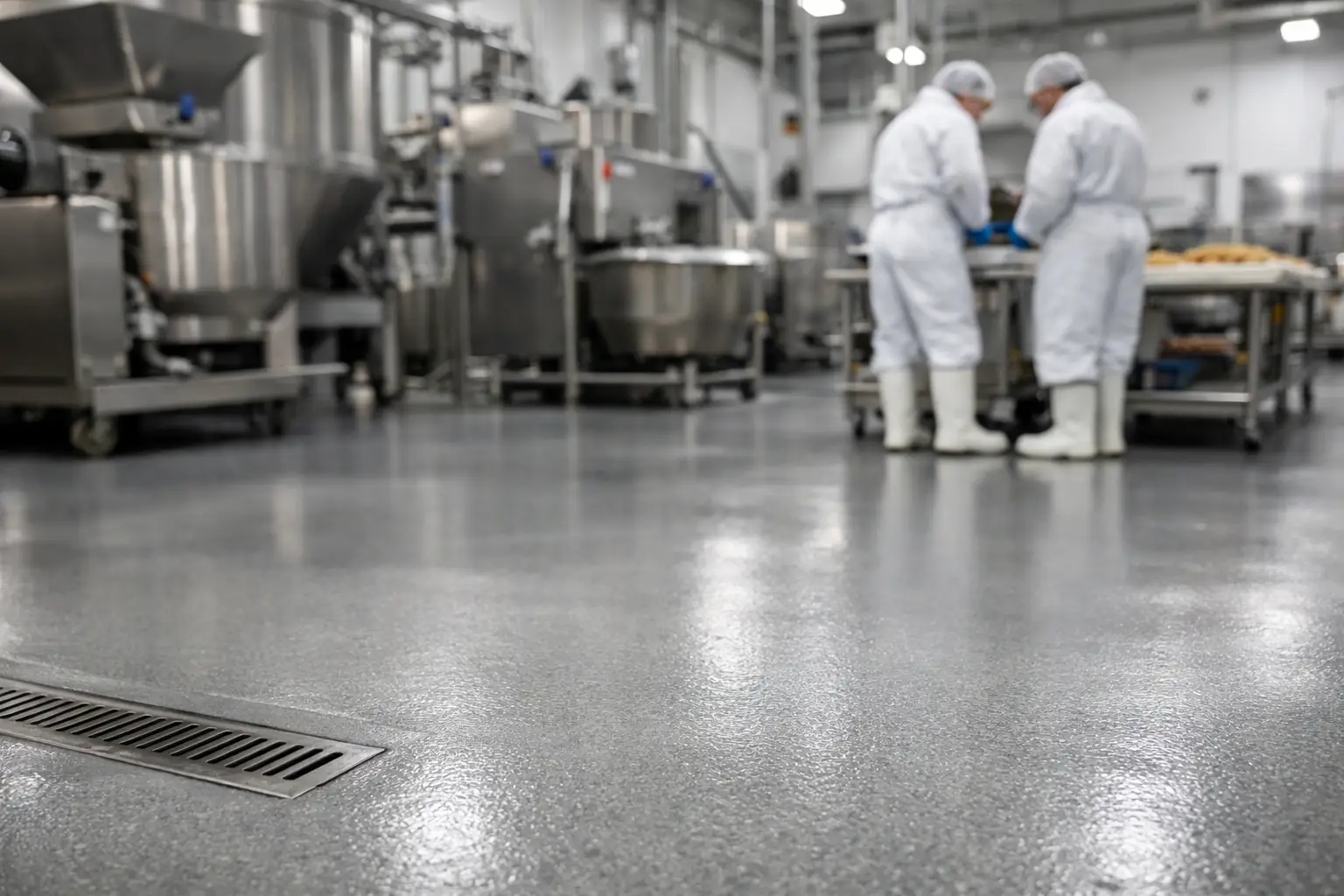
Polyurethane cement is often specified where the floor experiences demanding washdowns, temperature changes, moisture, and hard industrial use. It is particularly well suited to commercial kitchens, food processing areas, breweries, cold rooms, loading zones, and facilities where hygiene and durability must work together.
This system has a high tolerance for thermal movement compared with many conventional coatings. That makes it a practical option near ovens, dishwashing areas, hot-water cleaning zones, and areas subject to cold storage conditions. Its chemical resistance is also well suited to many food acids, oils, fats, alkalis, and cleaning regimes.
The trade-off is visual finish and budget. Polyurethane cement is designed first for performance, and its appearance is generally more functional than decorative. For the right environment, that is a sensible trade: fewer maintenance interruptions and a floor that remains dependable under difficult conditions.
MMA Flooring When Downtime Is the Main Constraint
MMA, or methyl methacrylate, flooring is valued for rapid curing. It can be a strong solution where a business cannot leave an area closed for an extended period, such as retail back-of-house spaces, commercial kitchens, healthcare support areas, or operational facilities with limited shutdown windows.
MMA systems can be formulated for chemical resistance, slip resistance, and fast return to service. They do require experienced installation because material handling, odor management, substrate preparation, and cure conditions must be controlled carefully. Fast curing does not remove the need for disciplined preparation.
The Concrete Determines Whether the Coating Lasts
A high-performance resin floor cannot compensate for a weak, contaminated, or moisture-affected substrate. Surface preparation is the foundation of chemical resistant flooring. If oils remain in the concrete, old coatings are poorly bonded, or cracks are left untreated, the new system may fail long before its expected service life.
Professional preparation typically includes mechanical grinding or shot blasting to create the required surface profile, thorough cleaning, localized repairs, crack treatment, and priming. The concrete should also be assessed for moisture conditions. Excess moisture vapor can affect adhesion and lead to blistering or delamination if it is not managed with the correct primer or moisture-mitigation approach.
Floor falls and drainage deserve attention before coating begins. A chemical-resistant surface helps contain spills, but standing water and chemical residue create slip hazards and make cleaning harder. In wet processing areas, correct slope, drain detailing, and seamless wall-to-floor coving can improve hygiene and reduce areas where contamination collects.
Slip Resistance Must Work With Cleanability
A glossy floor can look clean while offering limited traction when wet. Conversely, an overly aggressive texture can trap dirt, make mopping difficult, and increase maintenance time. The right profile depends on the footwear, contaminants, cleaning methods, and level of pedestrian or wheeled traffic in the area.
For example, a dry warehouse aisle may need only modest slip resistance, while a commercial kitchen washdown zone may need a more textured surface. Forklift routes require a texture that supports traction without causing excessive wear on tires or creating a rough ride. The floor should be assessed as a working surface, not selected from a sample board alone.
Detail the Vulnerable Areas
Most failures begin at transitions, joints, drains, wall edges, and heavily used loading points rather than in the middle of an open floor. These details need to be included in the project scope.
Coving can create a sealed, cleanable transition between floor and wall in hygiene-sensitive spaces. Joint treatment may be required where movement is expected. Around drains, equipment bases, chemical storage areas, and battery charging stations, the system may need added thickness, reinforced detailing, or localized protection.
Chemical storage rooms also benefit from a containment-minded approach. The floor should support the site’s spill response procedures, with compatible coatings extending into areas where leaks or transfer spills are most likely. A coating is one layer of protection, not a replacement for safe storage, ventilation, drainage design, or spill-control practices.
Plan Installation Around Operations
A reliable installation starts with a clear site inspection and proposal. The contractor should understand access restrictions, operating hours, odor sensitivity, curing time, traffic loads, and the sequence in which areas can be taken offline. This is especially important in active kitchens, warehouses, workshops, and manufacturing facilities.
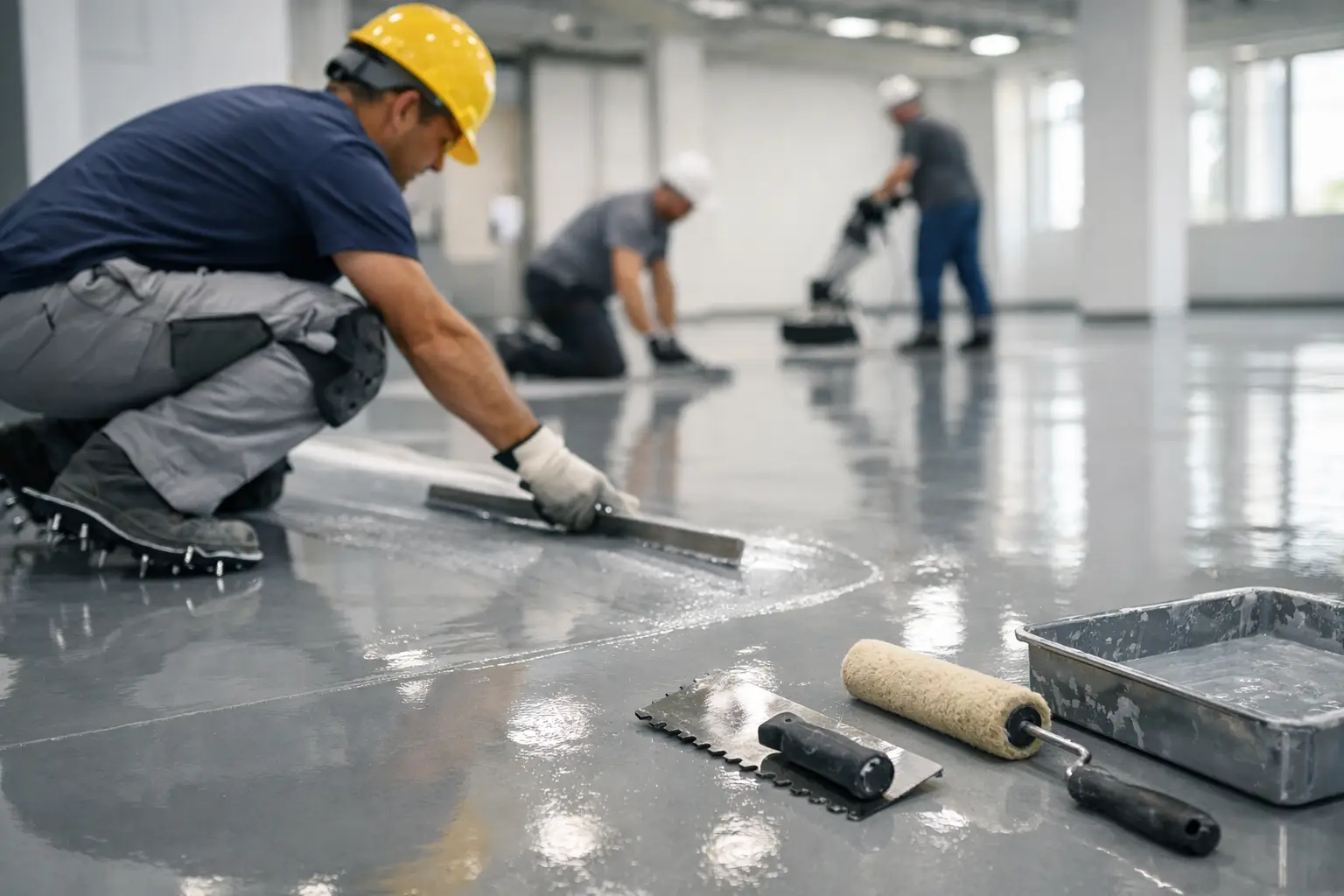
The installation process generally moves through inspection, preparation, repairs, priming, resin application, curing, and final inspection. Each stage affects the final performance. Rushing preparation to shorten a shutdown can create a much more expensive interruption later.
Sydney Epoxy Flooring works with clients to match material selection and installation scheduling to the realities of the site. That may mean staging work in sections, installing during planned closures, or selecting a rapid-cure MMA system when operational downtime is limited.
Maintain the Floor Without Damaging It
Chemical-resistant resin flooring is low maintenance, not no maintenance. Prompt spill cleanup remains essential, especially with concentrated acids, solvents, and strong alkalis. Use cleaning products that are compatible with the installed system, avoid abrasive methods that unnecessarily wear the finish, and keep drains clear so washdown water does not remain on the surface.
Regular inspections should focus on joints, drains, edges, high-traffic routes, and areas beneath chemical dispensing equipment. Small chips or damaged sections are easier to repair before moisture or chemicals reach the concrete below.
The right floor is one that accounts for what happens on site after installation: the spills, the cleaning cycles, the traffic, the heat, and the pressure to keep work moving. When those conditions guide the specification from the start, chemical resistance becomes a practical part of a safer, longer-lasting facility.