Warehouse floors face brutal conditions daily:
- Heavy machinery rolling across them
- Forklifts, pallet jacks, and industrial equipment
- Constant foot traffic from workers
- Chemical spills and exposure
- Impact damage from dropping loads
- Dust and debris accumulation
- Extreme temperature variations
Ordinary concrete floors deteriorate quickly under these stresses. Cracks develop, dust spreads everywhere, and safety hazards multiply. The cost of replacing a damaged warehouse floor—plus operational downtime—can devastate your business.
The solution? Professional warehouse epoxy flooring.
Epoxy transforms ordinary concrete into an industrial-grade surface that withstands extreme conditions while improving worker safety, reducing maintenance costs, and enhancing operational efficiency.
In this comprehensive guide, we’ll explain why warehouse epoxy flooring is essential, how it works, and why thousands of Sydney businesses trust us with their warehouse floors.
Why Warehouse Floors Are Critical to Operations
Warehouse Floor Challenges
Heavy Machinery Impact Warehouses aren’t static spaces. Forklifts, pallet jacks, reach trucks, and other equipment move constantly, creating:
- Stress fractures in concrete
- Spalling (surface breaking away)
- Uneven surfaces that damage equipment
- Potential safety hazards from damaged flooring
Chemical Exposure: Many warehouses store or use chemicals that attack ordinary concrete:
- Oils and lubricants from machinery
- Cleaning and sanitizing chemicals
- Fuel spills
- Manufacturing byproducts
- Fertilizers and agricultural products
Without protection, these chemicals dissolve concrete, creating pits and weak spots.
Constant Movement Warehouses operate continuously with:
- Heavy loads being moved
- Workers walking constantly
- Equipment in motion
- Stress on the floor surface
This relentless activity wears down unprotected concrete quickly.
Dust and Contamination Deteriorating concrete creates massive dust issues:
- Dust clouds affect air quality
- Contaminated products from dust settling
- Equipment malfunction from dust infiltration
- Worker respiratory issues
- Increased cleaning and maintenance burden
Safety Concerns: Poor warehouse floors create safety hazards:
- Uneven surfaces cause trips and falls
- Cracks trap debris and water
- Damaged areas become slippery when wet
- Visibility issues in dimly lit areas
- Equipment instability on uneven surfaces
Operational Inefficiency Deteriorating floors reduce efficiency:
- Equipment damage from uneven surfaces
- Slower forklift operation on damaged floors
- Increased maintenance requirements
- Unexpected downtime for repairs
- Lost productivity during floor failures
The Costs of Ignoring Warehouse Floor Damage
Short-Term Issues (First Year)
Productivity Loss:
- Equipment damage and breakdowns
- Worker injuries from unsafe surfaces
- Time wasted managing floor problems
- Operational disruptions
Maintenance Costs:
- Repeated concrete patching
- Dust control measures
- Cleaning and sweeping
- Temporary repairs that fail
Safety & Liability:
- Worker injuries from falls
- Equipment damage claims
- Potential OSHA violations
- Liability insurance implications
Medium-Term Problems (1–3 Years)
Structural Deterioration:
- Concrete continues degrading
- Cracks grow larger
- Spalling spreads across the floor
- Entire sections may need rebuilding
Operational Challenges:
- More frequent downtime for repairs
- Reduced equipment efficiency
- Safety concerns escalate
- Productivity continues declining
Environmental Issues:
- Dust contamination spreads
- Chemical leaks into soil
- Environmental compliance issues
- Potential cleanup liability
Long-Term Consequences (3+ Years)
Complete Floor Failure:
- Concrete breakdown accelerates
- Sections become unusable
- Full replacement becomes necessary
- Major operational disruption needed
Business Impact:
- Potential loss of clients due to downtime
- Difficulty securing insurance
- Property value decline
- Possible facility closure during repairs
Why Warehouse Epoxy Flooring is the Smart Solution
Unmatched Durability
Epoxy creates an ultra-hard protective surface that:
- Resists heavy machinery impact
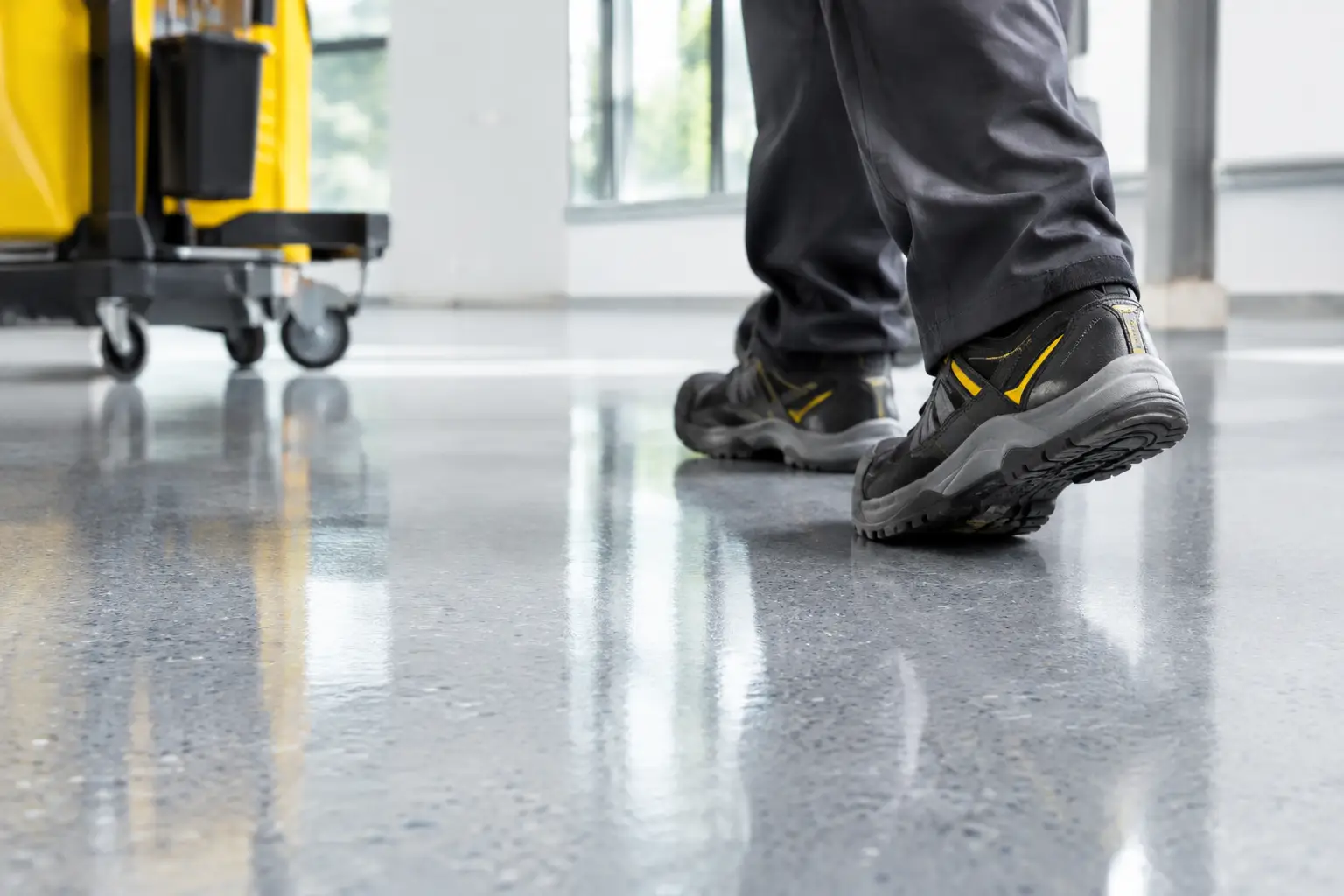
- Stands up to constant forklift traffic
- Prevents spalling and concrete breakdown
- Maintains structural integrity for 10+ years
- Handles extreme weight loads
Unlike ordinary concrete, epoxy doesn’t deteriorate or create problems—it strengthens the floor.
Chemical Resistance
Industrial epoxy resists:
- Oils and hydraulic fluids
- Industrial solvents
- Cleaning chemicals
- Fuel and gasoline
- Acids and alkalis
- Salt and road chemicals
- Fertilizers and agricultural products
This protection prevents chemical damage that would otherwise eat away at concrete and create safety hazards.
Eliminates Dust Issues
Sealed epoxy surfaces:
- Create seamless, non-porous coating
- Eliminate concrete dust completely
- Prevent dirt and debris from settling into the floor
- Improve air quality dramatically
- Reduce cleaning requirements
Workers breathe better, and products stay cleaner.
Enhanced Worker Safety
Epoxy improves safety through:
- Non-slip surfaces even when wet
- Smooth, even surface prevents trips
- Better visibility (especially with light-reflective finishes)
- Reduced liability from floor-related accidents
- Improved equipment stability
Safer workers mean fewer injuries, lower insurance costs, and better productivity.
Improved Efficiency
Optimized warehouse floors:
- Allow faster, smoother equipment operation
- Reduce equipment wear and tear
- Minimize maintenance disruptions
- Improve product handling speed
- Enable better inventory organization with line marking
Even small efficiency gains multiply across a warehouse operation.
Cost-Effective Long-Term Investment
Yes, epoxy costs more upfront, but consider:
Durability: 10+ year lifespan vs. constant patching Maintenance: Minimal upkeep vs. frequent repairs Downtime: One-time installation vs. recurring disruptions Productivity: Improved efficiency gains compound Safety: Reduced injury costs and insurance premiums Equipment: Extended equipment lifespan from better surfaces
The break-even point comes quickly, with savings continuing for years.
Professional Appearance
Epoxy finishes:
- Look professional and well-maintained
- Demonstrate attention to detail
- Impress clients visiting your facility
- Support a stronger business reputation
- Create better employee morale
A well-maintained facility reflects positively on your entire business.
Types of Warehouse Epoxy Flooring Systems
Industrial-Grade Epoxy Coating
Characteristics:
- Heavy-duty 3–5mm thick coating
- Chemical-resistant formulation
- Non-slip textured surface
- Seamless application
Best For:
- Manufacturing facilities
- Heavy machinery operations
- Chemical storage warehouses
- High-traffic operations
Benefits:
- Maximum durability
- Superior chemical resistance
- Excellent non-slip properties
- Long-lasting protection
Epoxy with Anti-Slip Texture
Characteristics:
- Standard epoxy enhanced with slip-resistant additives
- Provides safety on wet or oily surfaces
- Available in various texture levels
- Professional appearance
Best For:
- Food processing warehouses
- Cold storage facilities
- Areas prone to spills
- High-safety-requirement zones
Benefits:
- Improved worker safety
- Maintains appearance
- Easy to clean
- Prevents accidents
Decorative Epoxy Flooring
Characteristics:
- Epoxy with aesthetic finishes
- Available in multiple colors
- Can include metallic or flake effects
- Custom designs possible
Best For:
- Showrooms and retail spaces
- Offices in warehouse facilities
- Customer-facing areas
- Professional reception areas
Benefits:
- Professional appearance
- Branding support (custom colors)
- Attractive finish
- Full functionality maintained
Epoxy with Line Marking
Characteristics:
- Industrial epoxy base
- Line markings for traffic flow
- Zone identification
- Equipment positioning guides
Best For:
- Warehouses needing organization
- Distribution centers
- Manufacturing facilities
- Large storage warehouses
Benefits:
- Improves workflow efficiency
- Enhances safety
- Organizes space effectively
- Guides equipment traffic
The Installation Process for Warehouse Epoxy
Phase 1: Assessment & Planning
Site Evaluation:
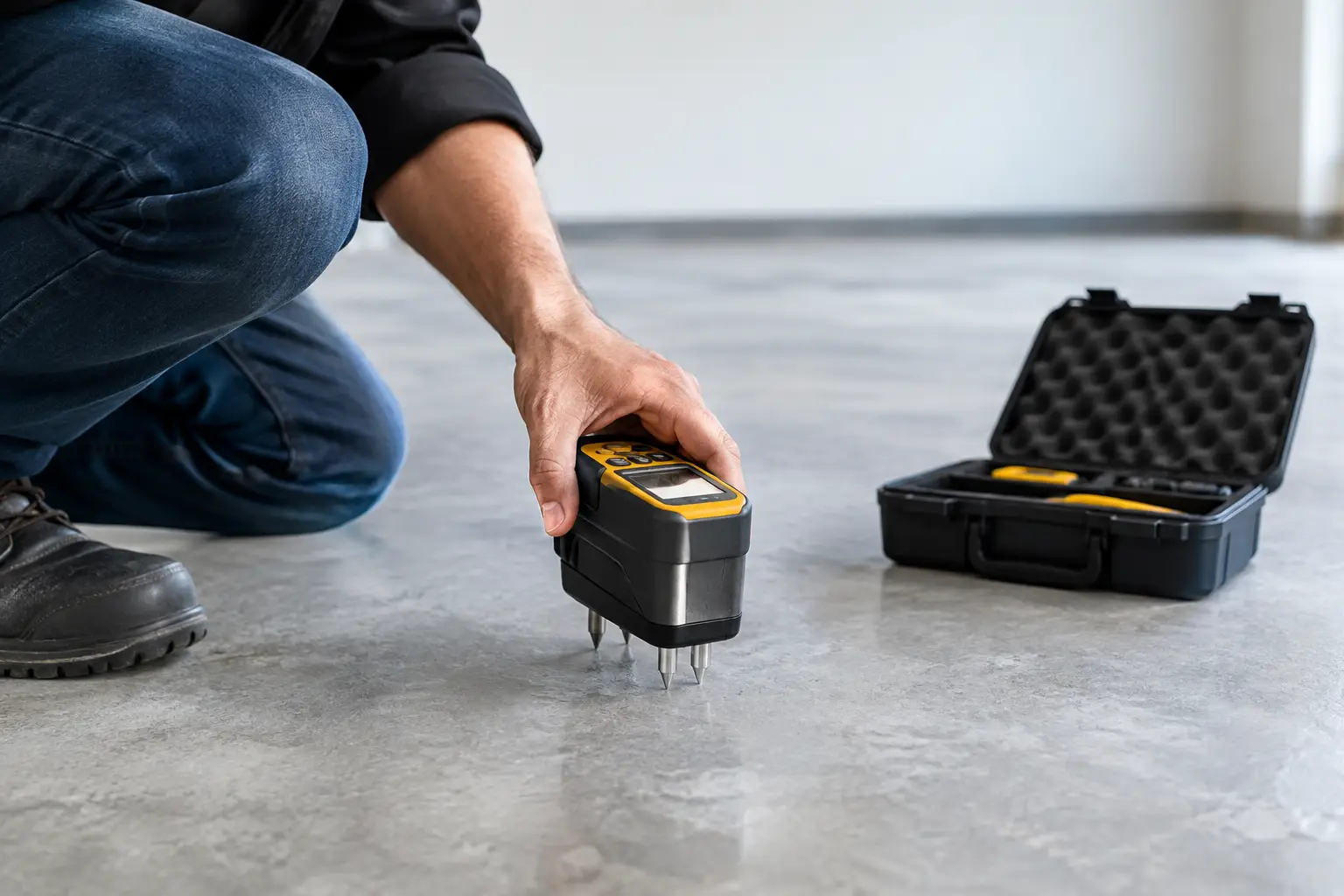
- Inspect floor condition and substrate
- Identify areas requiring special attention
- Note equipment and logistics constraints
- Plan installation timeline around operations
- Assess structural integrity
Planning Considerations:
- Warehouse size and layout
- Equipment to work around
- Operational constraints
- Access routes
- Ventilation requirements
Phase 2: Surface Preparation (Critical Step)
Surface prep determines success. Our professionals:
- Remove old coatings and sealants
- Grind the concrete surface smooth
- Repair cracks and fill pits
- Remove contamination
- Prime the substrate for adhesion
Why This Matters: Proper preparation ensures epoxy bonds perfectly and lasts for its full 10+ year lifespan. Skipping or rushing this step leads to premature failure.
Phase 3: Application
Epoxy Application:
- Mix epoxy with precision ratios
- Apply in controlled conditions
- Use professional equipment for even coverage
- Maintain proper application thickness
- Allow optimal curing time
Multiple Coats:
- Base coat: Provides adhesion
- Intermediate coat: Builds thickness and properties
- Top coat: Delivers final finish and protection
- Specialized coatings: Add slip resistance as needed
Phase 4: Final Finishing
Specialized Additions:
- Non-slip texturing if required
- Line marking application
- Color coding for zones
- Equipment guides
Quality Inspection:
- Check coverage uniformity
- Test non-slip properties
- Verify adhesion quality
- Ensure proper curing
Phase 5: Curing & Reopening
Curing Timeline:
- Initial set: 24–48 hours
- Light foot traffic: 48–72 hours
- Full operations: 5–7 days
Managing Reopening:
- Gradual resumption of activities
- Monitoring for any issues
- Customer support for questions
- Final quality confirmation
Warehouse Flooring Challenges We Solve
Challenge 1: Heavy Equipment Damage
Problem: Forklifts and machinery damage ordinary concrete.
Solution: Epoxy’s extreme hardness resists impact and prevents damage. Your floors stay intact under heavy use.
Challenge 2: Chemical Spills
Problem: Chemicals destroy unprotected concrete.
Solution: Chemical-resistant epoxy withstands exposure to oils, solvents, and industrial products. Spills clean up easily without damaging the floor.
Challenge 3: Dust Contamination
Problem: Deteriorating concrete creates excessive dust that contaminates products and air.
Solution: Sealed epoxy eliminates dust completely. Your facility stays cleaner, and product quality improves.
Challenge 4: Slippery Surfaces
Problem: Spilled liquids create dangerous slip hazards.
Solution: Non-slip epoxy finishes maintain safety even when wet. Worker injuries decrease, and liability is reduced.
Challenge 5: Uneven Flooring
Problem: Cracks and pits create uneven surfaces, affecting equipment operation and safety.
Solution: Even an epoxy surface provides smooth operation for all equipment. Forklifts run more efficiently, and products are handled more safely.
Challenge 6: Maintenance Burden
Problem: Damaged concrete requires constant patching and cleaning.
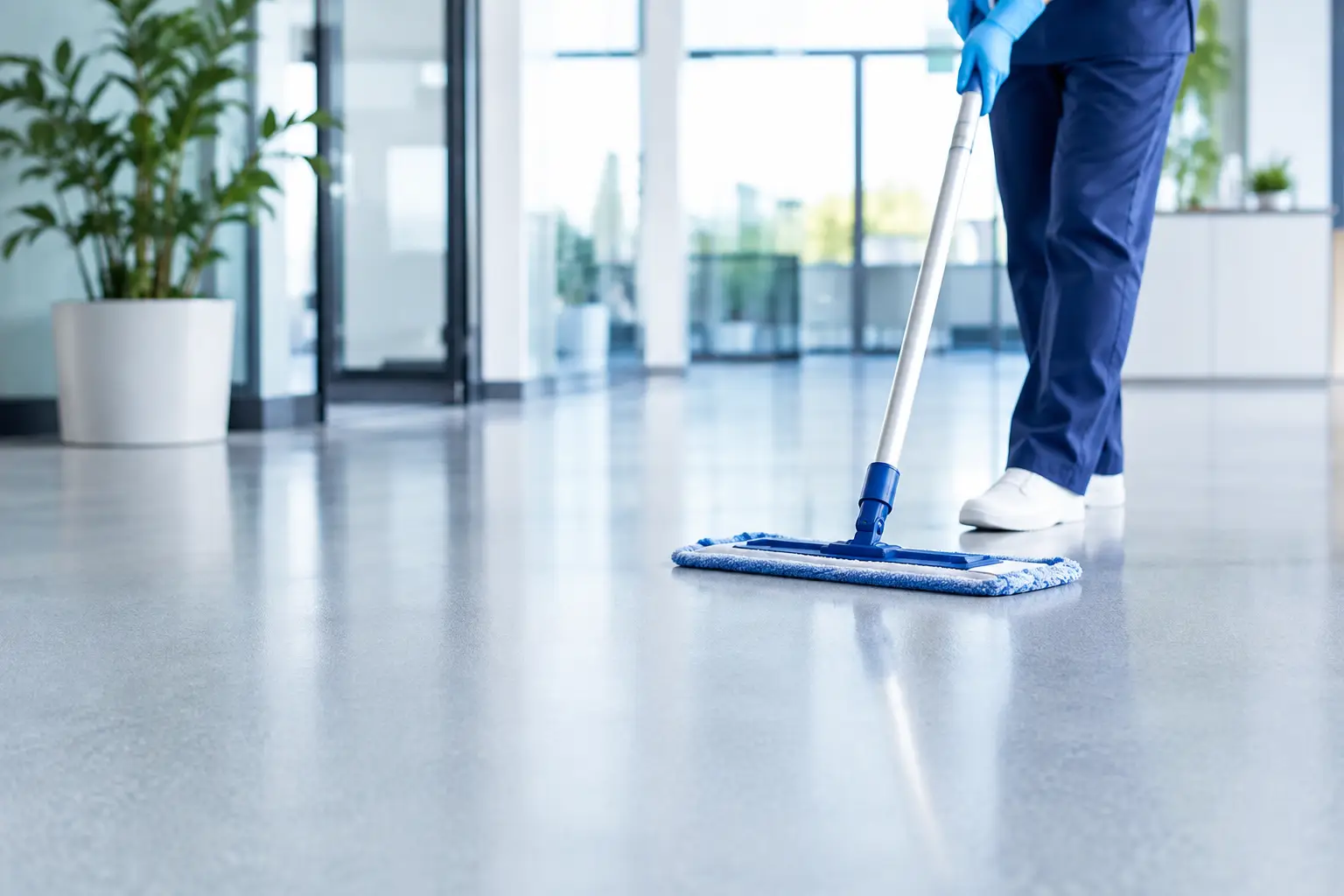
Solution: Epoxy reduces maintenance dramatically. Sealed surface requires only regular sweeping and occasional mopping.
Maintenance Requirements
Daily Maintenance
- Sweeping: Regular sweeping removes debris and prevents buildup
- Spill Cleanup: Wipe up spills immediately to prevent accumulation
- Visual Inspection: Check for any unusual wear or damage areas
Weekly Maintenance
- Mopping: Basic damp mopping keeps the surface clean
- Deeper Inspection: Check for developing issues
- Spot Cleaning: Address any problem areas identified
Monthly Maintenance
- Deep Cleaning: More thorough cleaning with appropriate products
- Equipment Inspection: Check for corrosion or damage on the floor
- Surface Assessment: Look for early signs of wear
Annual Professional Maintenance
- Professional Inspection: Annual check by epoxy experts
- Coating Assessment: Verify protective coating integrity
- Maintenance Plan: Plan any needed refresh or repairs
- Preventive Care: Address issues before they become problems
Warehouse Epoxy Flooring Costs in Sydney
Cost Factors
Warehouse epoxy costs depend on:
- Floor Size: Larger areas have lower per-square-meter costs
- Substrate Condition: Poor conditions require more preparation
- System Type: Basic vs. specialized systems affect cost
- Line Marking: Additional cost for traffic organization
- Timeline: Rush jobs may have premium costs
ROI Timeline: Most facilities see return on investment within 2–3 years through:
- Reduced repair costs
- Improved operational efficiency
- Decreased equipment maintenance
- Lower insurance premiums
- Extended equipment lifespan
Why Choose Sydney Epoxy Flooring for Your Warehouse
Our Experience & Expertise
12+ Years serving Sydney’s warehouse and industrial sectors
2,000+ Projects completed, including large-scale warehouses
120 Skilled Professionals trained in industrial flooring
700+ Happy Clients, including manufacturers and distributors
Our Guarantees
Proven Track Record with consistent, documented results
Industrial-Grade Materials engineered for heavy-duty use
Professional Installation meeting all Australian standards
Minimal Operational Disruption is scheduled around your operations
Transparent Pricing with detailed cost breakdowns
Comprehensive Warranty protecting your investment
What Sets Us Apart
- Warehouse Specialists: We understand industrial challenges
- Large-Scale Expertise: We’ve handled warehouses of all sizes
- Proven Systems: Tested and verified in harsh conditions
- 137+ Verified Google Reviews from satisfied warehouse operators
FAQ: Warehouse Epoxy Flooring
Q: How long does warehouse epoxy flooring last?
A: With proper maintenance, warehouse epoxy lasts 10+ years even under heavy industrial use.
Q: Can epoxy withstand heavy machinery?
A: Yes. Industrial epoxy is engineered for forklifts, pallet jacks, and other heavy equipment.
Q: Will we have to shut down operations during installation?
A: No. We schedule work around your operations to minimize disruption. Many facilities operate at partial capacity during installation.
Q: How quickly can we resume full operations? A: Typically 5–7 days. Light foot traffic can resume in 48–72 hours.
Q: Is epoxy flooring slippery?
A: No. We apply non-slip finishes specifically designed for wet and oily warehouse conditions.
Q: What if a chemical spill happens?
A: Epoxy resists most industrial chemicals. Spills clean up easily without damaging the floor.
Q: Can you work around existing equipment?
A: Absolutely. We assess your layout and work around fixed equipment, machinery, and operations.
Q: How much maintenance does epoxy require?
A: Minimal. Regular sweeping and occasional mopping keep it clean. We recommend annual professional inspections.
Q: Can you add line markings to an existing epoxy floor?
A: Yes. Line markings can be added to existing epoxy with minimal downtime.
Q: What’s the warranty on warehouse epoxy?
A: We provide comprehensive warranties. Details are included in your custom proposal.
Ready to Transform Your Warehouse Floor?
Your warehouse floor is one of your most important operational assets. A damaged floor creates:
- Safety hazards
- Operational inefficiencies
- Equipment damage
- Maintenance headaches
- Lost productivity
Professional warehouse epoxy flooring solves all these problems while paying for itself through improved efficiency and reduced costs.
Don’t let your floor slow you down. Contact Sydney Epoxy Flooring today.
Get Your Free Warehouse Assessment
Contact Sydney Epoxy Flooring Experts:
Phone: 1300 621 873
Email: info@sydepoxyflooring.com.au
Address: Unit 123/7 Hoyle Ave, Castle Hill, NSW 2154
Follow Us on Social Media:
Facebook
Instagram
YouTube
LinkedIn
Schedule your free facility assessment and custom proposal—no obligation.