A resin floor can look excellent on installation day and still fail early if the concrete beneath it was not properly assessed or prepared. That is why choosing epoxy contractors is not simply about comparing color samples or accepting the lowest quote. The contractor’s ability to diagnose the slab, specify the right system, and control every stage of application determines whether the finished floor remains safe, cleanable, and dependable under real use.
For a garage, warehouse, commercial kitchen, workshop, car park, or retail space, the right flooring system must respond to the conditions on site. Traffic levels, moisture, chemicals, cleaning routines, temperature changes, slip requirements, and downtime all matter. A capable contractor turns those details into a practical flooring scope rather than applying the same coating to every concrete surface.
What Epoxy Contractors Should Assess First
The floor audit is where a reliable project begins. Concrete is not a blank canvas. It may be contaminated with oil, covered by old coatings, weakened by surface dusting, cracked from movement, or holding moisture that can push a new coating away from the slab.
A site inspection should establish the concrete’s condition, its likely moisture profile, the need for repairs, and the environment the finished floor will face. In active facilities, the assessment should also consider access restrictions, staging, ventilation, curing time, and how to keep operations moving with minimal disruption.
The substrate matters more than the topcoat
Epoxy bonds mechanically to a correctly prepared concrete profile. If a contractor applies material over a glossy, contaminated, weak, or damp surface without solving the underlying issue, the coating may blister, peel, or delaminate. This is not usually a product problem. It is a preparation problem.
Professional preparation commonly includes diamond grinding, removal of failed coatings, thorough cleaning, crack repair, edge work, and priming where required. The correct method depends on the slab and the specified system. Shot blasting may suit large industrial areas, while controlled grinding can be better for occupied buildings, detailed spaces, or projects where dust management is especially important.
Cracks also require judgment. Some are stable and can be repaired as part of the preparation process. Others indicate movement that may transfer through a rigid coating over time. A straightforward repair may be appropriate in one setting, while a more flexible system or planned joint treatment is necessary in another.
Moisture is a specification issue, not an afterthought
Moisture vapor moving through concrete is one of the most common risks to resin flooring. Ground-level slabs, newly placed concrete, and areas exposed to water can all require additional testing and a moisture-mitigation approach. Skipping this step may create an attractive floor that fails after the contractor has left site.
A good proposal explains what has been allowed for, what assumptions have been made, and what happens if site conditions reveal extra work. Transparent scope details protect the client as well as the contractor.
Match the Flooring System to the Work
Epoxy is a versatile option, but it is not the only resin system and it is not automatically the best answer for every environment. The correct recommendation starts with the floor’s daily demands.
A decorative flake epoxy floor can be an excellent choice for residential garages, showrooms, and amenities areas because it combines a clean appearance with texture and easy maintenance. Solid-color epoxy may suit storage rooms, workshops, and commercial spaces that need a straightforward, durable finish. Metallic and marble-effect systems are more design-led choices for interiors where visual impact is part of the brief.
For hard-working industrial or food-related spaces, the system may need different performance characteristics. Polyurethane cement is well suited to areas exposed to thermal shock, frequent washdowns, heavy use, and aggressive cleaning regimes. Commercial kitchens, food-processing areas, and facilities with hot equipment often need this level of durability rather than a standard decorative epoxy.
MMA flooring can be a practical option where very rapid curing is essential. It can help reduce shutdown periods for retail, production, or operational areas, although its installation requirements, odor management, and cost profile need to be considered carefully. Faster is not always better if the site can accommodate a conventional system and the extra performance is not needed.
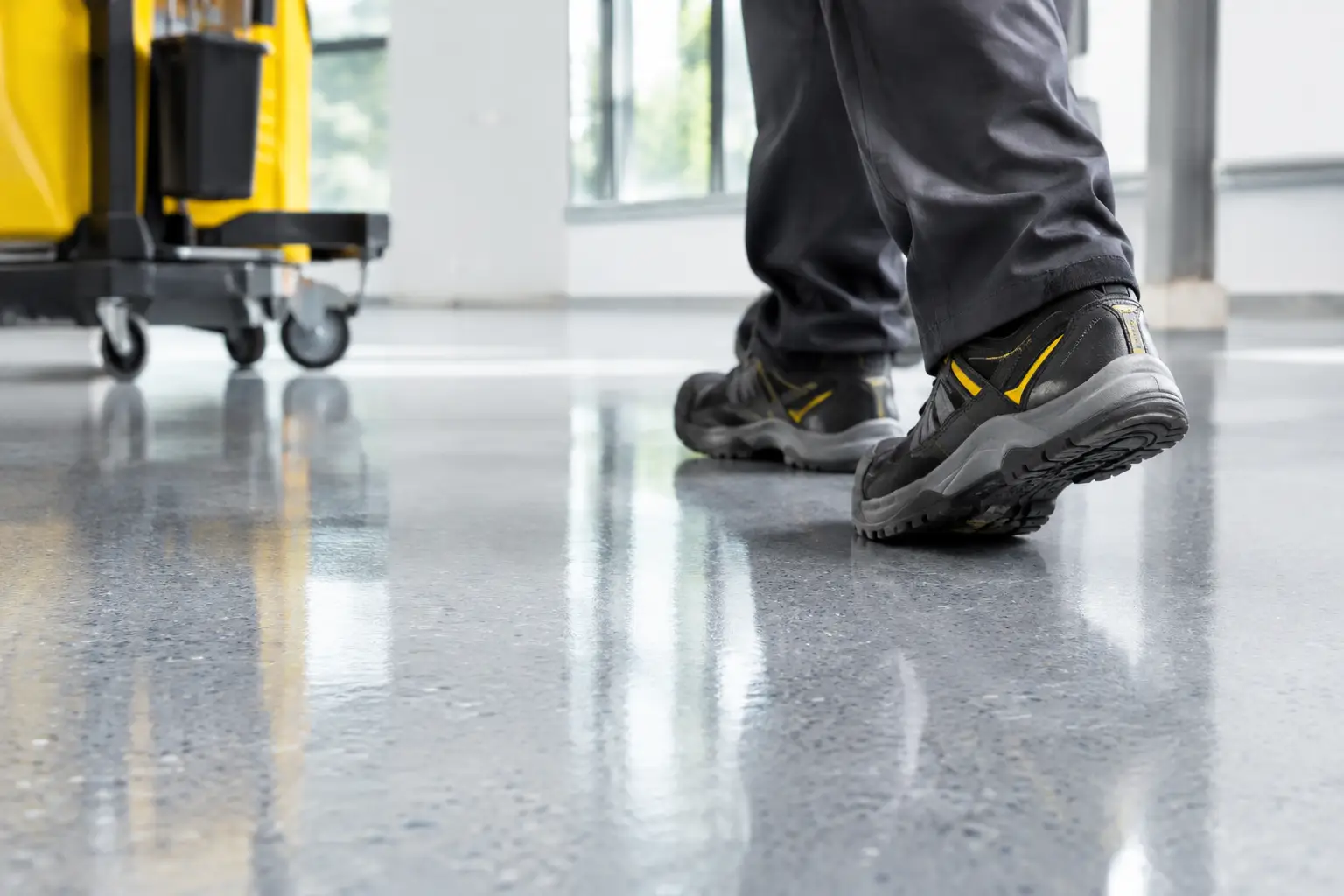
Slip resistance requires the same site-specific approach. More texture can improve traction, particularly where water, oil, or food residue may be present. However, an aggressively textured finish can be harder to clean. The goal is not the roughest floor possible. It is a finish that provides appropriate grip while remaining hygienic and manageable for the cleaning equipment and procedures in use.
The Process Reliable Epoxy Contractors Follow
A disciplined installation process gives clients clarity before work starts and accountability through final handover. It should begin with consultation and inspection, followed by a written proposal that identifies the recommended coating system, preparation work, repairs, finish, expected schedule, and limitations.
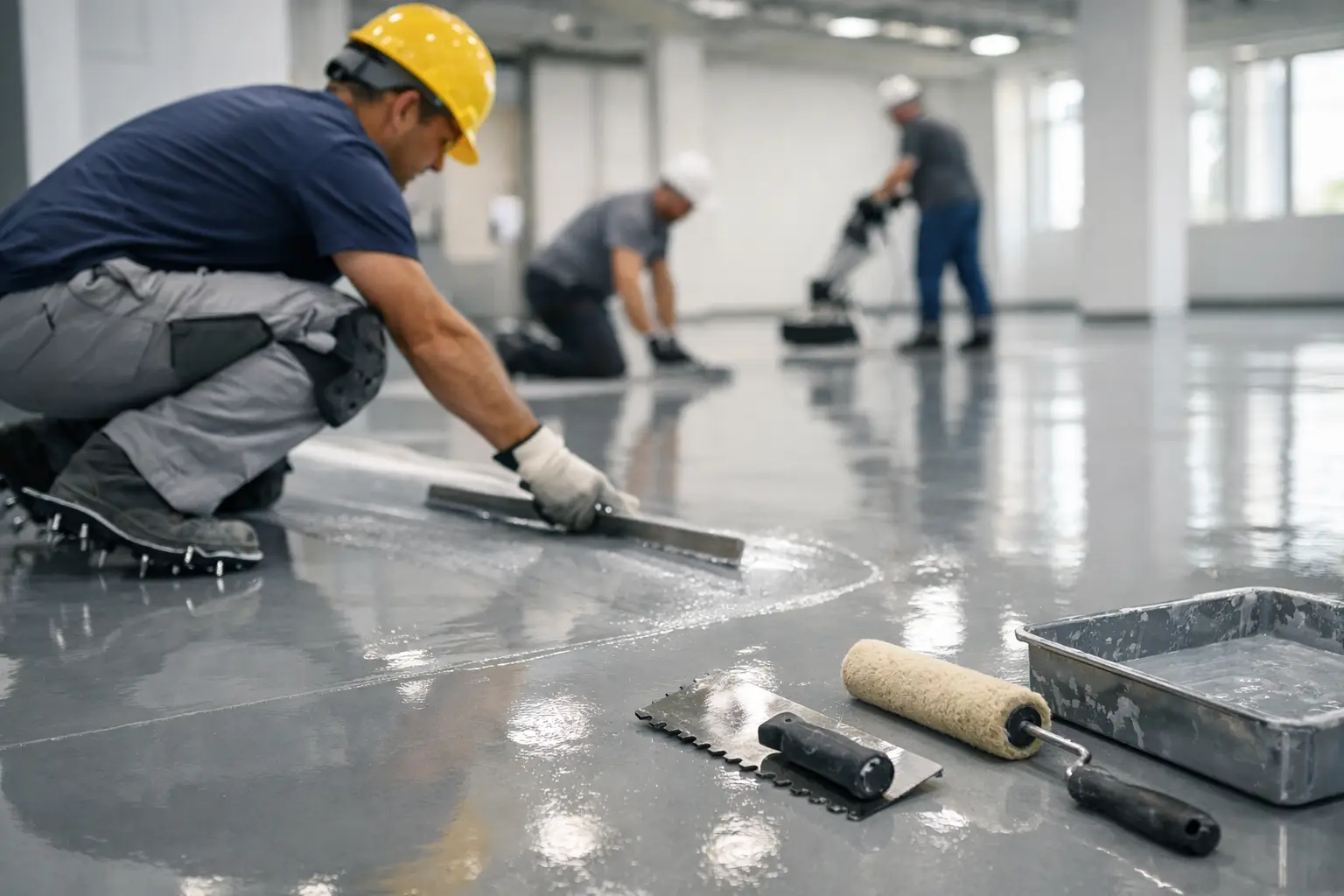
Once the scope is agreed, the installation team prepares the area. This may involve isolating work zones, protecting adjacent surfaces, mechanically grinding the concrete, repairing defects, removing dust, and applying a primer. Each layer is then installed at the correct coverage rate and within the manufacturer’s recoat window. Resin flooring is not a job for rushed guesswork. Material ratios, ambient temperature, humidity, and application timing affect the finished result.
The final stages are curing and inspection. A floor may be dry to touch before it is ready for foot traffic, vehicle traffic, chemical exposure, or washdown. Clients should receive practical guidance on when the area can return to service and how to maintain the surface once it is in use.
At Sydney Epoxy Flooring, this process is treated as a complete delivery system, from the initial floor audit through surface preparation, professional application, curing, and final inspection. That level of control is particularly valuable when a floor must satisfy both operational and visual requirements.
How to Compare Epoxy Flooring Proposals
Two proposals can use similar product names while covering very different levels of work. Price matters, but it should be considered alongside the preparation standard, coating thickness, repair allowances, safety finish, warranty terms, and disruption to the property.
Ask prospective contractors how they will prepare the concrete and what they will do if they find moisture, weak surface concrete, or hidden contamination. Ask whether crack repairs, joint treatment, line marking, coving, waterproofing details, or non-slip aggregate are included. These questions are not about making the process difficult. They reveal whether the scope has been developed for your actual floor.
It is also worth confirming the planned cure time. A contractor who promises a fast turnaround without explaining the resin type, temperature conditions, and return-to-service limits may be setting unrealistic expectations. In a warehouse or kitchen, an extra day of planning can be far less costly than a coating failure or an unsafe early reopening.
Maintenance Begins with the Right Finish
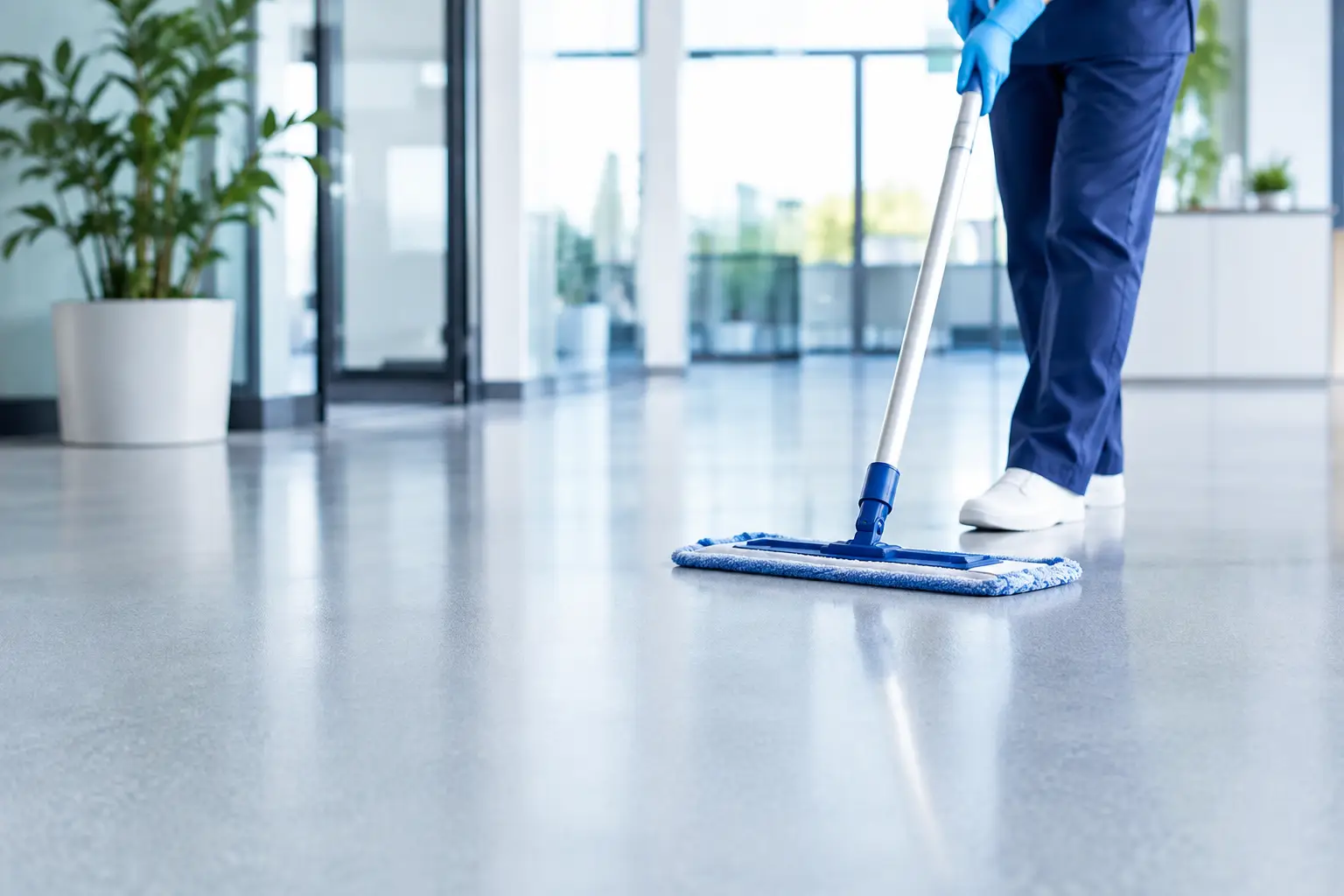
A properly specified resin floor is low maintenance, not maintenance-free. Regular sweeping and prompt removal of spills will protect the appearance and reduce abrasive wear. The cleaning products and tools should suit the coating, particularly in commercial kitchens, workshops, and industrial sites where degreasers or sanitizers are used frequently.
Maintenance planning should be part of the specification discussion. A glossy decorative surface may be ideal for a private garage, while a busy loading area may benefit from a more forgiving texture and color choice. In high-traffic operations, clearly marked walkways, work zones, and safety lines can also improve organization without introducing separate, incompatible floor finishes.
The best flooring decision is rarely the cheapest coating per square foot. It is the system that suits the concrete, the work performed on it, the people who walk across it, and the downtime the property can reasonably accept. Start with a thorough inspection, expect clear answers about preparation, and choose a contractor prepared to stand behind the details that make a floor last.