A workshop floor reveals its weak points quickly. Oil drips settle into porous concrete, hot tires leave marks, dropped tools chip thin finishes, and washdown areas become slippery when the surface was not designed for water and contaminants. The best coating for vehicle workshops is not simply the hardest product on a data sheet. It is the system that matches the vehicles, fluids, traffic, cleaning routine, substrate condition, and operating schedule of the site.
For most service bays, dealerships, fleet facilities, and mechanical workshops, a professionally prepared resin floor provides a major improvement over bare concrete. The right system creates a dense, cleanable surface that resists common workshop chemicals, supports safe footing, and holds up under daily vehicle movement. Selecting it well starts with understanding where each coating performs best and where its limits sit.
What the best coating for vehicle workshops needs to handle
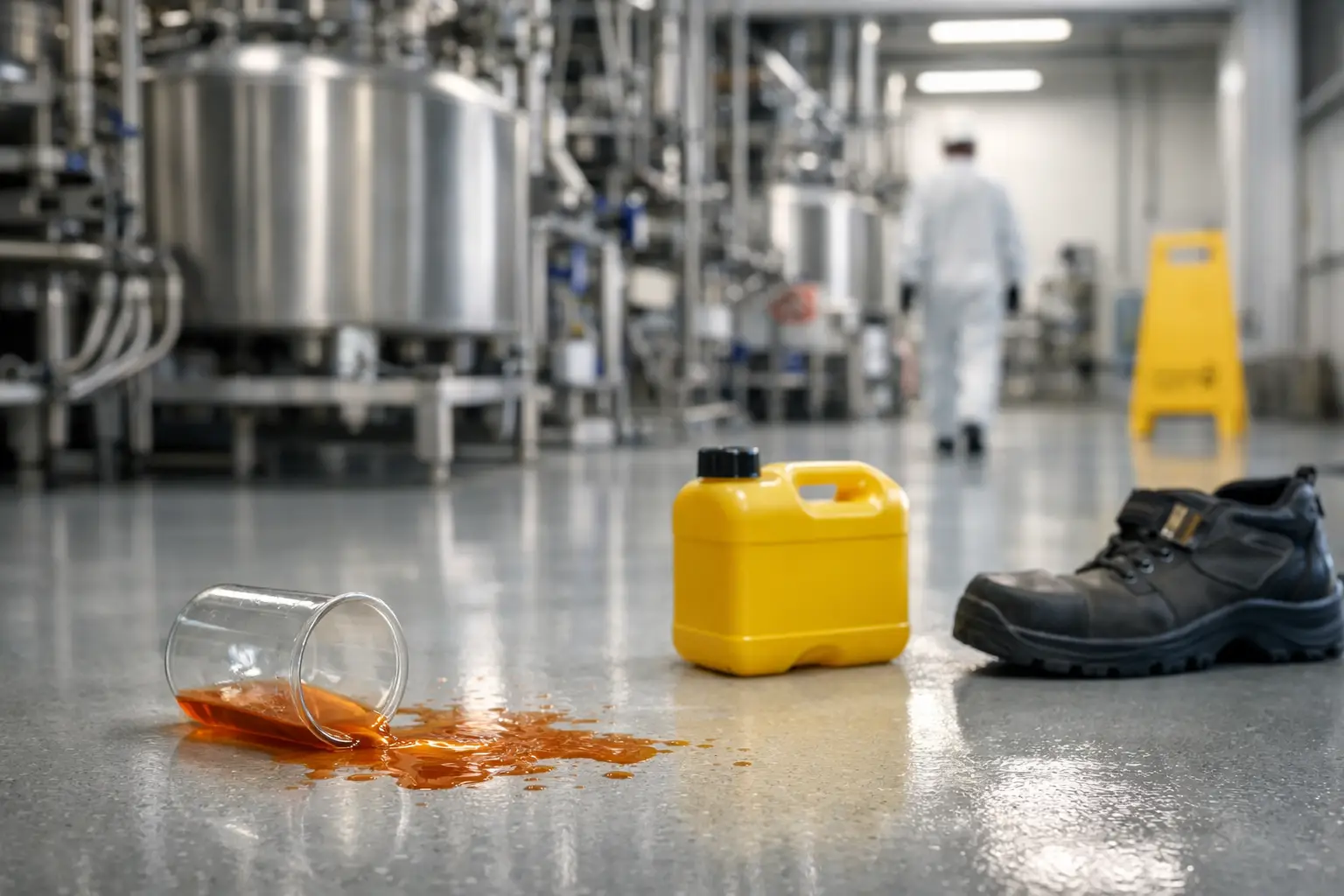
Vehicle workshops are demanding environments because several types of stress occur at once. Passenger vehicles, vans, forklifts, hoists, rolling tool cabinets, and pallet jacks place concentrated loads on the floor. Brake fluid, engine oil, fuel, coolant, degreasers, and battery-related contaminants can stain or degrade an unsuitable finish. Entrance bays may also receive water, dirt, and abrasive grit carried in on tires.
A suitable coating should therefore provide chemical resistance, abrasion resistance, impact tolerance, and a finish that can be cleaned without excessive effort. Slip resistance matters just as much. A glossy floor may look impressive, but it can be unsafe in a bay where water or oil is present unless the system includes the right aggregate profile and is maintained correctly.
There is also a practical business consideration: downtime. Some workshops can close an area for several days while a coating cures. Others need a rapid-return system that allows staged installation or overnight reopening. This is why the material choice must be made alongside the installation plan, not after it.
Epoxy flooring: a proven choice for general workshop bays
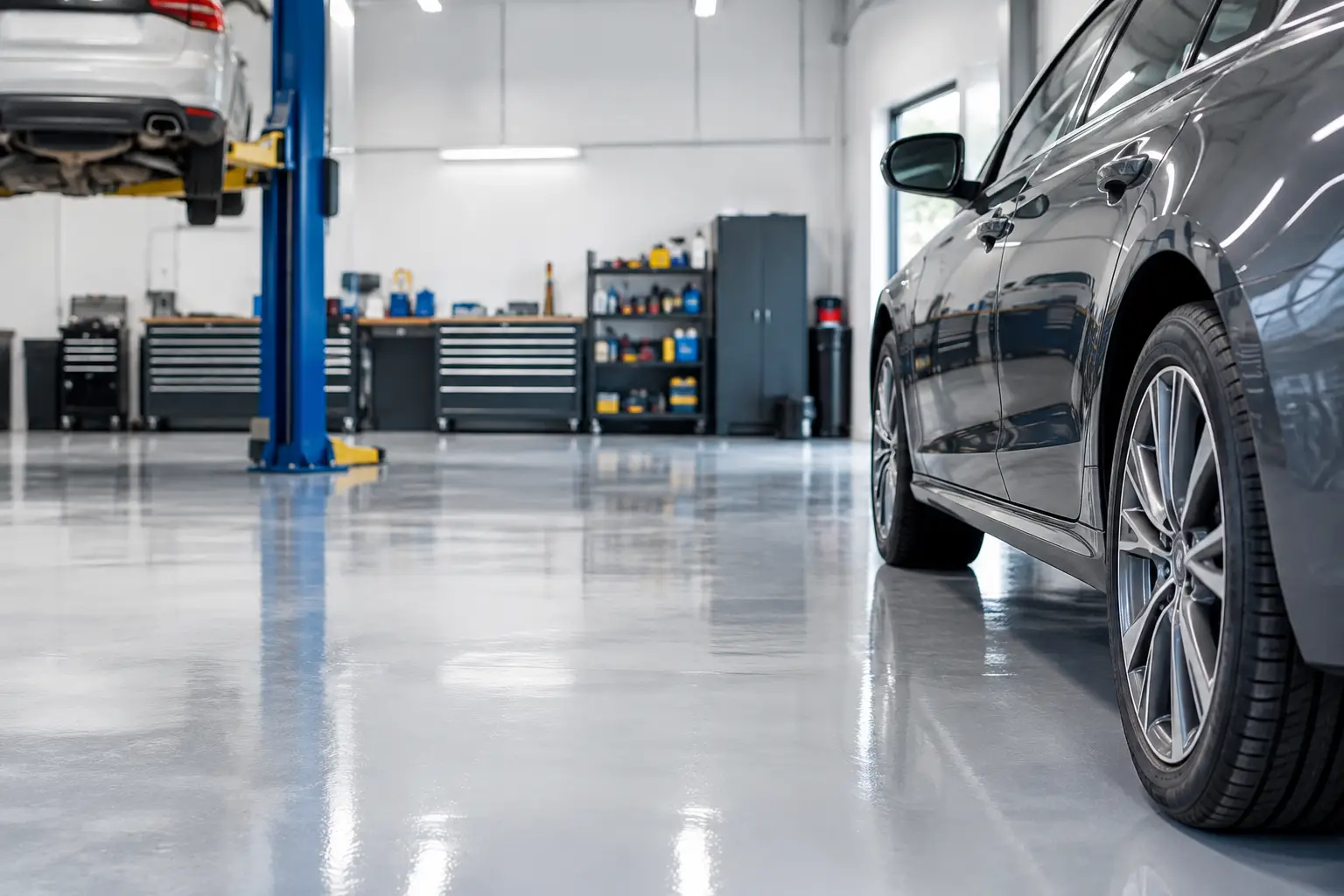
High-build epoxy is often the strongest all-around choice for vehicle workshops with standard mechanical servicing, moderate to heavy traffic, and a need for a clean, professional finish. When installed over properly prepared concrete, epoxy forms a hard, dense surface with very good resistance to oils, many automotive fluids, cleaning products, and tire traffic.
It is particularly effective for service areas, parts rooms, detailing bays, and garage floors where appearance and easy maintenance are priorities. Solid-color epoxy provides a crisp commercial look, while decorative flake finishes can help disguise dust and minor marks. Line marking can also be incorporated to define bays, walkways, storage zones, and safety areas.
However, epoxy is not one identical product. Film thickness, primer selection, topcoat chemistry, aggregate broadcast, and curing conditions all influence the finished performance. A thin roll-on coating may improve appearance, but it is not comparable to a professionally installed resin system designed for vehicle loads and chemical exposure.
Epoxy also has trade-offs. It can be less forgiving than other systems where the slab has elevated moisture, significant movement, or thermal shock. It may require more curing time than fast-set alternatives. In a workshop with a sound concrete slab and a workable shutdown period, those trade-offs are often acceptable because epoxy delivers long-term value and a highly maintainable finish.
When epoxy is the right fit
Epoxy is usually a practical recommendation when the workshop needs a durable general-purpose floor, the concrete can be mechanically prepared and repaired, and the business can allow sufficient time for installation and curing. It is also well suited to facilities that want a polished result for customer-facing areas without sacrificing industrial performance.
Polyurethane cement: for heavy-duty and wet-service conditions
Polyurethane cement is often the better option when conditions move beyond a typical dry mechanical bay. This system is designed for demanding industrial use and performs especially well where floors are exposed to heat, frequent washdown, moisture, aggressive cleaning, or thermal cycling.
In vehicle workshops, polyurethane cement can be appropriate for wash bays, heavy maintenance facilities, transport depots, areas near steam cleaning operations, and sites where the slab experiences challenging moisture conditions. Its ability to tolerate thermal shock makes it a stronger candidate than conventional epoxy where hot water, hot equipment, or repeated temperature changes are part of normal operations.
The finish is generally more industrial in character than decorative epoxy, but that is often the point. In a hard-working service environment, performance comes first. A suitable topcoat or texture can still provide a clean appearance, chemical resistance, and a slip-resistant surface that supports safe operations.
Polyurethane cement is not automatically necessary for every workshop. For a light-duty auto service center with occasional spills and no hot washdown, it can be more system than the environment requires. The value is clearest when its specialized resistance directly addresses a known site condition.
MMA flooring: when downtime is the deciding factor
Methyl methacrylate, commonly called MMA, is a rapid-curing resin flooring system. Its key advantage is speed. In the right conditions, MMA can cure far faster than conventional epoxy, making it a strong option for operational workshops that cannot afford to lose a bay for an extended period.
This can be useful for fleet operations, busy repair centers, and commercial facilities where work must be completed in tightly managed stages. MMA systems can also provide good chemical resistance, durability, and slip-resistant finishes when specified for the intended use.
The faster cure does not remove the need for disciplined preparation. Concrete still needs to be assessed, mechanically ground, repaired, cleaned, and primed as required. MMA installation also requires experienced handling due to its material characteristics and odor during application. A contractor should plan ventilation, work zones, and access carefully so speed does not create unnecessary disruption.
Surface preparation determines whether the coating lasts
The most expensive coating can fail if it is installed over weak, contaminated, or poorly prepared concrete. Workshop slabs commonly hold oil, old sealers, tire residue, curing compounds, and embedded contaminants. Cracks, spalls, failed joints, and uneven transitions around drains can create further problems if they are ignored.
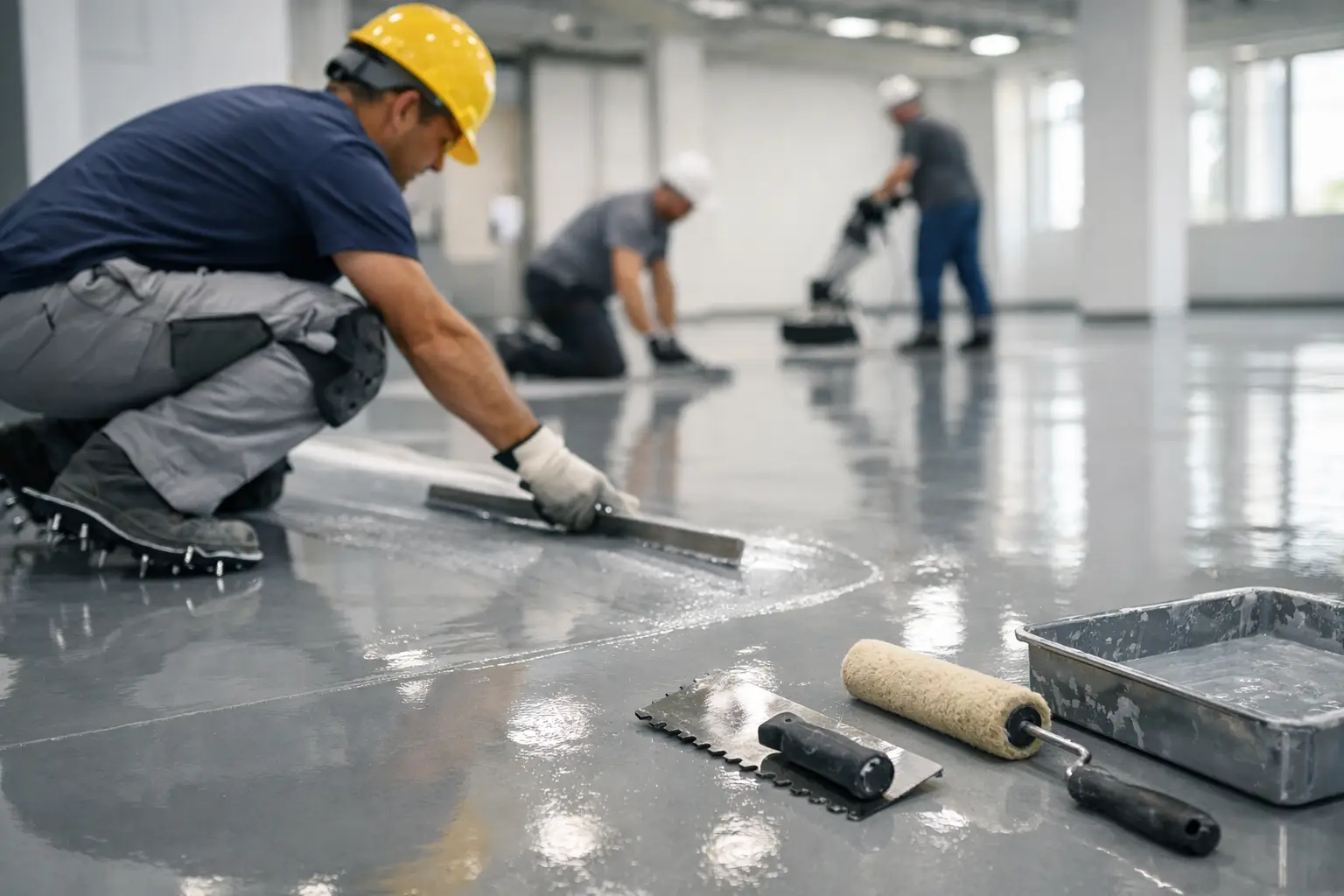
Professional surface preparation normally involves a detailed floor audit followed by mechanical grinding or other suitable preparation methods. The goal is to create a clean, sound surface profile that allows the resin system to bond properly. Damaged areas are repaired, joints are assessed, and moisture conditions are considered before coating begins.
This stage is not an optional extra. It is where a coating system becomes tailored to the actual slab rather than applied as a generic finish. At Sydney Epoxy Flooring, preparation, repair, priming, and final inspection are treated as part of one controlled installation process because each step affects the service life of the floor.
Slip resistance should be designed around the task
Workshop owners sometimes worry that a slip-resistant floor will be rough, difficult to clean, or uncomfortable to work on. It does not have to be. The right aggregate size and broadcast method can create a practical texture that improves traction while remaining manageable for sweeping, mopping, and wheeled equipment.
The appropriate profile depends on the area. A dry repair bay may need moderate slip resistance and easy movement for tool carts. A wash bay or entry zone exposed to water and dirt may require a more aggressive texture. Excessive texture in the wrong location can trap grime and increase cleaning time, so the whole facility should not receive one identical finish by default.
Build the coating system around your operations
The most reliable recommendation comes from a site-specific conversation. Consider what vehicles enter the building, what fluids are regularly handled, whether washdown occurs, the condition of the concrete, and how long each work area can be unavailable. A workshop with lifts and standard servicing needs a different system from a heavy vehicle depot with wash bays and constant forklift movement.
A clear scope should identify the preparation method, repairs, primer, coating layers, slip-resistant treatment, color, line marking, and realistic cure times. It should also explain how the finished floor will be cleaned and what practices can shorten its life, such as allowing corrosive spills to sit for long periods or dragging sharp metal equipment across the surface.
The best floor is one your team can use confidently every day. Choose a coating system that respects the realities of the workshop, then give preparation and installation the same attention you give the material itself.