Epoxy Flooring Sydney has become the go-to solution for homeowners, warehouse managers, and commercial property owners who need a floor that lasts. If your garage, workshop, or factory floor is cracked, dusty, stained, or just plain worn out, you already know the problem. The real question is: what can actually fix it for the long term?
This guide covers everything you need to know about epoxy flooring in Sydney, from the most common flooring problems people face to how Sydney Epoxy Flooring solves them with professional-grade systems built to last 20+ years. Whether you’re looking at a garage, a commercial warehouse, or a retail showroom, this is written for you.
Sydney Epoxy Flooring is a Castle Hill-based specialist team with 12 years of industry experience, serving homes and businesses across Greater Sydney. They hold a 5-star Google rating backed by 148+ verified reviews and have worked with clients including NSW Police Force, NSW Government, and Woolworths. According to Safe Work Australia, slip-and-fall incidents are among the leading causes of workplace injuries in Australia, making proper floor treatment not just an aesthetic choice, but a safety one.
Sydney’s Climate and Why It Affects Your Concrete Floor More Than You Think
Sydney’s weather is deceptively tough on concrete. The city experiences high humidity levels, particularly in summer, combined with significant temperature swings between seasons. In coastal and western suburban areas, salt-laden air and heat accelerate the breakdown of untreated concrete surfaces faster than in many other Australian cities.
Here’s what actually happens at a material level:
Moisture and humidity: Concrete is porous by nature. When Sydney’s humidity rises, moisture seeps into the slab. As temperatures drop at night, that moisture contracts, creating micro-fractures over time. This cycle repeats hundreds of times a year.
UV exposure: Australia has some of the highest UV radiation levels in the world. Standard floor coatings, even quality ones, can yellow, fade, or become brittle without UV-stabilised formulations.
Western Sydney heat: Suburbs like Blacktown, Penrith, and Parramatta regularly hit 40°C+ in summer. Thermal expansion puts stress on untreated slabs and low-grade coatings alike.
What this means for your floor: A coating system that works well in Melbourne or Brisbane may underperform in Sydney’s specific climate profile. This is why locally experienced flooring specialists who understand the slab conditions, moisture levels, and UV exposure patterns of Greater Sydney tend to produce longer-lasting results than a generic national provider.
Epoxy Flooring Sydney: Common Problems People Face
Concrete Floors That Crack, Chip, and Deteriorate Fast
Bare concrete might look fine on day one, but within a few years, sometimes months, it starts to show its weaknesses. Cracks form, chips appear, and the surface begins to dust and flake. For Sydney garages and commercial floors, this is especially common due to heavy vehicle traffic, chemical exposure, and fluctuating temperatures.
Why it happens: Untreated concrete is porous. It absorbs moisture, oils, and chemicals. Over time, the surface weakens from within.
The solution is a professionally applied epoxy flooring system in Sydney. The process begins with diamond grinding and crack repair, then a high-build epoxy base coat is applied, creating a chemical bond with the concrete surface. This seals the slab, stops moisture ingress, and creates a surface that can bear heavy loads without cracking.
Why this works: Epoxy creates a polymer matrix that’s significantly harder than bare concrete. Sydney Epoxy Flooring uses premium materials from suppliers like Hychem, Flowcrete, and A&I Coatings, ensuring each job meets industrial performance standards.
Slippery, Unsafe Floors in Workshops and Commercial Spaces
Smooth, polished floors look great, but in a workshop, warehouse, or commercial kitchen, they’re a liability. Oil spills, water, and dust turn any untreated floor into a hazard. Sydney businesses face strict OH&S compliance requirements, and a slippery floor can mean not only injuries but legal consequences.
Why it happens: Smooth floor surfaces lack the texture needed to create traction under wet conditions. Standard sealers offer no anti-slip protection.
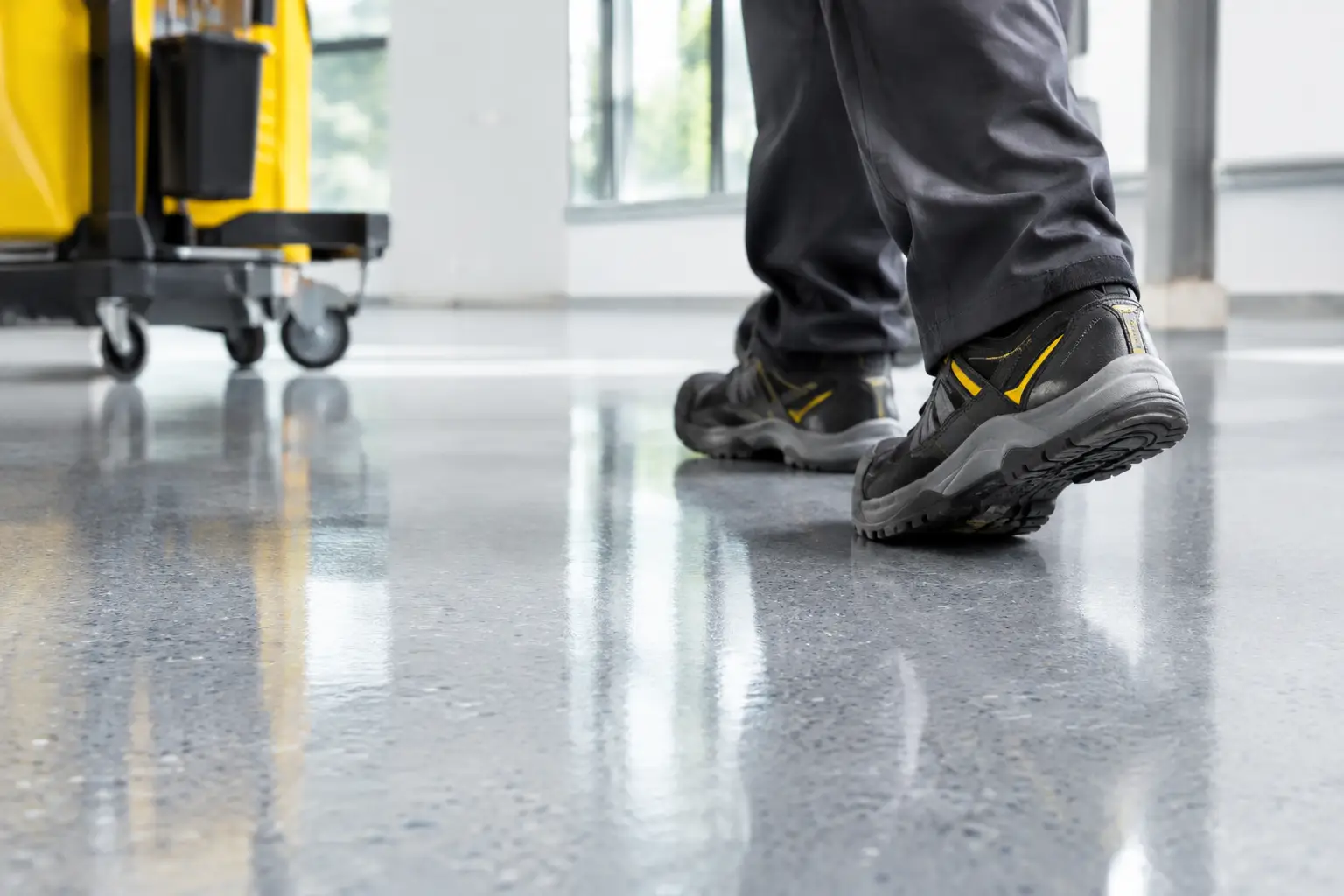
The solution: Sydney Epoxy Flooring applies anti-slip broadcast coatings, typically flake or quartz systems, that create a textured, grip-friendly surface without sacrificing the clean, professional look. Their floor audit process includes a Health and Safety Review to identify hazards before work begins.
Why this works: The broadcast aggregate is embedded into the epoxy during application, so the anti-slip property is permanent; it won’t wash away or wear off like surface treatments.
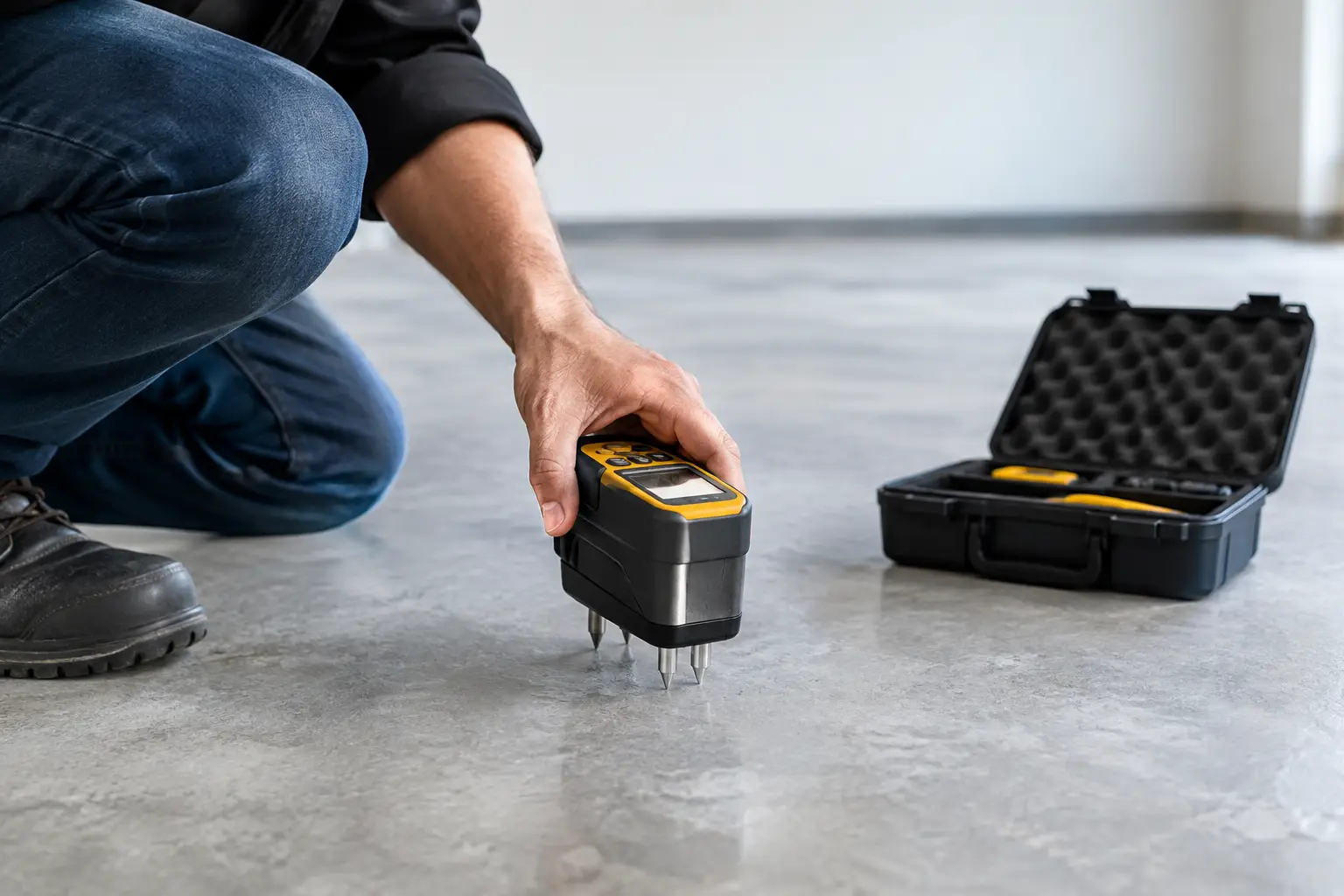
Warning: Applying epoxy directly over a damaged, damp, or contaminated slab is one of the most common mistakes in DIY floor coating. Without professional moisture testing and crack remediation, your coating will peel, bubble, and fail within 12 months. Sydney Epoxy Flooring always conducts a full floor audit before any installation, including moisture measurement, load-bearing analysis, and condition checks.
Floors That Look Terrible and Kill the Impression of Your Space
For retail stores, showrooms, and commercial offices, the floor is part of the brand. A stained, patchy, or dull floor tells visitors your space isn’t well-maintained and that matters. Even for residential garages, a worn floor can drag down the value and feel of the whole property.
Why it happens: Most standard floor coatings lack the aesthetic range or durability to maintain their appearance over time. They yellow, fade, or chip under UV exposure and foot traffic.
The solution: Sydney Epoxy Flooring offers Decorative Coating Systems, including metallic and marble-effect epoxy finishes, flake systems, and custom colour matching. These use UV-resistant formulations that maintain their finish under harsh Australian sunlight.
Why this works: The decorative finishes are integral to the epoxy system, not painted on top. The result is a floor that looks sharp, stays vibrant, and is as easy to clean as a kitchen benchtop.
Environmental Considerations: VOC, Curing Time, and Eco-Friendly Options
Modern water-based epoxy systems have significantly lower VOC levels than traditional solvent-based formulations — in many cases comparable to standard interior paints — making them safe for homes, schools, and workplaces. The space needs to be vacated during installation, but VOC off-gassing is largely complete within 24–72 hours with adequate ventilation.
Curing time varies by system: light foot traffic is typically safe after 24 hours, while vehicle traffic or heavy use requires 5–7 days for full cure.
Eco-friendly considerations worth knowing: water-based formulations reduce solvent waste, epoxy’s 15–20+ year lifespan means far fewer replacement cycles than tiles or short-life sealers, and some suppliers now offer products with recycled content. Always ask your installer to provide the product’s Safety Data Sheet (SDS) — a reputable company will provide this without hesitation.
How to Maintain Your Epoxy Floor: A Practical Guide
Epoxy flooring is low-maintenance by design, but the right habits extend its life significantly.
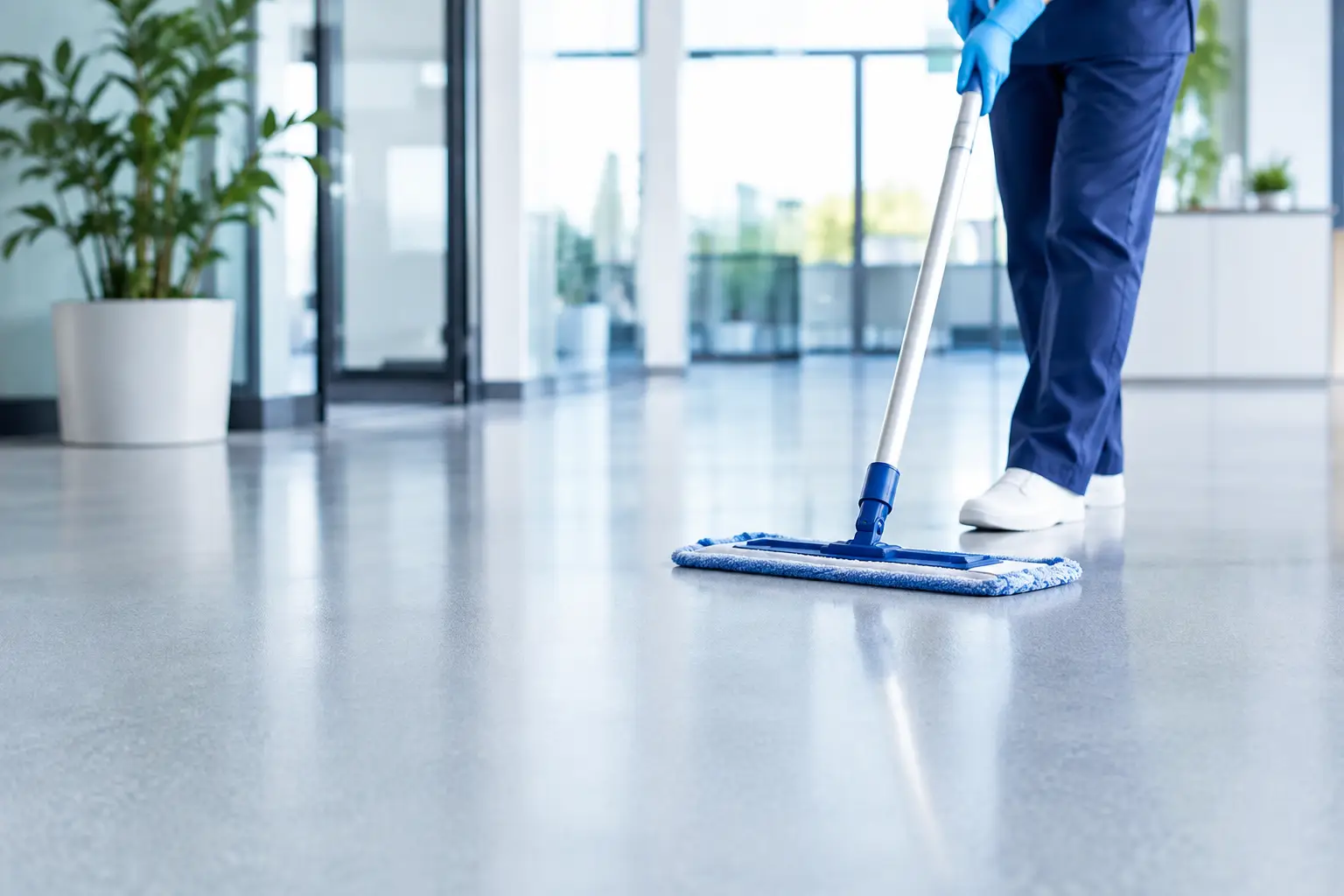
Day-to-day cleaning: Sweep or dust mop regularly to remove grit and debris — small particles act like sandpaper underfoot over time. Wipe up spills promptly, especially oils, acids, or harsh chemicals. Damp mop with warm water and a pH-neutral cleaner as needed.
What to avoid: Harsh chemicals like bleach, ammonia-based cleaners, or citrus-based degreasers can break down the epoxy surface over time. Avoid steel wool, abrasive scrubbing pads, and high-pressure steam cleaning directly on the surface.
Annual maintenance checks: Once a year, inspect for any areas where the coating has thinned, hairline cracks developing in the underlying concrete, or delamination at edges or joints. Catching minor issues early is far less costly than a full recoat.
Long-term recoating: A professionally installed epoxy floor won’t need recoating for 15–20 years under normal use. When the time comes, a maintenance coat — rather than a full strip and reapply — can extend the floor’s life further at a fraction of the original installation cost.
What 12 Years of Epoxy Flooring Across Sydney Teaches You
After completing hundreds of projects across Greater Sydney and maintaining a 5-star rating from 148+ verified clients, Sydney Epoxy Flooring has developed a clear picture of where floors fail, which suburbs present the most challenging conditions, and what separates a coating that lasts from one that doesn’t.
Most Common Floor Issues We See Across Sydney Projects:
| Problem | How Often Do We See It | Root Cause |
| Coating delamination | Very common | Moisture in the slab at the time of installation |
| Surface cracking | Common | Thermal cycling without flexible primer |
| Yellowing and fading | Common | Non-UV-stabilised topcoat used |
| Anti-slip failure | Regular | Surface treatment applied rather than embedded aggregate |
| Edge lifting | Regular | Inadequate substrate preparation at the joins |
What Sydney’s Suburbs Tell Us About Floor Conditions:
Western Sydney suburbs — Blacktown, Penrith, Parramatta, and Campbelltown — present the most thermally demanding conditions. Summer temperatures regularly exceed 40°C, and the temperature differential between day and night puts significant stress on coatings that aren’t designed for thermal movement. These areas account for a disproportionate share of premature coating failures we’re called in to remediate.
Coastal and near-coastal suburbs from Bondi to Manly and across the Northern Beaches introduce salt air as an additional challenge. Salt accelerates the breakdown of adhesion bonds at the slab-coating interface, particularly in garages and outdoor areas where the slab is exposed to the elements.
Inner city and industrial areas — including Alexandria, Botany, and the South Sydney industrial corridor — typically present older slabs with more complex contamination histories. Oils, chemicals, and previous coatings require more thorough preparation before a new system can be applied successfully.
One pattern holds consistently across all areas: floors that are properly prepared and primed before coating installation outperform floors where preparation was rushed or skipped, regardless of the quality of the topcoat. Preparation is not a cost-cutting opportunity — it’s the foundation of everything.
Why Choose Sydney Epoxy Flooring for Epoxy Flooring in Sydney
Sydney Epoxy Flooring is a specialist floor coating company based at Unit 123/7 Hoyle Ave, Castle Hill, NSW 2154. With 12 years in the industry and hundreds of completed projects across Sydney, they combine technical expertise with a genuine customer-first approach.
Our 6-Step Process for Epoxy Flooring Sydney Projects
Initial Consultation: Understanding your specific needs, whether residential, commercial, or industrial.
Site Inspection and Assessment: A full floor audit including moisture testing, load-bearing analysis, crack assessment, and OH&S review.
Customised Proposal: A transparent quote covering materials, labour, timeline, and cost, with no hidden fees.
Surface Preparation: Diamond grinding, crack repair, priming, and full slab preparation for maximum adhesion.
Application: Skilled technicians apply the chosen system using advanced equipment for an even, high-quality finish.
Curing and Final Inspection: The coating is monitored through curing, then inspected to stringent quality standards before handover.
Services Offered
- Floor Audit and Assessment
- Floor Preparation (diamond grinding, crack repair)
- Industrial Coating and Systems
- Decorative Coating Systems (flake, metallic, marble effect)
- Line Marking Systems
- Waterproofing
- UV-Resistant Outdoor Epoxy
- High-Pressure Floor Cleaning
Trust Factors
- 12 years of specialist experience in epoxy flooring across Sydney
- Safe Work Method Statement (SWMS) is provided on every project
- Premium material suppliers: Hychem, Flowcrete, A&I Coatings, Sika, Alka Coatings
- Notable clients: NSW Police Force, NSW Government, Woolworths
- Free site inspection and customised proposal, no obligation
Frequently Asked Questions (FAQ) About Epoxy Flooring Sydney
Q1: What is epoxy flooring?
Epoxy flooring is a durable protective coating applied to concrete, commonly used in garages, warehouses, and commercial spaces.
Q2: How long does epoxy flooring last?
Professionally installed epoxy flooring can last 15–20+ years with proper maintenance.
Q3: How much does epoxy flooring cost in Sydney?
The cost depends on floor size, condition, and the epoxy system used. Sydney Epoxy Flooring provides fixed-price quotes after a free site inspection.
Q4: Can epoxy be applied to cracked concrete?
Yes, but cracks and surface damage must be repaired before the epoxy coating is applied.
Q5: Is epoxy flooring slip-resistant?
Yes. Anti-slip finishes such as flake or quartz systems can be added to improve safety.
Q6: How long does installation take?
Most residential garages are completed in 1–2 days. Larger commercial projects are scoped individually with minimal disruption to operations.
Q7: Can epoxy flooring be applied outdoors in Sydney?
Yes. UV-resistant outdoor epoxy systems are available specifically for Sydney’s high UV exposure conditions.
Q8: Will epoxy flooring affect my property value?
A professionally finished epoxy floor improves the presentation and functionality of a garage or commercial space and is generally viewed positively by buyers and tenants.
Q9: What’s the difference between DIY epoxy kits and professional installation?
DIY kits use thinner materials and lack the surface preparation equipment needed for a lasting bond. Professional systems are significantly thicker, harder, and chemically bonded to the slab.
Q10: How do I get started?
Call 1300 621 873 or email info@sydepoxyflooring.com.au. Sydney Epoxy Flooring offers free on-site assessments across all of Greater Sydney, typically within the same week of enquiry.
The Bottom Line on Epoxy Flooring in Sydney
Your floor works harder than any other surface in your home or business — it carries the load, takes the spills, and sets the tone for the entire space. A properly installed epoxy system doesn’t just protect it; it transforms it into something that performs better, looks better, and requires almost nothing from you for the next 15–20 years.
The difference between a floor that lasts and one that fails within a year comes down to three things: preparation, materials, and the experience of the installer. Sydney Epoxy Flooring has delivered on all three across hundreds of projects — from residential garages in the Hills District to industrial floors for NSW Government facilities.
Here’s what to take away from this guide:
- Never skip preparation. Diamond grinding, moisture testing, and crack repair are what make the coating bond. Without them, even the best topcoat will fail.
- Choose the right system for your zone. A garage floor, a commercial kitchen, and an outdoor area each need different formulations. One product does not fit all.
- Sydney’s climate demands Sydney-specific expertise. UV exposure, coastal salt air, and Western Sydney heat all affect how a coating performs long-term.
- Professional installation pays for itself. The cost difference between a professional system and a DIY kit is far smaller than the cost of remediation when a DIY coating fails.
Sydney Epoxy Flooring offers free on-site assessments across all of Greater Sydney, typically within the same week of enquiry.
Contact Sydney Epoxy Flooring Experts:
Phone: 1300 621 873
Email: info@sydepoxyflooring.com.au
Address: Unit 123/7 Hoyle Ave, Castle Hill, NSW 2154