A polished concrete slab can look clean and professional, then become a hazard the moment water, oil, grease, or fine dust reaches the surface. Non slip epoxy flooring addresses that risk by combining a durable resin coating with a specified texture that gives people, carts, and equipment more reliable footing. The right system does more than make a floor feel rough. It must suit the way the area is used, the contaminants it sees, the cleaning methods in place, and the finish the property requires.
For warehouses, workshops, commercial kitchens, garages, and busy service areas, slip resistance should be designed into the flooring scope from the beginning. Adding a generic grit to a coating without considering cleaning, drainage, footwear, or traffic can create a floor that is difficult to maintain or uncomfortable to work on. A well-planned epoxy system balances traction with cleanability, appearance, chemical resistance, and long-term performance.
What Makes Epoxy Flooring Non Slip?
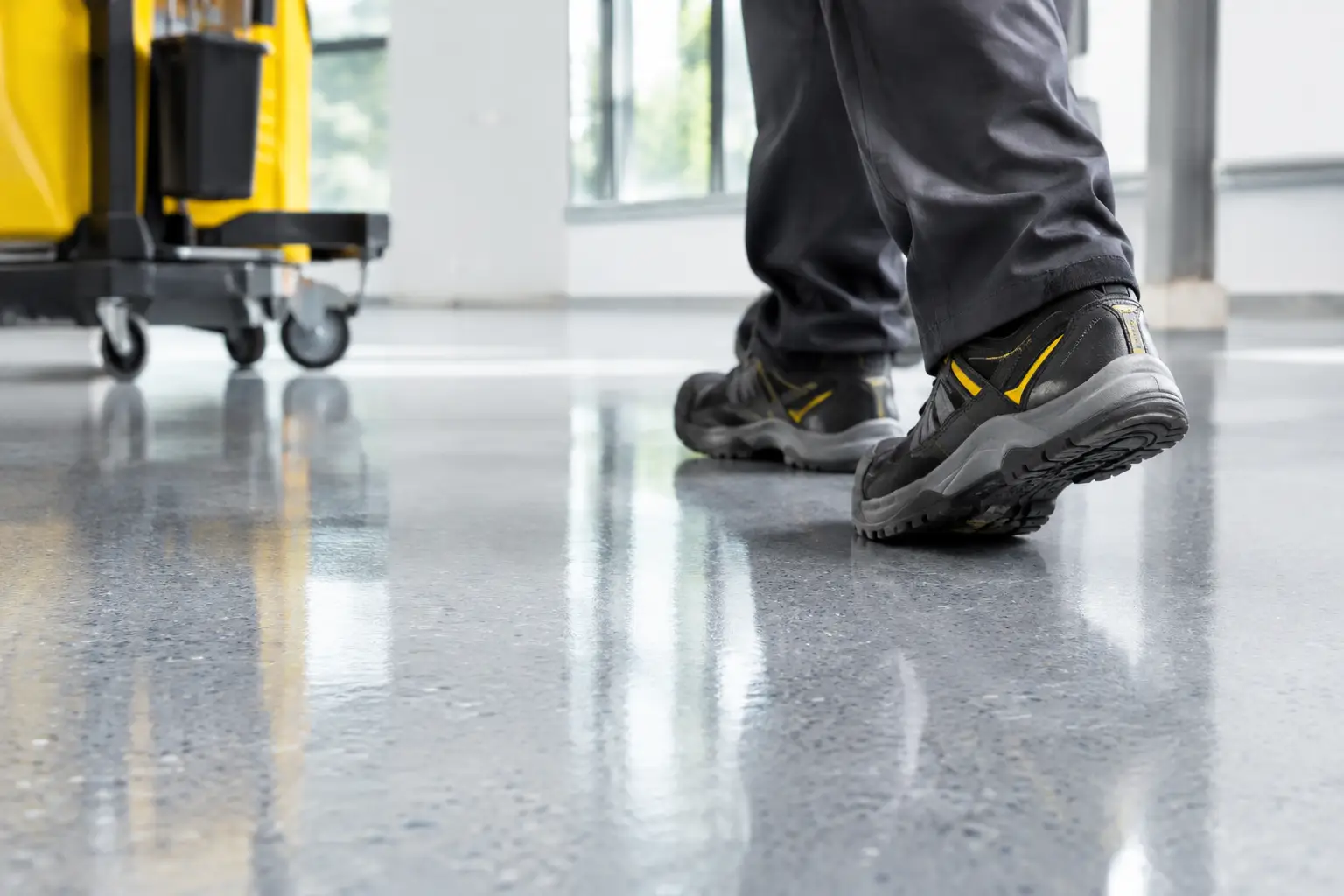
Standard epoxy can cure to a smooth, glossy surface. That finish is easy to wipe down and can look excellent in a garage, showroom, or light-duty space, but it may be too slick where water or contaminants are regularly present. Non-slip performance is created by introducing texture into the wearing surface, usually through an aggregate or flake broadcast and a compatible topcoat.
The material and particle size matter. Fine silica can provide a light, subtle texture suitable for pedestrian areas that need easy cleaning. Coarser silica, aluminum oxide, or specialty aggregates can produce greater traction for ramps, loading areas, wash bays, and industrial work zones. Decorative flake systems can also improve grip while delivering a finished appearance that hides dust and minor marks better than a solid-color floor.
Texture is not a single setting. A floor designed for dry foot traffic needs a different profile than one exposed to wet shoes, cooking oils, forklift tires, or vehicle fluids. Too little texture may not provide adequate footing. Too much can trap dirt, make mopping harder, increase wear on wheels, and create an unnecessarily aggressive surface. The objective is fit-for-purpose traction, not the roughest possible floor.
Where Non Slip Epoxy Flooring Delivers the Most Value
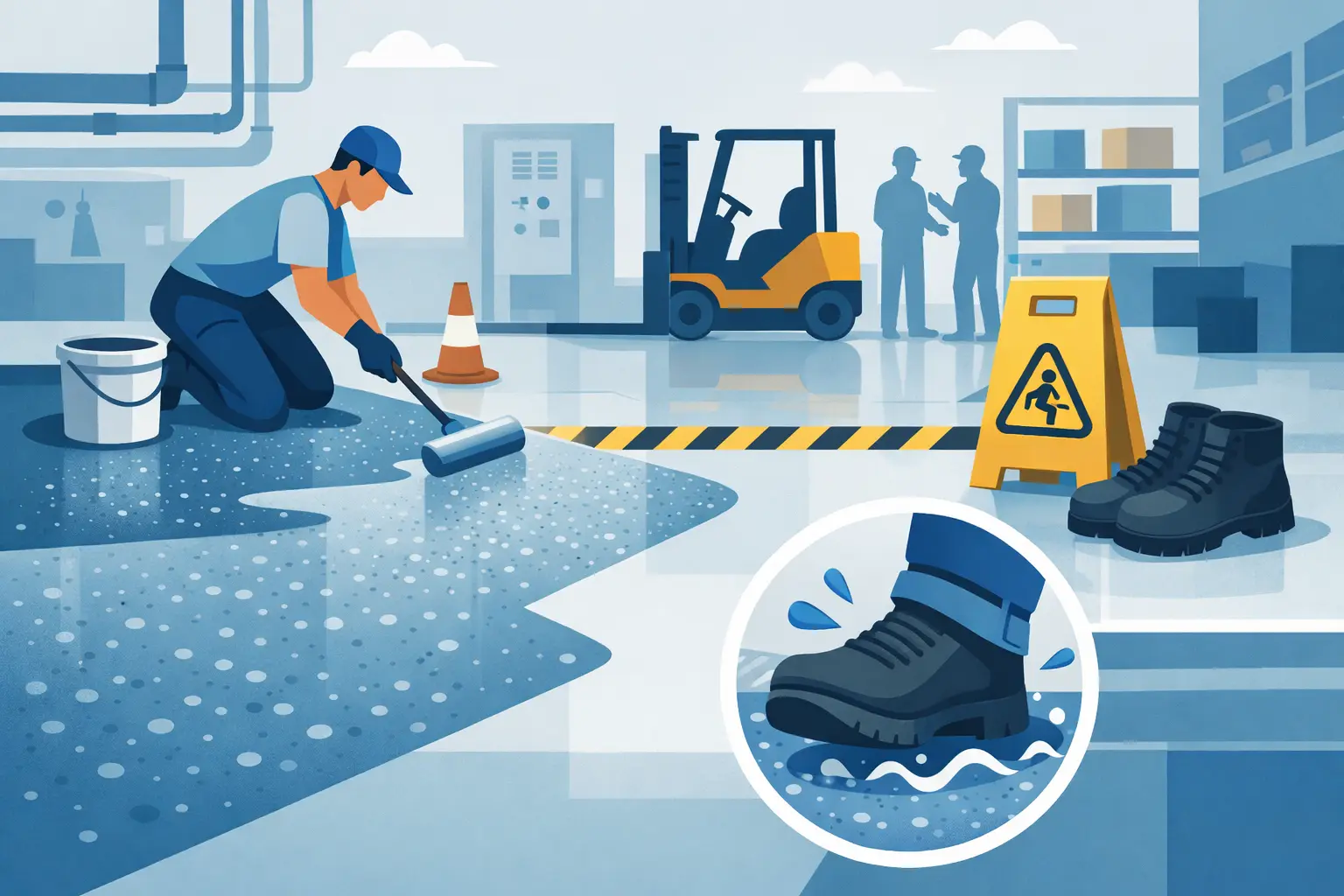
The most effective applications are areas where a slip could interrupt operations, cause injury, damage goods, or create a compliance concern. In a warehouse, this may include pedestrian walkways, packing zones, entrances, battery charging areas, and transitions around loading docks. Clear line marking can be incorporated into the system to separate people from mobile equipment and identify safe routes.
Workshops and automotive facilities commonly need resistance to oil, coolant, tire traffic, dropped tools, and frequent cleaning. A textured epoxy surface helps technicians move confidently while maintaining the hard-wearing, easy-care benefits expected from a resin floor. For heavily used areas with thermal shock, persistent moisture, or harsh cleaning chemicals, polyurethane cement may be a better material choice than conventional epoxy. The resin should always match the environment.
Commercial kitchens, food preparation spaces, and wash-down rooms place different demands on a floor. Grease, water, sanitation chemicals, and regular scrubbing call for a seamless surface with controlled texture and properly detailed coving, drains, and transitions. A coarse profile may sound safer, but it can become difficult to sanitize if it is poorly specified. The correct system provides grip while still supporting efficient cleaning routines.
For homeowners, a garage floor is often the main opportunity to improve traction. Cars bring in rainwater, mud, road residue, and oil, while families may use the same space for storage, hobbies, and exercise. Decorative flake epoxy with a practical non-slip additive can provide a more forgiving surface without making the floor feel industrial underfoot. Outdoor areas require additional consideration because UV exposure, water drainage, and changing temperatures can affect coating selection and service life.
Surface Preparation Determines Performance
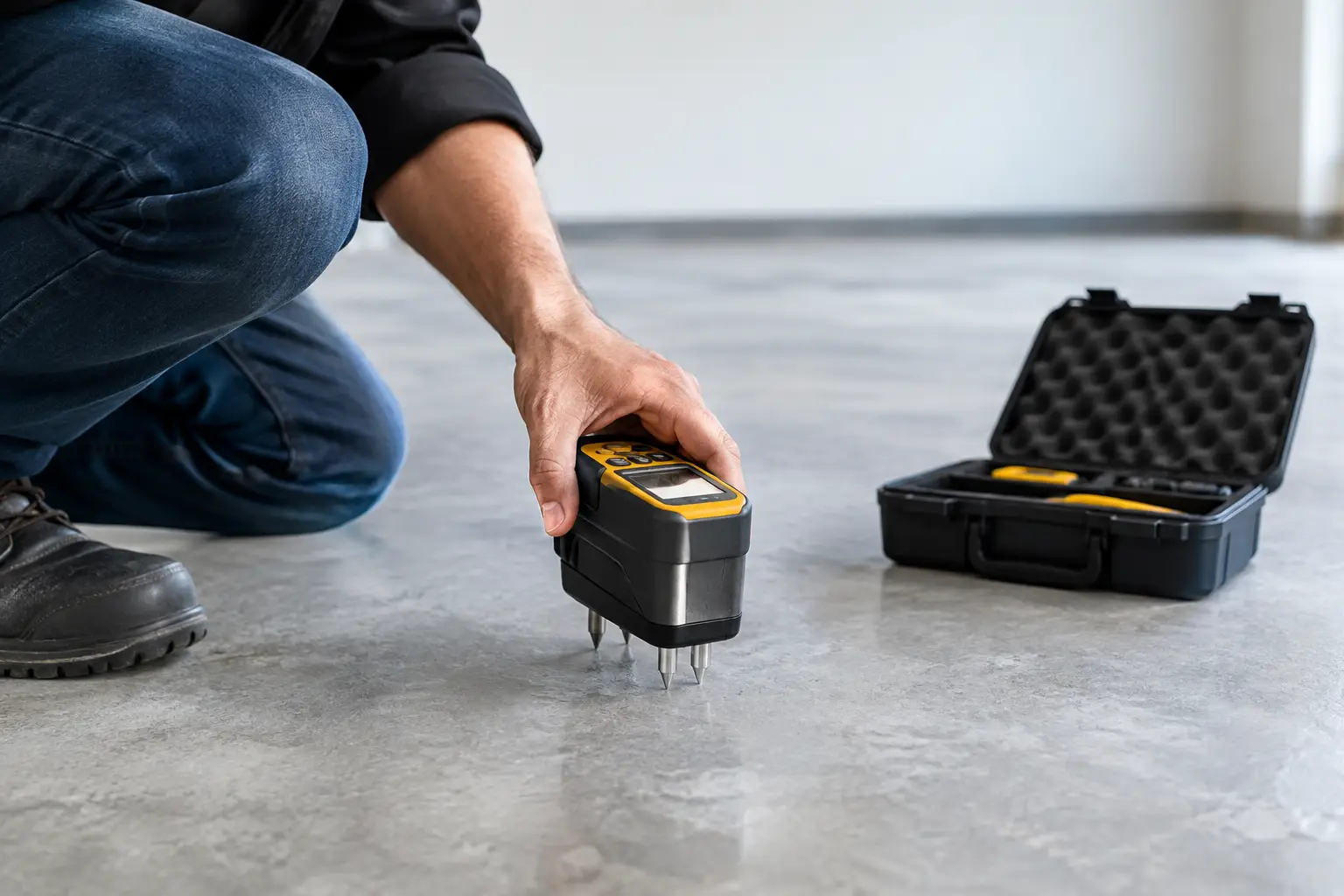
A non-slip topcoat cannot correct a weak substrate. If the concrete is dusty, contaminated, damp, cracked, or poorly bonded, the coating can fail regardless of the quality of the finish layer. Proper preparation begins with a site inspection and floor audit to identify the slab condition, existing coatings, moisture concerns, joint movement, repairs, drainage, and expected traffic.
Mechanical grinding is typically used to create a clean, open concrete profile that allows the primer to bond correctly. Adhesives, paint, oils, curing compounds, and weak concrete must be removed. Cracks and damaged sections should be repaired using materials suited to the slab and the movement expected in the area. Where moisture vapor is a concern, a moisture-tolerant primer or moisture mitigation approach may be required before the epoxy is installed.
This preparation phase is where experienced installation teams protect the long-term value of the project. Skipping it may save time at the start, but it increases the risk of peeling, bubbling, delamination, and premature wear. Sydney Epoxy Flooring plans preparation around the existing substrate and operating conditions, rather than treating every concrete floor as the same.
The Right Texture Must Match the Cleaning Plan
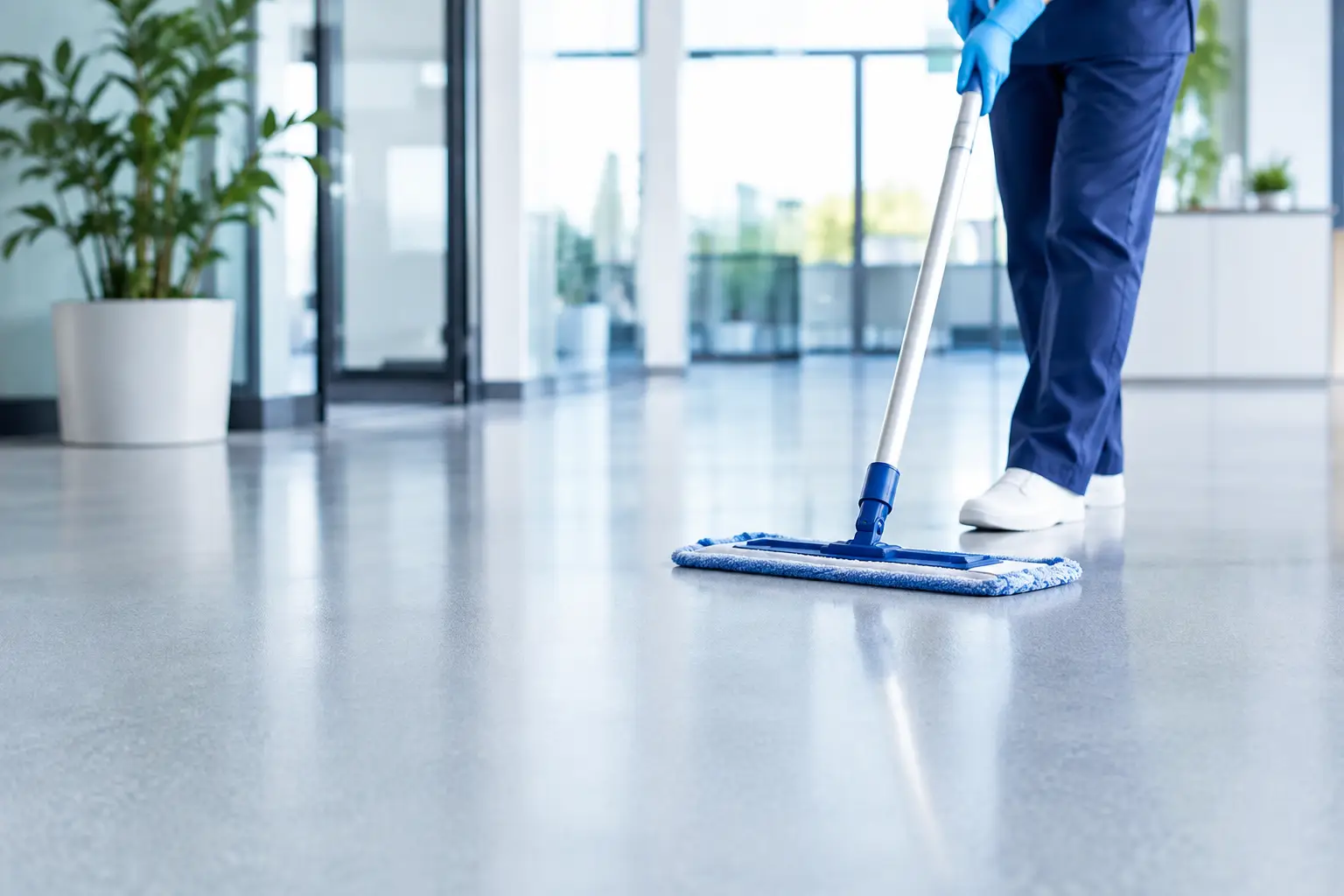
Slip resistance changes with contamination. A floor that performs well when dry may become less reliable under soapy water or oil, and a surface with aggressive texture may hold residue if cleaning equipment cannot reach into the profile. That is why the cleaning method should be discussed before the system is selected.
For a commercial kitchen, this may mean choosing a profile that works with squeegees, pressure washing, and approved degreasers. For a warehouse, it may mean confirming that scrubber machines and wheeled equipment can move efficiently across the finished surface. In a garage, routine sweeping and occasional mopping may be enough, provided spills are cleaned promptly.
Good housekeeping remains part of slip prevention. Even the best non-slip coating cannot eliminate risk when standing water, oil pools, loose packaging, or debris are left on the floor. Drainage, entry mats, spill response procedures, and regular inspection all support the coating’s performance.
Selecting a System for Your Facility
The most useful starting point is not a color chart. It is a clear description of how the floor will be used. Consider whether the area is primarily pedestrian, vehicle-based, wet, chemically exposed, temperature-sensitive, or customer-facing. Also consider downtime. Some epoxy systems need longer cure periods, while MMA flooring can return certain spaces to service faster when timing is critical.
A tailored proposal should define the preparation method, repair scope, primer, build coat, aggregate or flake treatment, topcoat, color, line marking, and curing requirements. It should also identify limitations. For example, epoxy has excellent adhesion and chemical resistance in many settings, but it is not the best answer for every exterior or high-heat application. A transparent recommendation explains those trade-offs before work begins.
Finish appearance deserves attention as well. Solid-color systems provide a clean, uniform look and make line marking highly visible. Decorative flakes add visual depth and can disguise minor dirt between cleaning cycles. Metallic and marble-effect epoxy can suit lower-risk decorative spaces, though highly textured industrial finishes are usually more appropriate where safety is the primary concern.
Installation and Curing Are Part of the Safety Outcome
Even a correctly specified system needs disciplined application. Aggregate must be distributed consistently, coating thickness must be controlled, and topcoats must fully encapsulate materials where required. Inconsistent texture can leave smooth patches, while insufficient topcoat can allow aggregate to shed prematurely.
Curing time should be respected before foot traffic, wheeled traffic, chemical exposure, or cleaning begins. Rushing a facility back into use can mark the surface or compromise the finish before it reaches its intended performance. A final inspection should check coverage, edges, joints, transitions, texture consistency, and any safety markings before the handover.
The best flooring decision starts with the conditions under your feet: where moisture enters, what reaches the surface, who uses the space, and how the floor will be cleaned at the end of each shift. When those details guide the specification, non-slip epoxy becomes a practical safety measure that also keeps the facility cleaner, more durable, and easier to operate.