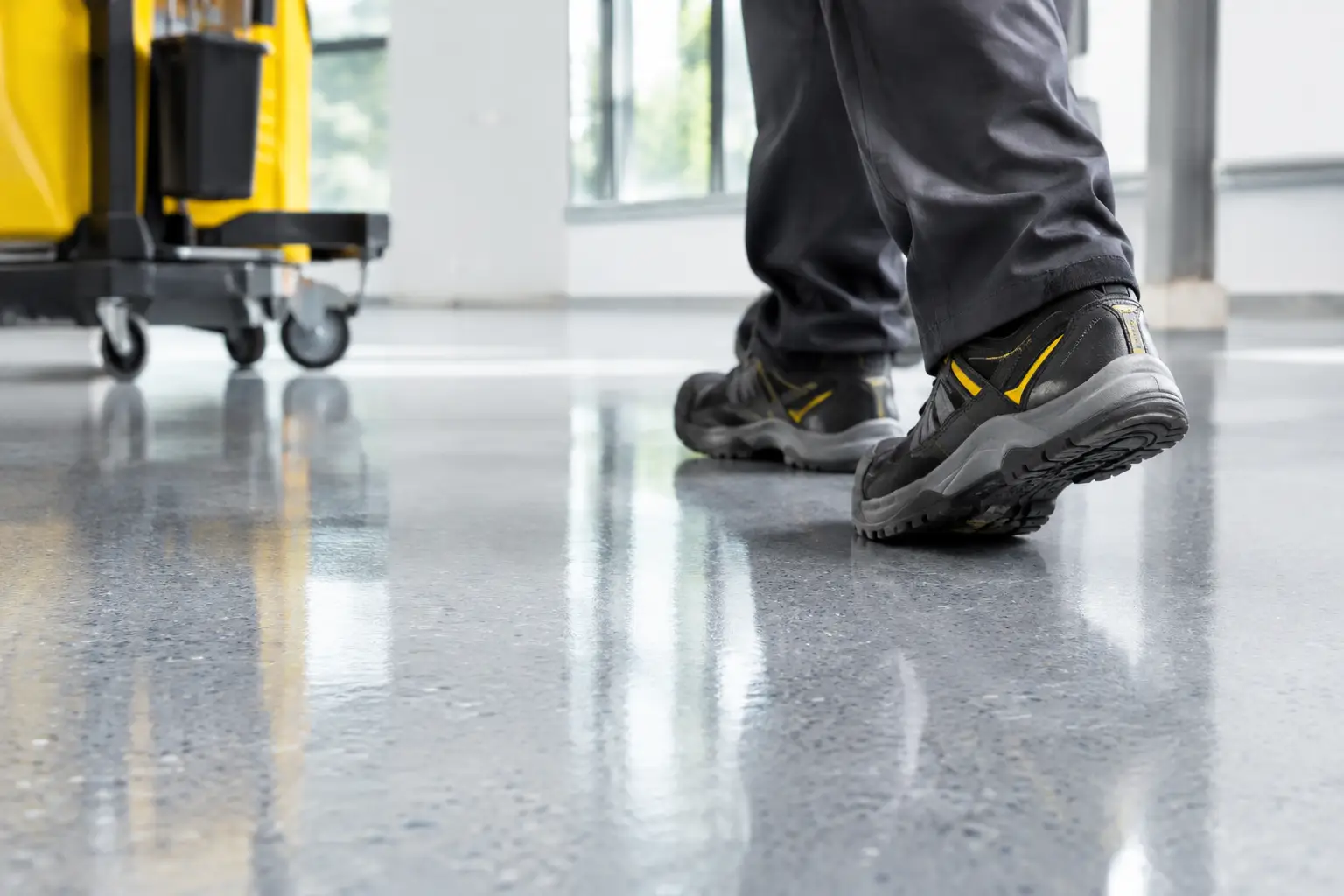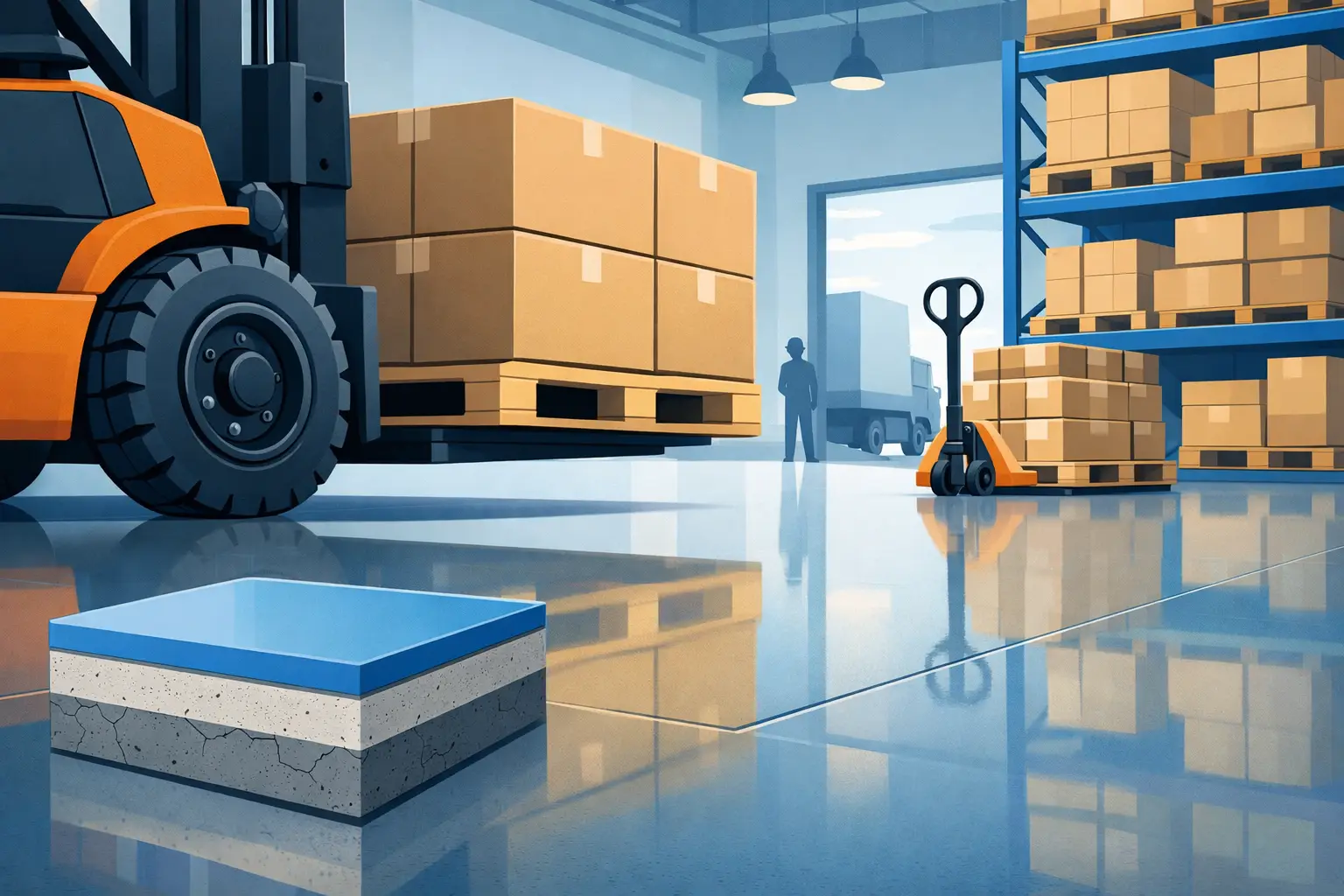
A warehouse floor has to perform long after the installation crew leaves. Forklifts turn in the same lanes, pallets hit the ground, oils and cleaning products spill, and foot traffic crosses active work areas all day. The right warehouse floor coating turns a porous, dusty slab into a safer, easier-to-maintain work surface, but only when the system is selected for the actual operation and installed over properly prepared concrete.
A coating that looks good on day one but peels under forklift traffic is not a cost-saving solution. Warehouses need a floor that accounts for load, abrasion, moisture, chemical exposure, temperature changes, cleaning practices, and safety requirements. That starts with a practical assessment of the slab rather than a one-size-fits-all product recommendation.
What a Warehouse Floor Coating Needs to Handle
Warehouse conditions vary widely. A distribution center with electric pallet jacks has different demands than a fabrication facility handling oils, a cold-storage area with thermal movement, or a loading zone exposed to rain and tire traffic. The floor coating should be specified around those demands.
Traffic is usually the first consideration. Repeated forklift travel creates concentrated wear, especially at turning points, dock approaches, charging areas, and intersections. A suitable resin system needs abrasion resistance and enough film build to protect the concrete from progressive surface wear. If the slab already has weak top concrete, visible dusting, or tire damage, repairs and mechanical preparation are essential before coating begins.
Chemical exposure matters just as much. Battery acid, hydraulic fluid, fuels, solvents, detergents, and process chemicals can stain or degrade an unsuitable finish. Epoxy coatings provide strong adhesion and chemical resistance for many warehouse environments. Where hot washdowns, thermal shock, or aggressive chemical exposure are part of routine operations, polyurethane cement may be the better long-term choice.
Safety also affects the specification. A glossy coating can improve brightness and cleanliness, but it must not create an avoidable slip risk. Texture can be incorporated into the system to provide traction in pedestrian routes, entrances, wet-process areas, and loading locations. The right level of texture depends on whether the area is primarily for foot traffic, wheeled equipment, or both. Excessive texture can make cleaning harder, so the goal is a finish that balances slip resistance with maintainability.
Start With the Concrete, Not the Color
Most coating failures are related to the substrate. Concrete may look sound while concealing moisture vapor, surface contamination, old sealers, curing compounds, weak laitance, or previous coating residue. These conditions can prevent a new resin floor from bonding correctly.
A disciplined floor audit identifies the issues that affect performance. This includes checking the slab’s condition, locating cracks and joints, reviewing traffic patterns, assessing moisture concerns, and identifying areas with chemical exposure or standing water. It also provides an opportunity to plan the work around active warehouse operations, including access routes, staging areas, and cure times.
Mechanical grinding is typically the preferred preparation method because it opens the concrete profile and removes weak or contaminated material. Depending on the slab, preparation may also involve shot blasting, crack repair, joint treatment, degreasing, patching spalls, and priming. Dust control is not a minor detail. A clean, properly profiled surface gives the coating system the foundation it needs to bond consistently.
Cracks require a practical approach. Some cracks can be filled and coated over, while active joints or moving cracks may need to remain functional within the floor design. Treating every joint as a cosmetic defect can lead to later cracking in the finish. A contractor should explain where a seamless appearance is realistic and where movement must be accommodated.
Choosing the Right Warehouse Floor Coating System
There is no single best resin floor for every warehouse. The most reliable choice comes from matching material properties to the environment, maintenance plan, and downtime available.
Epoxy for General Industrial Protection
Epoxy is a common choice for warehouses because it creates a hard, durable, easy-to-clean surface with good resistance to many chemicals and oils. It is well suited to storage areas, assembly zones, workshops, packing areas, and equipment rooms where a clean, professional finish is required.
Epoxy can be installed as a thin-film coating or as a thicker high-build system. A thicker system generally provides more protection and better visual uniformity, particularly on older concrete. Decorative flake can be used in staff areas or customer-facing sections, although a solid-color industrial system is often more practical for high-traffic production floors.
Epoxy does have limits. It can be less tolerant of ongoing moisture issues and thermal cycling than other systems. It also requires a defined cure period before the area returns to service. For a warehouse that cannot close a critical aisle for long, fast-curing alternatives may need consideration.
Polyurethane Cement for Harder Conditions
Polyurethane cement is designed for more demanding environments. It performs well where floors face heat, moisture, aggressive cleaning, thermal shock, and heavier chemical exposure. Food processing, commercial kitchens, washdown areas, and industrial facilities with hot equipment often benefit from this type of system.
It is not always necessary for a dry storage warehouse. Because polyurethane cement is a more specialized system, it should be used where its performance advantages justify the investment. In the right setting, it can reduce the likelihood of early failure caused by temperature movement or severe service conditions.
MMA for Fast Return to Service
Methyl methacrylate, commonly called MMA, is a fast-curing resin flooring option. It can be valuable when downtime is the overriding concern, such as a busy dispatch area, a 24-hour facility, or a repair that must be completed during a short shutdown window.
MMA systems can cure quickly, but installation requires experienced planning and application. Odor management, ventilation, staging, and site coordination should be addressed before work begins. Fast cure does not remove the need for substrate preparation. It simply allows a properly prepared and installed floor to return to service sooner.
Plan for Traffic, Markings, and Maintenance
A high-performance floor is more than a coating layer. The layout of the warehouse should guide decisions about color, texture, and line marking. Clearly marked pedestrian walkways, forklift lanes, loading zones, exclusion areas, and storage bays help create a more organized and safer operation.
Line marking is most effective when it is integrated into the flooring plan rather than treated as an afterthought. The coating color can improve contrast, while durable markings define traffic flow and work zones. In areas with frequent forklift turning, the selected system should be capable of handling tire abrasion without quickly losing its finish.
Maintenance is straightforward, but it should be deliberate. Regular sweeping removes abrasive grit that can wear the surface over time. Spills should be cleaned promptly, especially oils and chemicals that may become slippery or stain unprotected areas. Use cleaning products appropriate for the installed resin system, and avoid harsh methods that can damage the finish or leave residue.
A coating also makes localized repairs easier to manage than untreated concrete. If a section is damaged by impact or a heavy equipment move, a flooring specialist can assess whether a targeted repair will blend acceptably or whether a wider area should be recoated. Addressing damage early helps prevent moisture and contaminants from reaching the concrete beneath.
A Warehouse Installation Should Minimize Disruption
Warehouse flooring projects succeed when installation is planned around operations. That may mean dividing the space into phases, maintaining access to loading docks, completing work during shutdowns, or scheduling sections around inventory movement. The most suitable approach depends on the building layout, available staging space, coating type, and required cure time.
A clear process reduces surprises. It should include consultation, site inspection, a defined proposal, mechanical preparation, repairs and priming, coating application, curing, and final inspection. Transparent planning also makes it easier to understand what is included, what conditions may affect the schedule, and when each area can safely return to traffic.
Price should be evaluated in the same practical way. The lowest initial quote may exclude proper grinding, moisture mitigation, crack repairs, sufficient coating thickness, or site protection. Those omissions often appear later as peeling, premature wear, or operational disruption. A durable warehouse floor coating is an investment in safer movement, cleaner conditions, and a concrete slab that remains serviceable under daily pressure.
The best next step is to walk the floor with the people who use it. Look at where equipment turns, where spills happen, where water enters, and where workers need more traction or clearer direction. Those details are what turn a coating project into a floor built for the way your warehouse actually works.