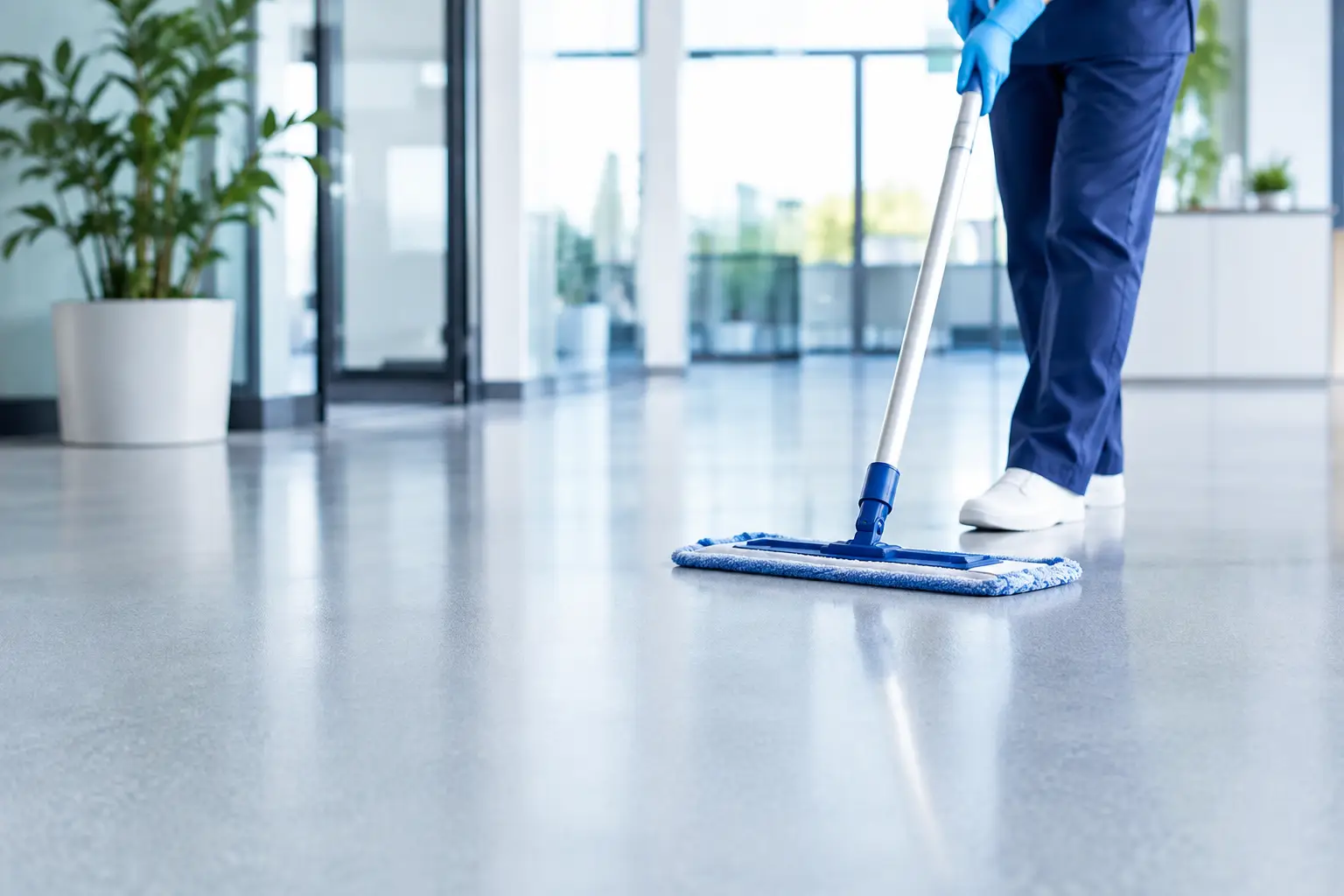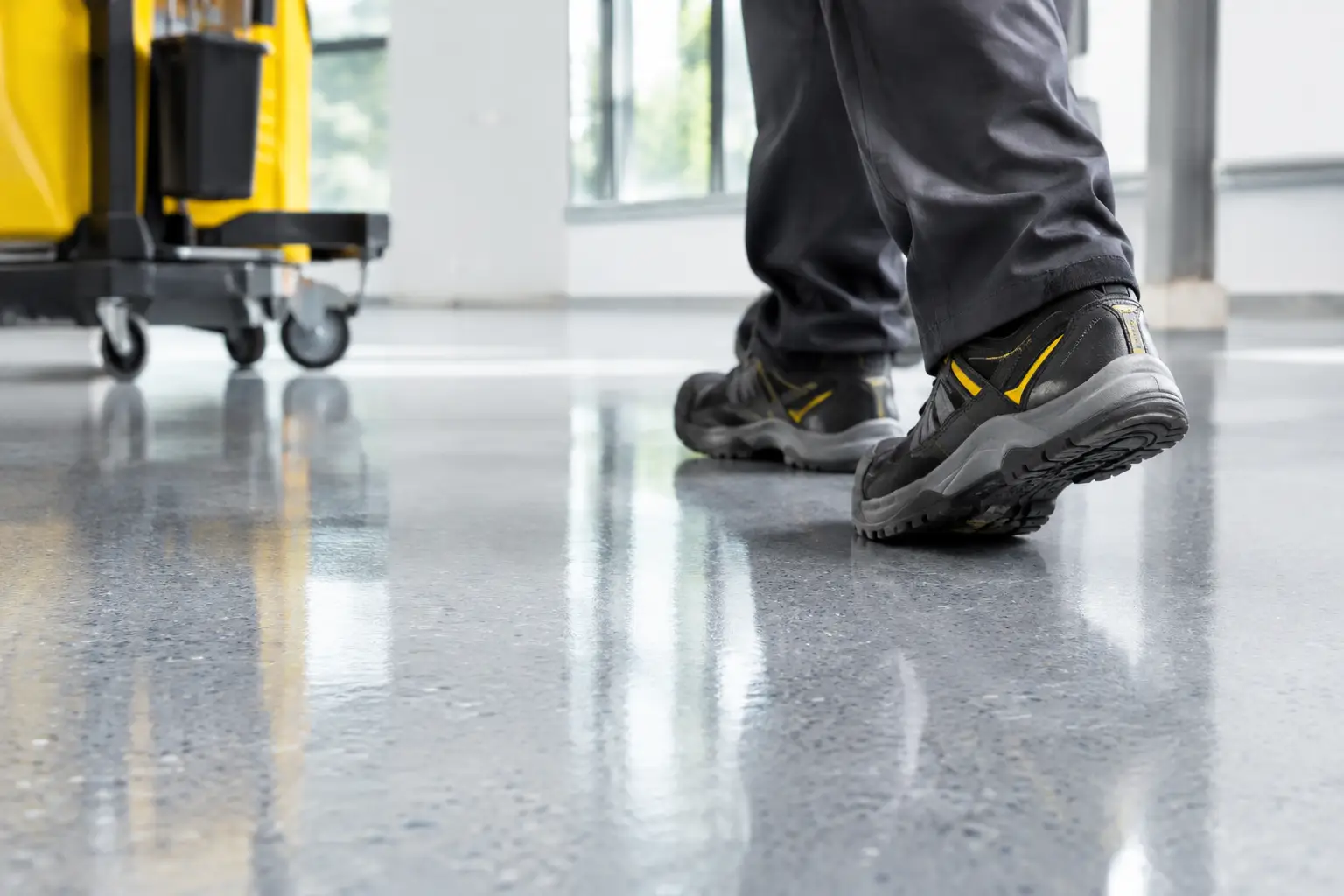
A coating can look excellent on installation day and still fail early if the concrete beneath it was not prepared correctly. Concrete grinding is the stage that determines whether epoxy, polyurethane cement, MMA, or decorative resin flooring bonds as intended. It removes weak surface material, opens the concrete pores, and creates a dependable foundation for a floor designed to handle traffic, chemicals, cleaning, and daily use.
For a warehouse, garage, commercial kitchen, workshop, or retail space, this is not a cosmetic preliminary task. It is a controlled surface-preparation process that directly affects adhesion, safety, finish quality, and service life.
What Concrete Grinding Does
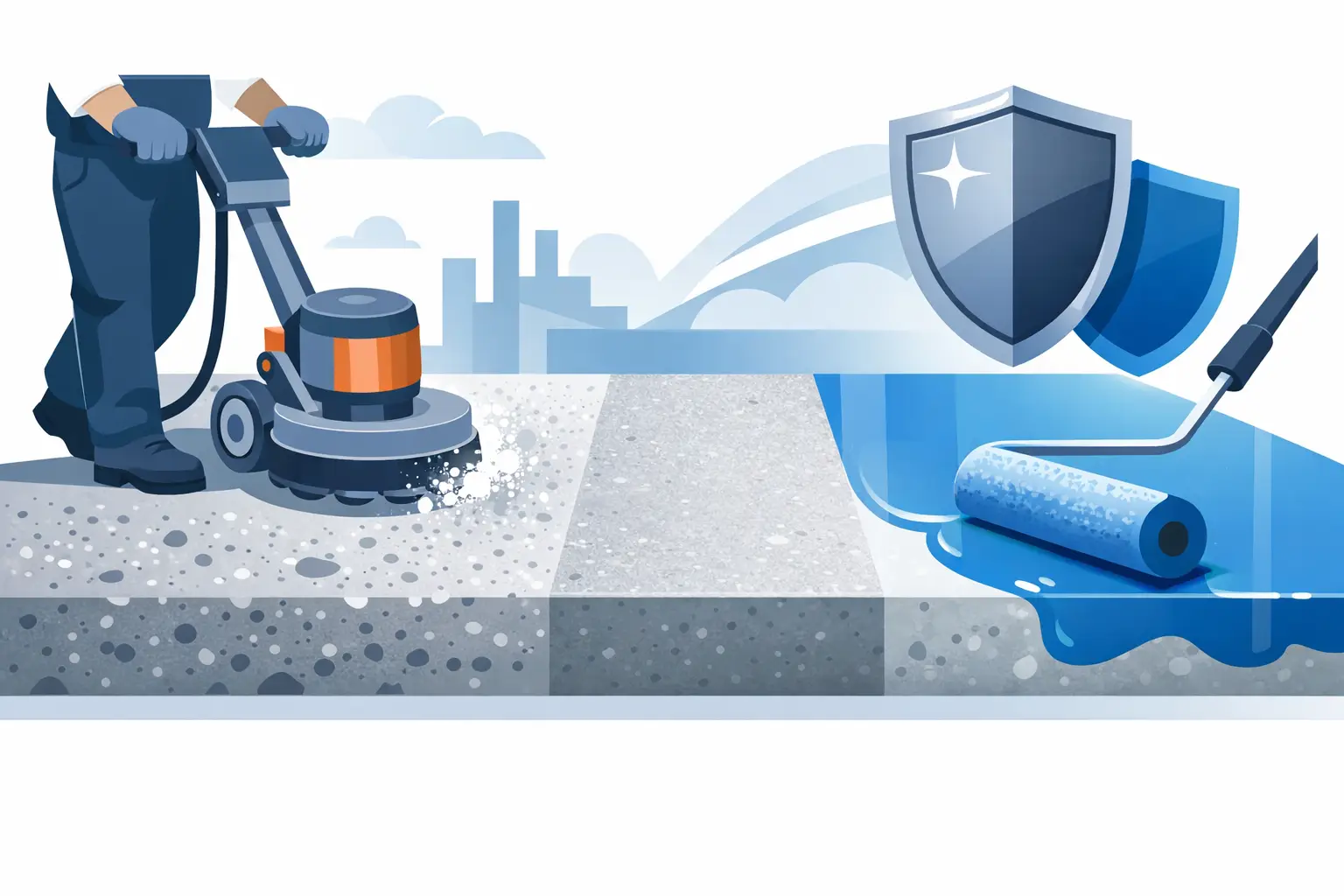
Concrete grinding uses purpose-built floor grinders fitted with diamond tooling to mechanically remove the top layer of a concrete slab. Depending on the floor condition and the coating system being installed, the process may remove old paint, failed epoxy, glue residue, surface contamination, minor unevenness, laitance, or weak concrete.
Laitance is the soft, dusty layer that can form when concrete is finished or cured. It may appear sound at first glance, but it does not provide a reliable surface for high-performance coatings. Grinding removes this layer and leaves a clean, sound substrate with a defined texture, often called a concrete surface profile.
That profile matters because resin flooring needs a mechanical bond as well as chemical adhesion. A slab that is too smooth can prevent the primer and coating from anchoring properly. A slab that is excessively rough may require more material to level and can affect the final appearance. The goal is not simply to make the concrete rough. The goal is to produce the right profile for the specified system.
Why Grinding Matters Before Epoxy Flooring
Epoxy coatings are durable, easy to clean, and available in systems suited to everything from residential garages to industrial manufacturing areas. However, even premium epoxy cannot compensate for contaminated, unsound, or poorly prepared concrete.
Concrete grinding helps prevent common coating failures, including peeling, bubbling, delamination, visible roller marks caused by uneven absorption, and premature wear in high-traffic paths. It also allows the installation team to identify substrate issues that could otherwise remain hidden beneath a new floor.
For example, a warehouse slab may have forklift tire residue, old line-marking paint, oil staining, and chipped areas near loading zones. A garage may have sealers, previous coatings, or tire-borne contaminants. In a commercial kitchen, the concerns may include moisture, degraded concrete, and the need for hygienic transitions at drains and walls. Each condition calls for a different preparation approach and, in some cases, a different resin system.
Grinding is also a practical way to reduce disruption compared with more aggressive removal methods. Modern planetary grinders combined with industrial HEPA dust extraction allow work to be controlled across active commercial sites. Site conditions still govern the schedule, but proper equipment and containment make a significant difference to cleanliness and operational planning.
Concrete Grinding Is Not Always Concrete Polishing
The terms are sometimes used interchangeably, but they describe different outcomes. Concrete grinding before a coating installation is focused on preparation. It creates a clean, open, suitably textured slab for the next layer of the flooring system.
Concrete polishing, by contrast, is a multi-stage refinement process designed to create an exposed concrete finish with increasing clarity and sheen. It generally involves progressively finer diamond tooling and may include densifiers, grouts, and protective treatments. A polished floor can be an excellent finished surface in the right environment, but it is not automatically the best substrate for every coating.
If the intended finish is decorative flake epoxy, solid-color epoxy, metallic epoxy, microcement, or polyurethane cement, preparation should be planned around that system’s technical requirements. The desired final appearance should never drive the grinder selection at the expense of proper adhesion.
The Right Process Starts With the Slab
A reliable flooring project starts with an inspection rather than an assumption. Before concrete grinding begins, the installer should assess the slab’s age, integrity, previous treatments, moisture condition, contamination, cracks, joints, and level changes. The floor’s intended use is equally important.
A light-duty residential garage and a food production facility may both need a resin floor, but they do not need the same preparation profile or material build. Exposure to hot washdowns, chemicals, thermal shock, wheeled traffic, impacts, and slip risks all influence the specification.
Initial cleaning and removal
Loose debris, dust, oils, and surface contaminants need to be addressed before or during mechanical preparation. Existing coatings may require stripping or more aggressive diamond tooling. Adhesives and mastics can also affect the selected method, especially when they are thick or contain materials that need controlled removal.
Mechanical grinding and dust control
The floor grinder is matched to the area, slab condition, and required profile. Larger machines can prepare broad warehouse floors efficiently, while edge grinders and hand tools are used along walls, columns, doorways, drains, and other areas a main machine cannot reach.
The team works methodically to avoid missed strips, inconsistent texture, and abrupt transitions. Dust extraction operates alongside the grinder to capture fine concrete dust at the source. This is essential for worker safety, cleaner adjoining areas, and a coating surface that is not re-contaminated by airborne dust.
Crack, joint, and defect repair
Grinding often reveals defects that need repair before coating application. Cracks may need to be routed and filled with an appropriate repair material. Spalled or weak areas may require removal and rebuilding. Joints need careful treatment because some are designed to move, while others can be filled and coated depending on the floor design.
There is no single repair method for every crack. A dormant hairline crack in a garage has different implications from an active joint in a heavily trafficked industrial slab. The right approach depends on movement, moisture, loading, and the selected flooring system.
Final cleaning, priming, and application
Once preparation and repairs are complete, the slab is vacuumed thoroughly and inspected. The surface must be sound, dry enough for the specified materials, and free of residue before priming begins. A compatible primer helps the coating bond into the prepared concrete and can assist with minor surface porosity.
The resin system is then installed to the required thickness and finish. This may include a broadcast flake layer for a garage, a non-slip aggregate for a wet work area, a chemical-resistant topcoat for a workshop, or polyurethane cement where heat and heavy washdowns are expected.
Choosing the Right Grinding Level
The appropriate degree of concrete grinding depends on the substrate and the coating. Light grinding may be sufficient for clean, bare concrete with a sound surface. Heavier grinding may be necessary where old coatings, sealers, uneven patches, or contamination are present.
The key trade-off is efficiency versus the condition of the slab. Skipping preparation may appear to save time at the beginning of a project, but it increases the likelihood of adhesion problems and more expensive repairs later. Over-grinding can also be inefficient and may expose aggregate or create a texture that requires additional leveling material.
Experienced installers select diamond tooling and grinding passes based on the actual floor, not a generic scope. This is why an on-site inspection is valuable. Two slabs in the same building can perform differently due to repairs, past coatings, moisture exposure, or variations in the original concrete placement.
Common Problems Grinding Can Reveal
Surface preparation is often the point when a floor’s true condition becomes clear. Moisture vapor issues, soft concrete, hidden coatings, oil penetration, and failing repairs may not be obvious before grinding begins.
Moisture deserves particular attention. Grinding can prepare the surface correctly, but it does not eliminate moisture moving through a slab. If testing or site conditions indicate elevated moisture, the flooring specification may need a moisture-mitigation primer or a different system. Applying standard epoxy over an unsuitable slab can lead to blistering or bond failure.
Oil contamination is another example. Light surface staining may be removed through grinding and cleaning, while deeply saturated concrete can require more extensive treatment. The solution should be based on how far the contamination has penetrated and what the area will be used for after installation.
A Better Floor Begins Below the Finish
Concrete grinding is rarely the part of a flooring project that attracts attention, yet it is where long-term performance is built. It prepares the slab to receive the coating, exposes issues while they can still be addressed, and creates a cleaner, safer path to a finish that suits the way the space operates.
When evaluating a new resin floor, ask how the concrete will be inspected, prepared, repaired, and tested before coating begins. The answer should be specific to the slab and the environment, because the most dependable floor is built on preparation that is every bit as deliberate as the finish people see.