A floor can look clean on handover day and still fail early if the system beneath it was not matched to the site. Epoxy flooring is valued for its hard-wearing, low-maintenance finish, but its real performance depends on the concrete condition, daily traffic, moisture exposure, safety needs, and the quality of surface preparation. A warehouse aisle, a commercial kitchen, and a residential garage may all need a resin floor, yet they do not need the same specification.
For property owners, builders, and facilities managers, the right question is not simply, “Should we use epoxy?” It is, “What does this floor need to withstand, and which coating system will do that reliably?” A practical assessment at the start prevents avoidable issues such as peeling, premature wear, slippery areas, and disruptions to operations.
Where Epoxy Flooring Makes Sense
Epoxy is a resin-based flooring system applied over a properly prepared substrate. Once cured, it forms a continuous protective layer that can improve durability, appearance, cleanability, and chemical resistance. It is especially useful where bare concrete creates dust, absorbs spills, stains easily, or is difficult to keep hygienic.
In garages and workshops, epoxy can protect concrete from tire marks, oils, tools, and routine abrasion while delivering a brighter, more finished space. Decorative flake systems are a popular choice where visual appeal matters, since they help disguise minor dirt and add texture underfoot. Solid-color finishes suit clients looking for a crisp, practical result, while metallic and marble-effect systems can create a more distinctive feature floor in residential or showroom settings.
Commercial and industrial sites place different demands on the coating. Warehouses may require high-build epoxy designed for forklift traffic and impact resistance. Workshops often need chemical resistance and non-slip texture around work zones. Car parks can benefit from durable coatings, clear traffic flow, and line marking that supports safer vehicle and pedestrian movement. In commercial kitchens, the priorities usually include hygiene, cleanability, slip resistance, waterproofing details, and resistance to food oils, cleaning agents, and thermal stress.
The appeal is not just that epoxy looks polished. A correctly designed floor can make cleaning faster, improve light reflectivity, define work areas, and protect the concrete slab from the conditions that gradually damage an untreated surface.
The Substrate Decides the Result
The most visible part of an epoxy floor is the final coating. The most important part is what happens before it is applied.
Concrete can hold moisture, contain surface contaminants, develop cracks, or have a weak top layer known as laitance. Old paint, tile adhesive, oil, dust, and curing compounds can all interfere with adhesion. Applying a premium coating over an unsuitable surface does not solve those problems. It can trap them beneath a finish that eventually lifts or blisters.
A proper floor audit identifies these risks before the scope is finalized. This may involve checking the slab for moisture, assessing cracks and joints, reviewing the level of wear, identifying chemical contamination, and confirming how the space will be used. New concrete also needs appropriate curing before coating. If a floor has a history of moisture vapor transmission, the system may require a moisture-mitigating primer or a different resin solution.
Mechanical grinding is generally central to reliable preparation. It opens the concrete profile and removes weak or contaminated material so the coating can bond to a sound surface. Crack repair, edge work, careful cleaning, and priming follow as required. This work can seem invisible once the floor is complete, but it is where much of the floor’s service life is determined.
Choosing the Right System for the Environment
Not every demanding floor should receive a standard epoxy build. Epoxy remains an excellent option in many environments, but heat, moisture, UV exposure, fast return-to-service requirements, and chemical conditions can change the recommendation.
For a typical enclosed garage, workshop, retail area, or moderate-traffic warehouse, an epoxy coating system may provide the balance of durability, appearance, and value the site needs. The final texture can be adjusted to support slip safety without creating a surface that is unnecessarily difficult to clean. That balance matters. An aggressively textured floor may offer more grip, but it can also retain dirt and increase cleaning time.
Areas exposed to sunlight require particular attention. Standard epoxy can amber or chalk under prolonged UV exposure, even though its protective properties remain intact. A UV-stable topcoat or a different system may be appropriate for outdoor-facing areas, entrances, balconies, and spaces with strong natural light.
In commercial kitchens, food processing areas, and locations subject to hot washdowns or thermal shock, polyurethane cement may be a better fit. It is designed for harsh operating conditions where temperature changes, moisture, and chemical exposure challenge conventional coatings. For businesses that cannot close for long, methyl methacrylate, or MMA, flooring can offer rapid curing and a faster return to service, although it requires careful planning because of its application characteristics and odor during installation.
This is why a tailored recommendation matters more than choosing a product from a color chart. The best flooring system is the one that matches the site’s actual conditions, not the one that happens to be most familiar.
Safety and Maintenance Need to Work Together
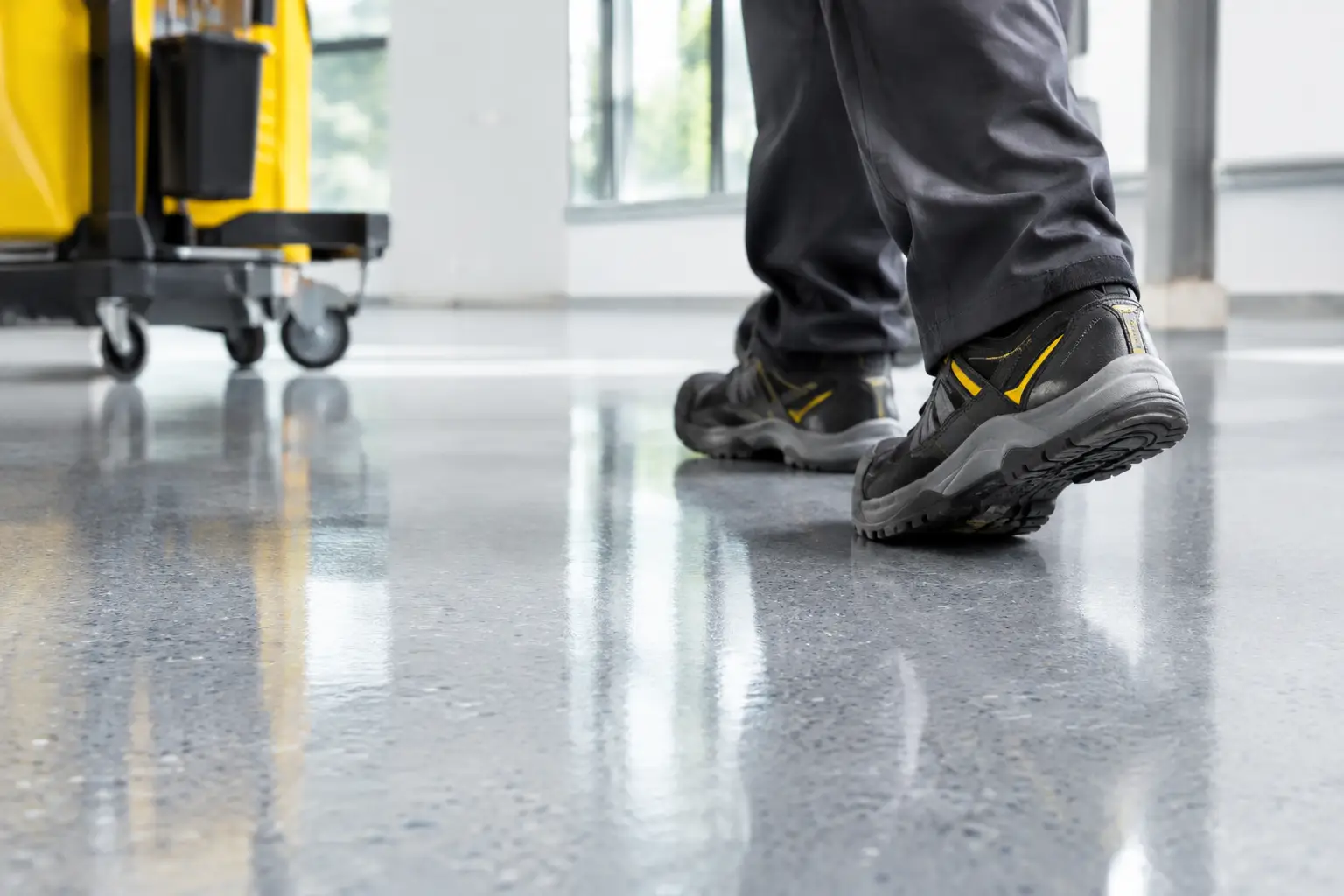
A safer floor is not automatically a rough floor, and an easy-clean floor is not automatically slippery. The specification needs to account for what lands on the surface, how often it is cleaned, footwear used on site, slope, drainage, and whether people or vehicles share the space.
Slip-resistant aggregates can be incorporated into epoxy flooring systems to provide additional traction. In a warehouse, that may be focused around loading areas, wash bays, pedestrian crossings, or machinery. In a commercial kitchen, the system may need texture that remains effective in the presence of oils and water. Clear line marking can further support safer circulation by separating walkways, forklift routes, storage zones, and hazard areas.
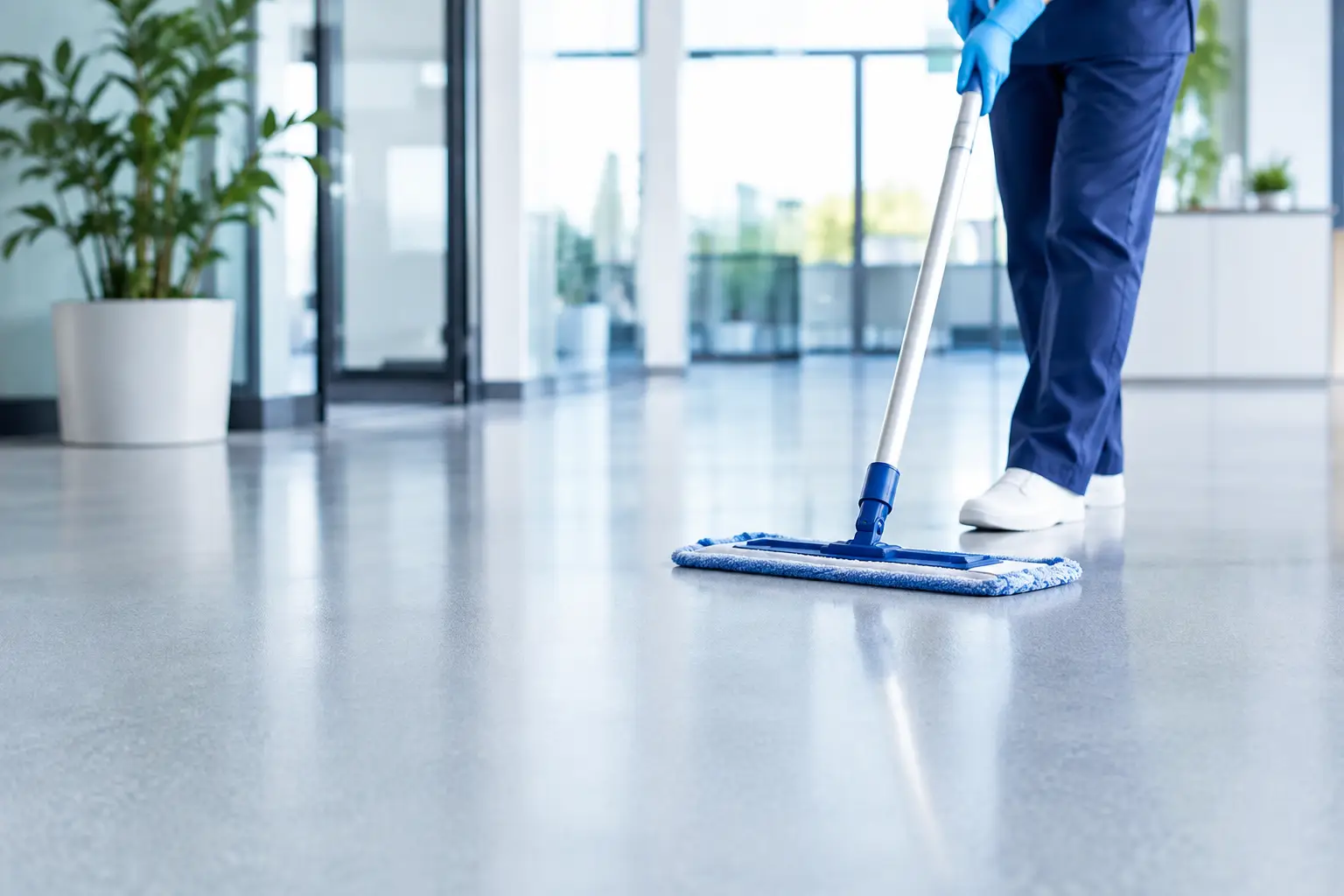
Maintenance is straightforward when the finish has been specified correctly. Regular sweeping removes abrasive grit that can dull any floor over time. Spills should be addressed promptly, and cleaning products should suit the coating rather than rely on harsh, unsuitable chemicals. A resin floor does not eliminate maintenance, but its non-porous surface can make routine cleaning more efficient than untreated concrete or damaged tile grout.
Plan Installation Around Site Operations
Flooring work affects access, curing schedules, and daily operations. The best installation process is planned around those realities rather than treated as a last-minute construction task.
A disciplined project begins with consultation and site inspection, followed by a clear proposal that explains the recommended system, preparation requirements, finish, program, and expected downtime. Once the scope is agreed, the work typically moves through substrate preparation, repairs and priming, coating application, curing, and final inspection. Each stage has a purpose, and shortcuts at any point can compromise the result.
For operating facilities, staged installation may reduce disruption by keeping sections of the site available while other areas are being completed. Access routes, equipment movement, ventilation, cleaning, and cure times should all be discussed before work begins. This is particularly important for kitchens, workshops, warehouses, and car parks where an unplanned closure can quickly affect revenue or safety.
Transparent pricing should also reflect the actual condition of the floor. A low estimate that ignores grinding, moisture issues, crack repair, or required safety texture can become expensive once the job is underway. A detailed scope gives clients a clearer view of what they are paying for and why it is necessary.
A Finish That Supports the Way You Work
The right resin floor should feel like part of a well-run property, not a cosmetic add-on. It should withstand the loads, spills, cleaning routines, and traffic patterns that occur every day while presenting the level of finish the space deserves.
Sydney Epoxy Flooring approaches each project from that practical starting point: inspect the slab, understand the use of the area, prepare the surface thoroughly, and install a system suited to the conditions. Whether the goal is a safer warehouse floor, a hygienic kitchen surface, a hard-wearing workshop, or a cleaner-looking garage, the details behind the coating are what make the investment last.
Before selecting a color or decorative finish, arrange a site assessment and define what the floor must do on its hardest day. That is the clearest path to a surface that remains safe, presentable, and fit for purpose long after installation.