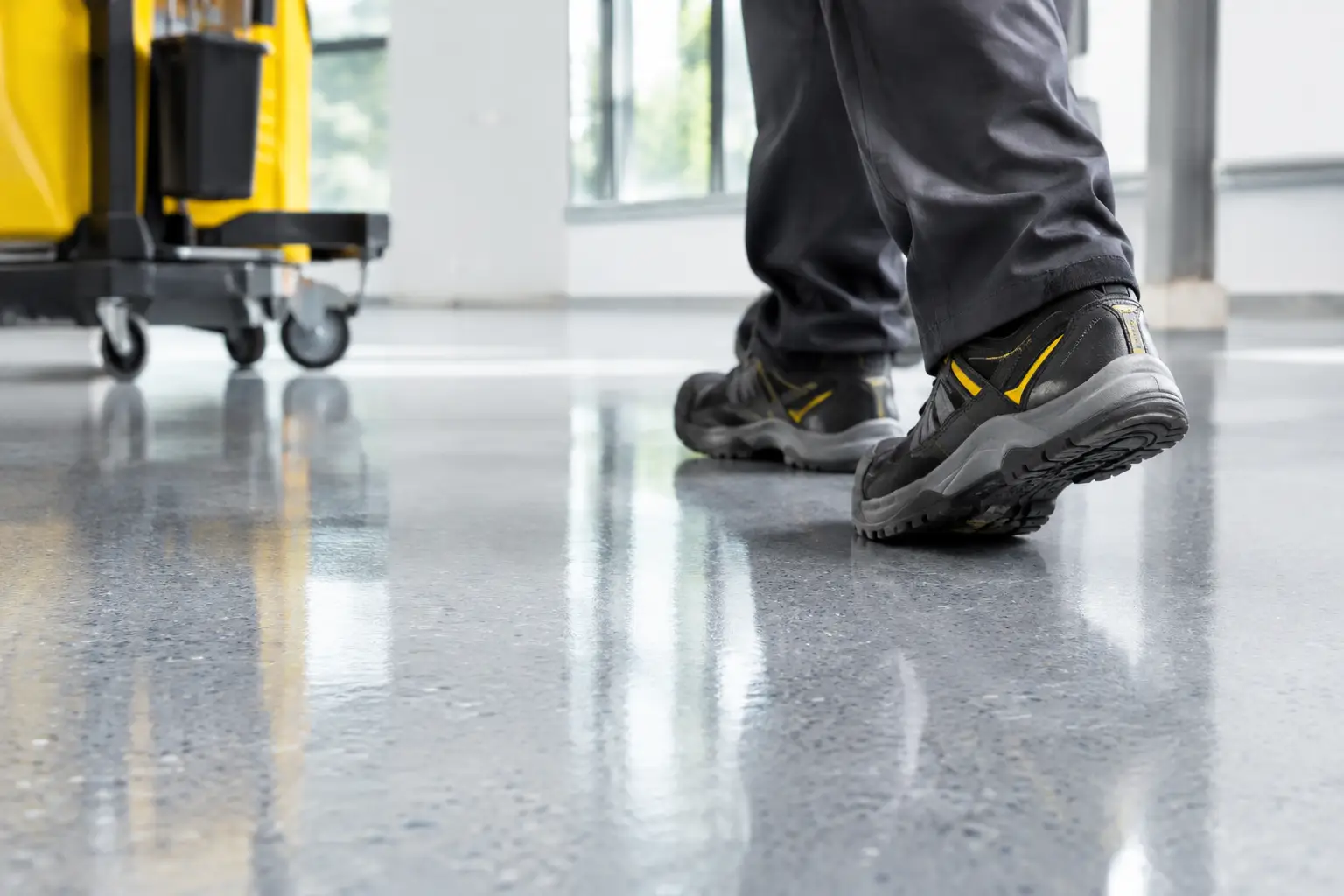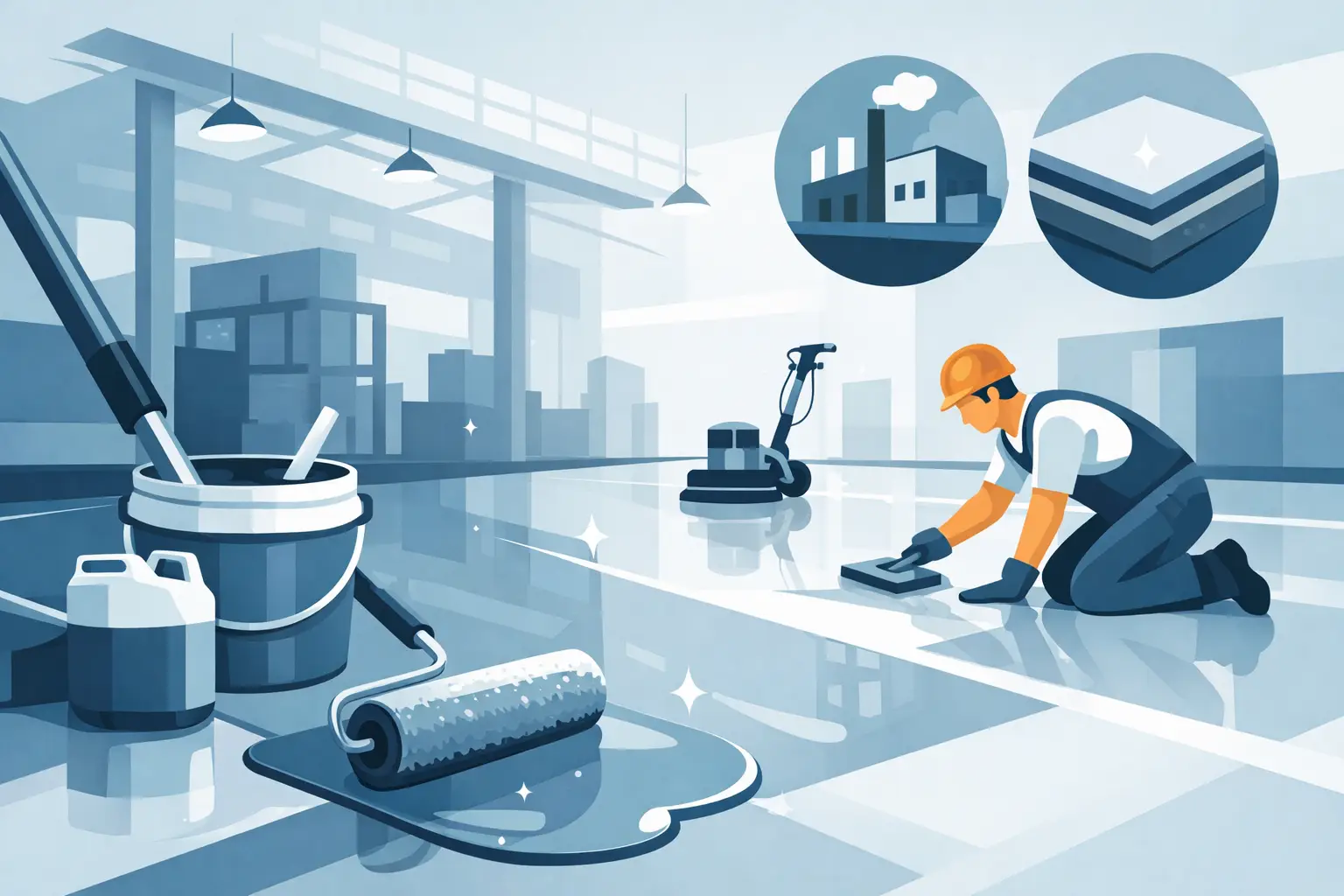
A warehouse floor can look sound at the end of a shift and still be losing performance underneath. Forklift traffic wears through weak topcoats, dropped loads open hairline cracks, washdowns drive moisture into the slab, and oil or chemical spills leave difficult safety hazards behind. Industrial epoxy coatings are designed to turn exposed concrete into a purpose-built working surface that can handle those demands while remaining easier to clean, safer to walk on, and more professional in appearance.
The right result is not simply a matter of choosing an epoxy color. Coating thickness, surface profile, moisture conditions, aggregate broadcast, cure schedule, and the facility’s daily use all affect whether a floor performs for years or begins to fail early. A proper system starts with the site, not a product brochure.
What Industrial Epoxy Coatings Are Built to Do
Industrial epoxy coatings are resin-based flooring systems applied over prepared concrete. Once cured, they form a continuous, bonded surface that helps protect the slab from abrasion, impacts, liquid penetration, and many common chemicals. Depending on the system specified, epoxy can be installed as a thin protective coating, a high-build finish, or a thicker broadcast floor with added texture and wear resistance.
For facilities managers and operations teams, the practical value is straightforward. A properly specified epoxy floor reduces concrete dusting, makes spills easier to contain, improves light reflectivity, and provides a clear foundation for line marking, work zones, and safety walkways. It can also create a more hygienic finish in areas where cleanliness matters, including food preparation spaces, workshops, laboratories, and storage facilities.
That does not mean every industrial setting needs the same epoxy system. A lightly used storeroom has very different requirements from a loading bay with constant forklift movement. The floor must be matched to the actual traffic, contaminants, temperatures, cleaning routine, and downtime available.
Where Epoxy Performs Best
Epoxy is a strong fit for warehouses, manufacturing areas, vehicle workshops, garages, service bays, storage rooms, retail back-of-house areas, and car parks. It is particularly useful where bare concrete is becoming dusty, stained, difficult to clean, or uneven in appearance.
In workshops, chemical resistance and easy cleanup often lead the decision. Oils, fuels, lubricants, and maintenance fluids should not be allowed to soak into unprotected concrete. In warehouses, abrasion resistance and clearly defined traffic paths may be more important. A broadcast epoxy system with a textured finish can improve grip in pedestrian areas, while separate line marking can help organize forklift routes, loading zones, and exclusion areas.
Commercial kitchens and wet-process spaces require closer assessment. Epoxy can be suitable in selected areas, but constant heat, thermal shock, aggressive cleaning products, and regular hot-water washdowns may call for polyurethane cement instead. Polyurethane cement is often better suited to demanding thermal conditions, while epoxy remains an effective choice for many dry or moderately wet service environments. Selecting the right resin is part of protecting the investment.
The Floor Beneath the Coating Matters
Most coating failures begin below the visible surface. Epoxy cannot compensate for a weak, contaminated, damp, or poorly prepared concrete slab. If oil, curing compounds, old paint, adhesives, or surface laitance remain in place, the new coating may not achieve the bond strength required for industrial use.
Preparation normally begins with a floor audit and site inspection. This identifies cracks, spalls, joint movement, moisture concerns, existing coatings, and operational constraints. Mechanical diamond grinding is then used to remove contamination and create the surface profile needed for adhesion. Damaged concrete is repaired, cracks are treated as appropriate for their movement and condition, and the floor is thoroughly cleaned before primer and build coats are applied.
Moisture testing is especially important. Concrete can release vapor long after it appears dry, and excessive moisture vapor transmission can cause blistering, debonding, or discoloration in the coating system. Where moisture readings are elevated, a suitable moisture-mitigation primer may be necessary. Skipping this step to save time can create a costly interruption later.
Selecting an Industrial Epoxy Coating System
The best specification follows the facility’s working conditions. Before recommending a system, a contractor should understand what moves across the floor, what lands on it, what spills on it, and how it is cleaned.
Traffic is the first consideration. Foot traffic, pallet jacks, forklifts, wheeled equipment, steel-wheeled carts, and vehicle tires each create different wear patterns. A simple roll-on coating may be appropriate for low-demand spaces, but high-traffic areas usually benefit from a higher-build epoxy or aggregate-broadcast system that adds thickness and abrasion resistance.
Slip resistance must be balanced with cleanability. A smooth gloss floor is easy to mop but can become slippery when wet. Adding a selected aggregate creates more grip, although a heavily textured surface can require more effort to clean. The correct level depends on the area: a warehouse aisle, vehicle bay, wet entry point, and food-service work zone should not automatically receive the same finish.
Chemical exposure also matters. Identify the actual substances used on site, including oils, fuels, acids, alkalis, solvents, disinfectants, and cleaning agents. Epoxy offers good resistance to many materials, but resistance is never universal. The concentration of the chemical, spill duration, operating temperature, and cleaning process all influence performance.
Finally, consider appearance as a functional part of the floor. Solid colors can define a clean, uniform work environment. Contrasting colors can separate production areas, walkways, and storage zones. Decorative flake is often used in garages and customer-facing spaces, while industrial line marking improves movement and visibility without relying on temporary tape that can lift and wear away.
Installation Planning Reduces Disruption
An industrial floor project has to work around production, deliveries, staff movement, and access requirements. The installation plan should be clear before preparation begins. This includes staging the work area, confirming substrate repairs, identifying shutdown windows, coordinating cure times, and planning when equipment can return to service.
Epoxy systems vary in their cure schedules. Some need longer before they can accept full traffic, while faster-curing alternatives may be considered where downtime is limited. MMA flooring, for example, can be a useful option for facilities needing a rapid return to service, though its application requirements and odor management need careful planning. The best choice is the one that protects both the floor and the operation.
A disciplined project process also includes final inspection. The finished surface should be checked for coverage, consistency, edge detailing, texture, and any agreed line marking. Clients should receive clear guidance on initial curing, cleaning products, spill response, and ongoing maintenance so the coating can perform as intended.
Maintenance That Preserves Performance
Industrial epoxy coatings are low maintenance, not maintenance-free. Routine sweeping removes abrasive grit that can wear the surface over time. Prompt spill cleanup limits chemical contact, and pH-neutral cleaning products are generally preferable to harsh or unapproved chemicals that may dull or damage the finish.
Avoid dragging heavy steel equipment directly across the floor, especially in concentrated traffic areas. Use appropriate wheels, protective pads, or load-distribution methods where needed. If the facility changes its operations – such as introducing heavier machinery, new chemicals, or more frequent washdowns – reassess whether the existing floor system remains suitable.
Small damage should also be addressed early. A local chip, worn traffic lane, or failed joint detail is easier to repair before moisture, contaminants, or repeated impact reach the concrete below. Regular inspections are a practical way to protect both the coating and the slab it was installed to defend.
A high-performing floor is built through careful decisions long before the final coat is rolled out. Start with an honest assessment of the concrete and the way your facility operates, then select an industrial epoxy system that supports safety, cleanliness, and daily productivity without asking the floor to do more than it was designed to handle.