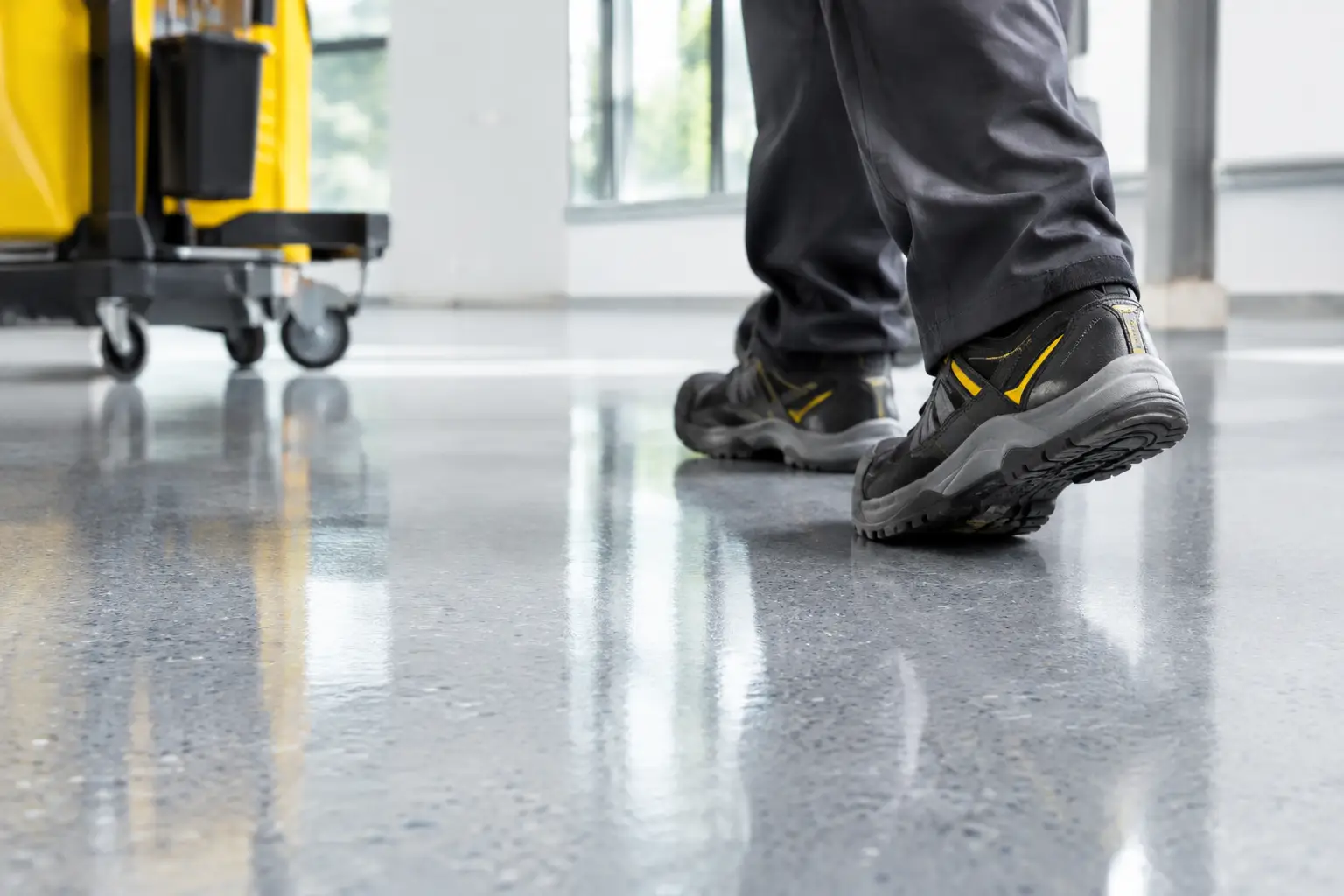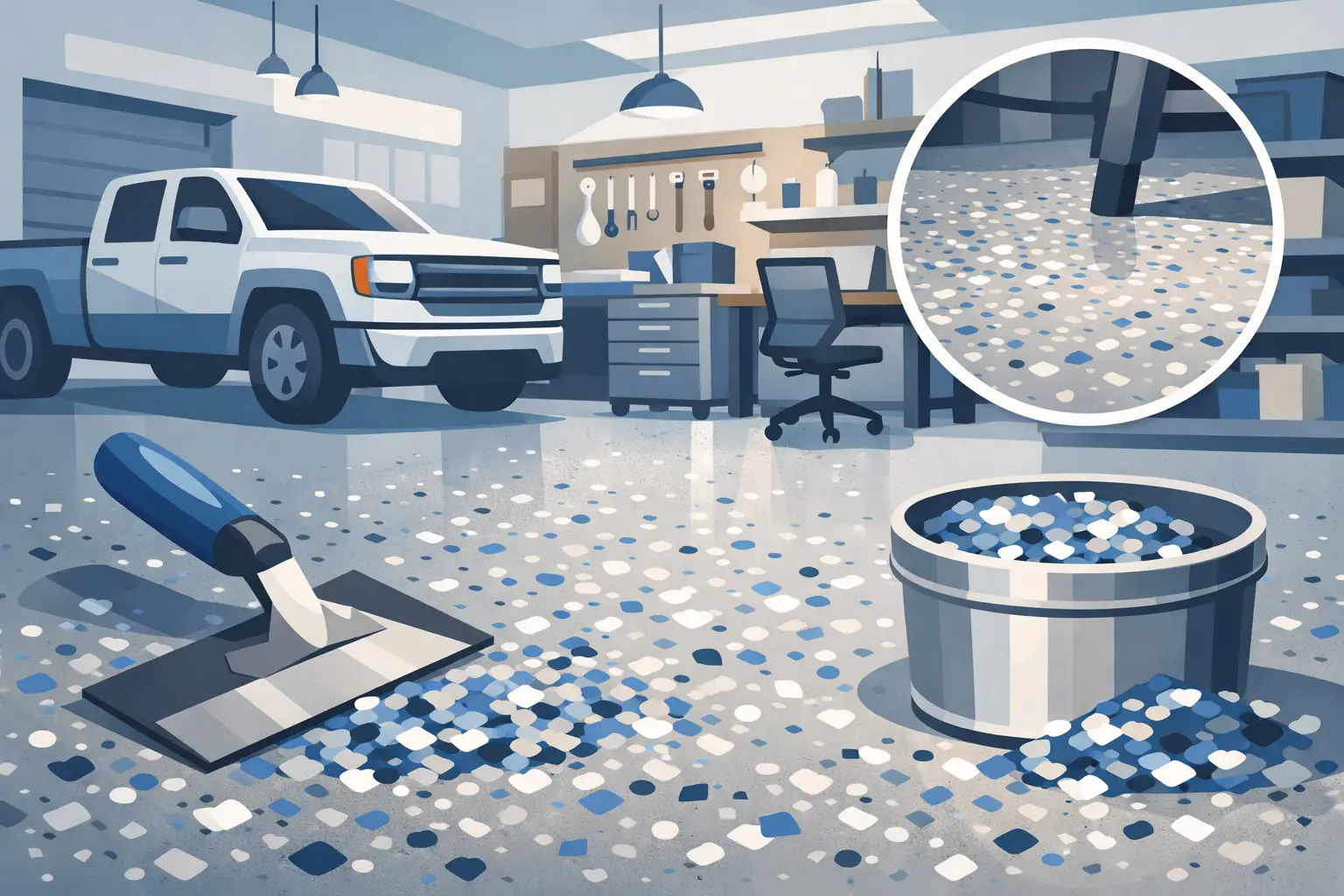
A garage that collects tire marks, a workshop exposed to oils, or a retail back room with constant foot traffic needs more than a painted concrete surface. Decorative flake flooring creates a durable, easy-to-clean finish while giving the floor a deliberate, polished appearance. It is a practical choice when a space must look professional without sacrificing grip, impact resistance, or day-to-day durability.
Unlike a single-color coating, a flake system uses colored vinyl chips broadcast into a resin base coat and protected with a clear topcoat. The result can be subtle and stone-like, high-contrast and modern, or selected to suit an existing interior palette. More importantly, the layered system helps protect the concrete beneath from wear, stains, and moisture exposure.
What Decorative Flake Flooring Is Designed to Do
Decorative flake flooring is a resin flooring system, commonly built with epoxy or polyaspartic materials, that combines performance with visual flexibility. After the concrete is prepared and primed, the installer applies a pigmented base coat. Decorative flakes are then distributed across the wet material, followed by scraping, cleaning, and a clear protective topcoat.
The flakes do more than add color. They help break up the visual impact of dust, small marks, and everyday debris that would be obvious on a plain floor. They also create a lightly textured surface that can improve underfoot traction when paired with the appropriate topcoat and slip-resistant aggregate.
For homeowners, this makes decorative flake systems especially popular in garages, patios, utility rooms, and workshops. For commercial owners and facilities teams, they can suit showrooms, retail spaces, staff areas, light-duty service zones, and amenity rooms where cleanability and presentation both matter.
The Right Floor Starts With the Concrete Below It
A flake finish is only as dependable as its bond to the substrate. Concrete can look sound while hiding moisture issues, weak surface laitance, oil contamination, old coating residue, or cracks that need repair. Applying resin over those problems can lead to peeling, blistering, or uneven wear long before the coating should need attention.
A professional floor audit identifies the condition of the slab and the demands of the space. This includes checking for moisture, assessing cracks and joints, identifying contaminants, and confirming whether the surface has previously been sealed, painted, tiled, or coated. The intended use matters as well. A residential garage has different loading and chemical exposure than an auto workshop, commercial kitchen corridor, or warehouse entrance.
Mechanical diamond grinding is generally the preferred preparation method because it removes weak material and creates a consistent surface profile for adhesion. Localized repairs can then be completed before the coating system is installed. This preparation work is not the visible part of a finished floor, but it is where long-term performance is decided.
Moisture and Existing Coatings Need Special Attention
Concrete transmits moisture vapor, particularly in ground-level slabs and older buildings. If testing indicates a moisture concern, the system may require a moisture-mitigating primer or a different flooring specification. Skipping that step to reduce upfront cost can create a far more expensive repair later.
Existing paint or coatings must also be evaluated rather than simply coated over. If the old finish is poorly bonded, it needs to be removed. A new resin system should bond to properly prepared concrete or to a verified, mechanically prepared coating layer that is still sound.
Choosing Flake Colors and System Components
Color selection should support how the space is used, not just how a sample looks under showroom lighting. Mid-tone blends are forgiving in garages and active commercial areas because they disguise dust, tire residue, and minor scuffs better than solid white or very dark finishes. Light blends can make enclosed spaces feel larger and brighter, while charcoal, gray, tan, and multi-tone patterns often complement vehicles, machinery, shelving, and contemporary interiors.
The topcoat deserves equal attention. A quality clear coat protects the flakes, determines the gloss level, and contributes to resistance against stains, abrasion, hot tires, and cleaning chemicals. Depending on the environment, the system may need enhanced UV stability, a matte or satin finish to reduce glare, or additional slip resistance.
Slip resistance should always be balanced with cleanability. A more aggressive texture may be appropriate near wet entries, wash areas, ramps, or work zones, but it can hold dirt and make mopping more difficult. In a garage or showroom, a finer texture often provides a better balance. The right specification depends on footwear, water exposure, cleaning routines, and safety requirements.
Where Decorative Flake Systems Work Best
Decorative flake flooring performs well in spaces that need a clean, finished appearance alongside dependable protection. It is often specified for residential garages because it resists common vehicle-related stains and transforms plain concrete into a usable extension of the home. It also works well in workshops and light industrial areas where floors see rolling equipment, dropped tools, oils, and regular cleaning.
Commercial applications vary. A customer-facing automotive service area may benefit from a flake system because it looks organized while being easier to maintain than bare concrete. Retail stockrooms, employee break areas, corridors, locker rooms, and certain medical or educational support spaces can also be suitable when the coating is matched to the traffic and cleaning regime.
There are limits. Heavy manufacturing environments with sustained forklift traffic, thermal shock, concentrated acids, or severe chemical exposure may need a more specialized system, such as polyurethane cement or a high-build industrial epoxy. Commercial kitchens also require careful consideration of waterproofing, coving, drainage, heat, grease, and slip safety. Decorative flakes can be part of the visual finish in some areas, but they are not automatically the best answer for every demanding floor.
Installation Requires a Controlled Process
A reliable result comes from disciplined sequencing, appropriate cure times, and site conditions that support the materials being installed. Temperature, humidity, slab moisture, ventilation, and access restrictions all affect the schedule. Fast-curing systems can reduce downtime, but the right material should be selected for performance first, not simply speed.
A typical project begins with consultation and inspection, followed by a clear proposal that defines preparation, repairs, coating layers, finish, and expected access restrictions. The installation team then prepares the slab, applies the primer and base coat, broadcasts the flakes, and seals the floor with the selected topcoat. Once cured, the floor is inspected for coverage, consistency, edge detail, and finish quality before being returned to service.
The amount of flake broadcast also changes the final appearance. A full broadcast system covers the base coat completely and produces a dense, highly decorative finish. A partial broadcast uses fewer flakes, allowing more of the base color to show through. Full broadcast systems are generally the more durable and visually consistent option for garages and active commercial spaces, though a partial broadcast can suit lower-traffic areas or specific design preferences.
Care That Protects the Finish
One advantage of a properly installed flake floor is straightforward maintenance. Sweep or dust mop regularly to remove abrasive grit, then clean with a neutral-pH cleaner and a soft mop or auto scrubber suited to the area. Deal with spills promptly, especially oils, chemicals, and strongly colored products, even though the coating provides stain resistance.
Avoid harsh acidic cleaners, highly caustic degreasers, and abrasive pads unless the coating manufacturer has confirmed they are suitable. Furniture, equipment, and metal shelving should use protective feet where practical. In garages and workshops, placing pads under motorcycle stands or heavy jacks can prevent concentrated point loading from marking the surface.
A well-specified decorative flake floor should not demand constant attention. It does, however, benefit from routine cleaning and early repair of any localized damage. Maintaining the clear topcoat protects both the visual finish and the resin layers below it.
For a floor that needs to carry vehicles, people, equipment, and a strong first impression, the best next step is not choosing a flake color from a screen. It is assessing the concrete, the traffic, and the conditions the floor will face. Sydney Epoxy Flooring approaches that decision as a complete system, so the finished surface is designed to perform as well as it looks.